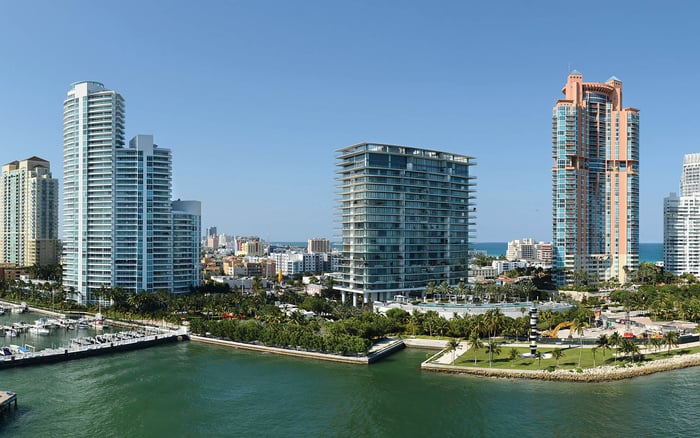
A buyer-focused briefing on Faena House Miami Beach that separates advertised hospitality services from mechanical assurances, with practical diligence on overnight HVAC response, humidity alerts, and cooling redundancy.
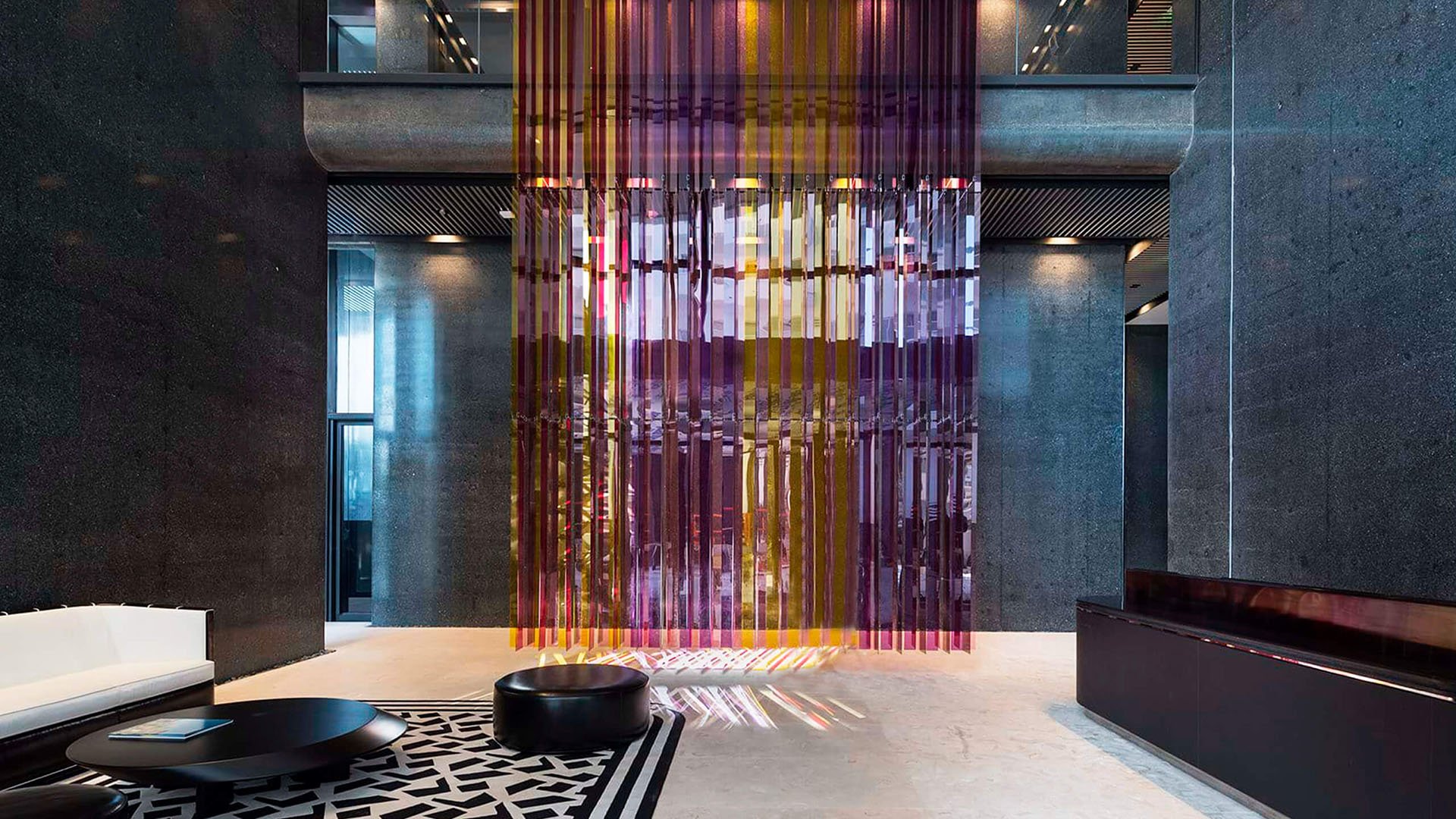
At Faena House Miami Beach, the architectural proposition is clear: a 17-story oceanfront residential building designed by Foster + Partners. For a private client, the ownership brief should extend beyond design to three less visible questions: who responds when cooling fails after hours, who receives a humidity alert, and what remains operational when equipment is unavailable?
These are distinct questions, not interchangeable measures of service. Advertised round-the-clock hospitality does not establish round-the-clock mechanical coverage. Equally, an undisclosed technical specification is not evidence that a safeguard is absent. The appropriate response is neither reassurance nor suspicion, but a request for current, residence-specific documentation before relying on an operating promise.
The building’s passive form was designed to reduce mechanical-cooling demand during hot summer months. That intent is neither a quantified energy-performance guarantee nor evidence of backup cooling. Architectural intelligence and mechanical resilience deserve separate entries in the buyer’s diligence file.
Faena House’s advertised services include 24-hour doorman and valet services, 24-hour five-star concierge services, and 24-hour security surveillance. These are hospitality and security provisions. They do not establish overnight mechanical-engineering staffing, a guaranteed HVAC response time, or continuous monitoring of residential humidity.
The marketing disclosures do not establish a resident HVAC emergency number, a named on-call mechanical contractor, or an overnight service-level agreement. Ask management for the current written procedure rather than treating a staffed desk as a commitment to dispatch a qualified technician.
That procedure should distinguish acknowledgment, attendance, and restoration. An answered call is not a technician’s arrival; a technician’s arrival is not a promise to restore cooling within a specified period. Request any applicable response targets, the escalation contact if the first call goes unanswered, and the arrangements for weekends and holidays.
For a client whose Miami Beach search also includes Setai Residences Miami Beach, ask the same questions independently. A service reputation is no substitute for a building-specific mechanical agreement. Do not assume equivalent coverage between properties.
An after-hours plan should address authority as carefully as availability. Ask who may enter the residence when the owner is away, what consent must already be on file, and whether an owner’s representative can authorize inspection or repair. These are questions to resolve, not permissions to presume.
Request a written allocation of call-out, diagnosis, repair, and restoration costs. Use the applicable building documents and service agreements to clarify which equipment is the owner’s responsibility and which is the association’s. Do not rely on a verbal description of that boundary.
Walk through a hypothetical overnight cooling failure. Who receives the first call? Who authorizes entry? Who contacts the contractor? Who updates the owner? Ask management to explain each handoff, including what happens if the usual contact is unavailable. This turns a general assurance into a procedure the buyer can evaluate.
The marketing disclosures do not establish automatic humidity alarms in every Faena House residence. Nor should 24-hour security surveillance be interpreted as HVAC alarm monitoring. Request confirmation of the installation and notification arrangements for the residence under consideration.
Start with the sensors: whether they exist, where they are located, and which conditions they measure. Then ask about alert thresholds, the delay before an alert is issued, and who receives it. Establish whether notifications reach management, an outside contractor, the owner, or an authorized representative. Do not assume any of those recipients is included.
Next, establish accountability. Are alerts acknowledged? Is there a record of acknowledgment and subsequent action? Can the owner review alarm histories? Request a demonstration of the notification procedure where available, and clarify who maintains the devices and updates contact details.
For indoor conditions, keeping relative humidity below 60% helps prevent mold; below 50% is preferable for mold and dust-mite control. These are general humidity-control guidelines, not confirmed Faena House operating targets or alarm settings. If central air conditioning cannot maintain humidity below 60% and a dehumidifier is needed, the air-conditioning system should be examined for problems.
Standing water warrants particular urgency: common molds can take hold when water stands for even 24 hours. That guidance should not be recast as a universal countdown from a humidity reading.
The marketing disclosures do not verify chiller counts, N+1 cooling capacity, generator-backed cooling, independent risers, or a mechanical spare-parts inventory. None should be presented as a confirmed Faena House feature. Conversely, those disclosure gaps do not establish that the systems lack backup provisions.
Request current mechanical and emergency-power schedules, and have an appropriately qualified professional explain what they demonstrate for the particular residence. If redundancy is represented, ask which equipment and operating conditions it covers. If emergency power is represented, ask specifically whether it includes residential cooling. Generator availability alone is not proof.
The supporting file should include the building-automation alarm matrix, maintenance documentation, service agreements, and 24 months of outage logs. Ask that any claimed backup arrangement be tied to those records. Equipment descriptions, notification procedures, and maintenance obligations should be consistent.
The practical question is not simply whether backup exists. It is what service remains available during a failure, what intervention is required, and what limitations apply. Those answers should be explicit before resilience becomes part of the purchase rationale.
A buyer also considering The Perigon Miami Beach can use this documentation framework without assuming equivalent equipment, staffing, or alarm coverage. Compare written provisions, not adjectives. A credible comparison treats hospitality hours, technical attendance, humidity notification, emergency access, and cooling continuity as separate questions.
Keep Faena House distinct from Faena Hotel Miami Beach and Faena’s Miami River development. Their services and specifications are not interchangeable. Familiar branding is no basis for transferring a mechanical assurance from one property to another.
Before an extended absence, request a concise operating file containing confirmed emergency contacts, access permissions, alert recipients, and repair-authorization arrangements. Ask management to identify unresolved items rather than leaving the owner’s representative to interpret broad assurances during an incident.
The private-client standard is straightforward: understand what is advertised, confirm what is currently provided, and document who acts when something changes. For Faena House, that approach respects the architecture while giving the less visible aspects of ownership the attention they deserve.
For a discreet conversation about your Miami Beach property search and ownership priorities, connect with MILLION.
If branded residences are on your mind — as a home or as an allocation — we would be glad to share what we are seeing, privately.
Begin a quiet conversationFaena House is a 17-story oceanfront residential building in Miami Beach designed by Foster + Partners.
Advertised services include 24-hour doorman, valet, five-star concierge, and security surveillance. Those descriptions do not establish overnight mechanical-engineering coverage.
A guaranteed HVAC response time is not established by the marketing disclosures. Request current written targets for acknowledgment, technician attendance, and restoration.
Automatic humidity alarms in every residence are not established by the marketing disclosures. Confirm the sensors, settings, and notification arrangements for the specific residence.
Advertised 24-hour security surveillance should not be interpreted as HVAC alarm monitoring. Ask separately who receives and acknowledges mechanical or humidity alerts.
Keeping indoor relative humidity below 60% helps prevent mold, while below 50% is preferable for mold and dust-mite control. These guidelines are not confirmed Faena House operating targets.
If central air conditioning cannot maintain humidity below 60% and a dehumidifier is needed, the system should be examined for problems.
Neither is verified by the marketing disclosures, which does not prove either is absent. Request current mechanical and emergency-power schedules to clarify the actual provisions.
Request mechanical schedules, emergency-power schedules, the building-automation alarm matrix, maintenance documentation, service agreements, and 24 months of outage logs.
Confirm emergency contacts, entry permissions, alert recipients, repair authority, and responsibility for call-out and restoration costs in writing.