A private aviation weekend changes how discerning buyers judge a Downtown Miami pied-à-terre, shifting attention from sheer size to positioning, privacy, and the ease of repeated use.
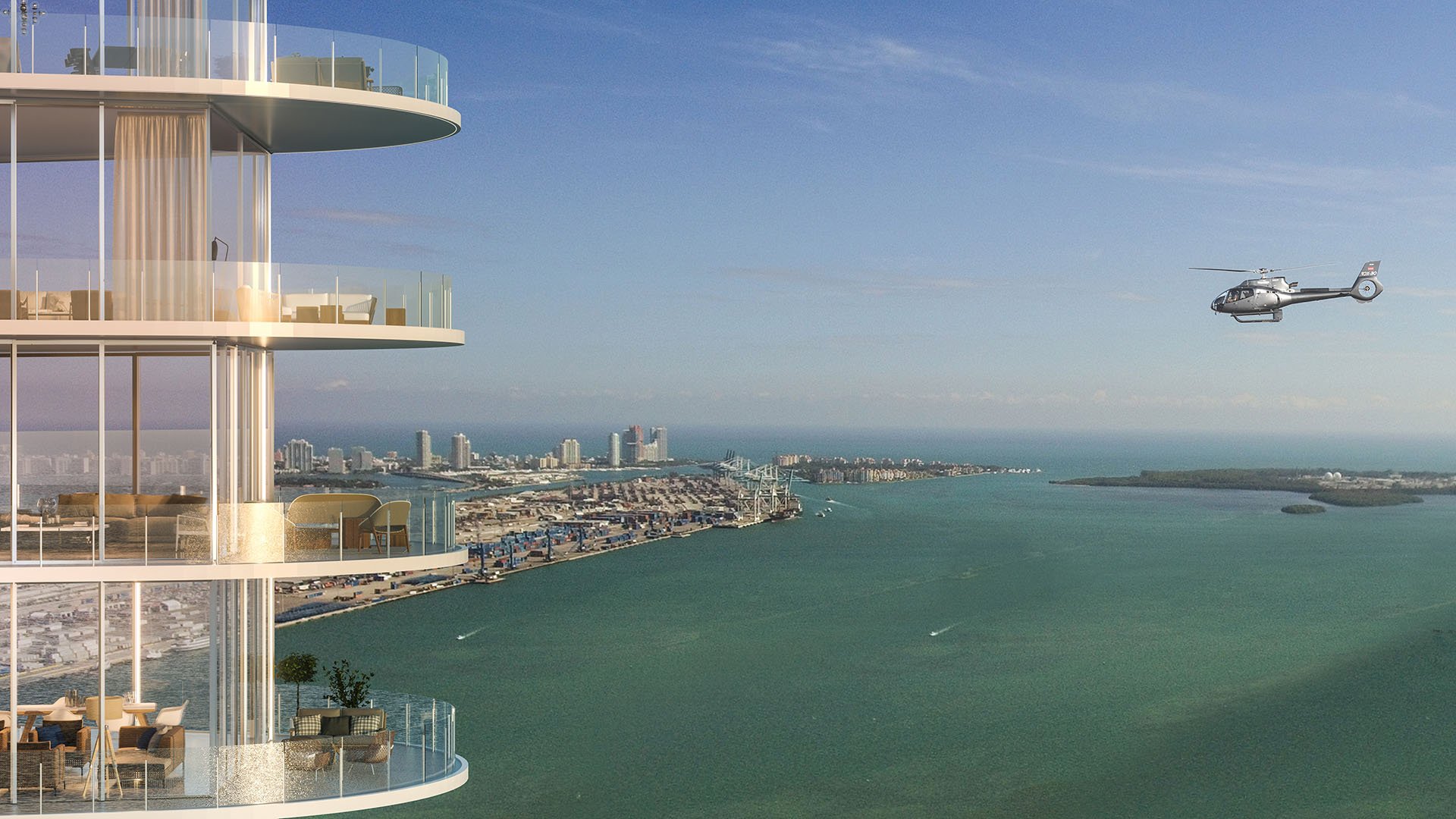
For the South Florida buyer arriving by private aviation, the weekend is no longer a casual escape. It is a compressed luxury itinerary, often built around a dinner, a meeting, a boat day, a family visit, or a cultural calendar with little tolerance for friction. In that context, a pied-à-terre is not simply a smaller residence. It is an instrument of time control.
That is why Downtown Miami warrants a more exacting look from second-home buyers. The strongest case is not that every buyer needs more square footage in the urban core. It is that a precisely positioned residence can make a short stay feel longer, smoother, and more deliberate. When arrival and departure are part of the lifestyle, location becomes less abstract and more consequential.
A private-aviation weekend exposes inefficiencies quickly. If the residence sits outside the owner’s actual Miami routine, its beauty becomes conditional. If the building adds too many steps between arrival, privacy, storage, service, and the evening ahead, the weekend loses its rhythm. A better-positioned Downtown pied-à-terre solves for the hours that matter most.
Downtown is compelling because it concentrates many of the use cases that define a short South Florida stay. Business, dining, waterfront movement, cultural appointments, and social obligations can sit within a tighter personal radius than in more resort-driven settings. For certain buyers, that makes Downtown less of a compromise and more of a base.
This is especially relevant for owners who already have a primary estate elsewhere in South Florida, the Northeast, the Midwest, Latin America, or abroad. A pied-à-terre does not need to replicate the main home. It needs to remove the recurring inconvenience that discourages spontaneous visits. The best examples feel ready before the owner arrives and restful within minutes of entry.
The appeal is not limited to weekday business. Weekend use is often where the logic becomes strongest. A couple may fly in for one night, host friends the next, attend an event, and leave without taking on the obligations of a larger residence. Downtown gives that itinerary a more compact frame.
Positioning is not only a pin on a map. It is a sequence of small decisions that shape the owner’s experience. A better-positioned pied-à-terre should offer an arrival path that feels discreet, a building culture that matches the owner’s pace, and a plan that makes short stays effortless rather than ceremonial.
The most successful buyers tend to think in patterns. How often will the residence be used? Will it be a Friday-to-Sunday retreat, a midweek work base, or a flexible South Florida address for family and guests? Will the owner entertain, work quietly, or simply sleep well between engagements? These questions matter more than a generic checklist.
For a private-aviation user, the best residence may not be the largest. It may be the one that reduces decision fatigue. Storage can be more valuable than an unused room. A confident lobby experience can matter more than decorative drama. A floor plan that separates guests from private quarters can be more useful than a formal layout that looks impressive but lives inefficiently.
The Downtown and Brickell corridor offers several distinct interpretations of the urban pied-à-terre. The decision should not be reduced to brand recognition alone. It should begin with how the owner wants to move through a weekend and which building environment best supports that cadence.
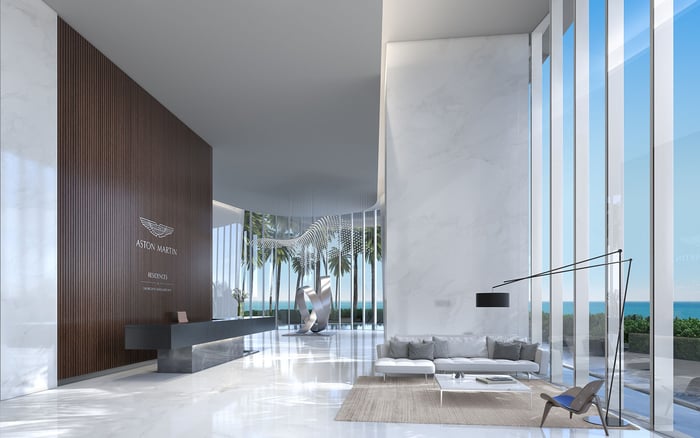
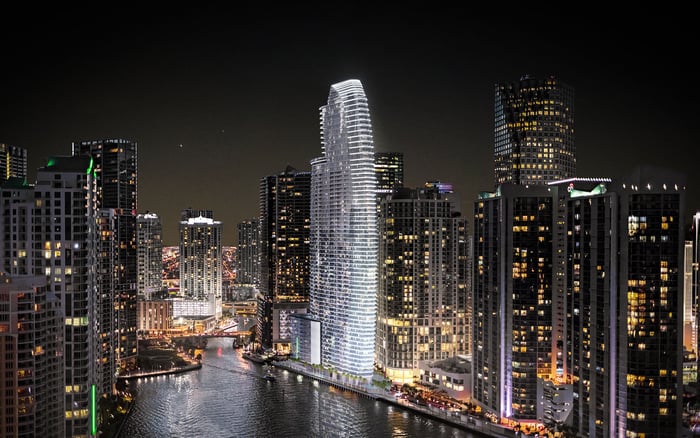
For buyers drawn to the waterfront edge of the urban core, Aston Martin Residences Downtown Miami speaks to the desire for a refined, design-led address that can feel both metropolitan and private. Its relevance to this conversation is not merely its name. It is the way a highly visible Downtown address can function as a confident base for owners who want the city close at hand.
For those considering a more vertical expression of the Miami skyline, Waldorf Astoria Residences Downtown Miami fits the buyer who wants the pied-à-terre to feel like part of a global lifestyle language. In a fly-in context, familiarity can matter. A residence that feels intuitively serviced and internationally legible can reduce the cognitive load of repeated short stays.
Brickell adds another layer to the conversation. It remains relevant for owners whose Miami routine leans toward finance, dining, entertaining, and a more walkable urban tempo. The Residences at 1428 Brickell and St. Regis® Residences Brickell each speak to buyers who want the polish of a serious address without surrendering the practical advantages of being close to the center of action.
A more intimate Brickell option can also be attractive when the goal is not spectacle but frequency of use. 2200 Brickell belongs in that discussion for buyers who want a city residence that supports repeatable weekend patterns rather than an oversized occasional showpiece.
The words Second-home and Investment often sit together in South Florida, but they should not be confused. A pied-à-terre purchased for private-aviation weekends must first satisfy the owner’s lifestyle. If it does not improve how the owner arrives, rests, hosts, and leaves, the financial thesis becomes secondary.
That said, disciplined lifestyle utility can support long-term desirability. Residences that are easy to understand, easy to use, and well aligned with established urban demand tend to have a clearer story. Buyers should consider whether the home will feel relevant not only on closing day, but after years of changing travel schedules, family needs, and business habits.
The most elegant outcome is a residence that does not overstate itself. It sits in the right part of the city, performs when the owner arrives without notice, and feels appropriate whether occupied for one night or ten. In the ultra-premium market, that kind of quiet competence is often more persuasive than excess.
Begin with actual weekends, not imagined ones. Map the meals, meetings, waterfront plans, wellness appointments, shopping, friends, and family touchpoints that define the owner’s Miami life. Then work backward into the building and residence.
Privacy should be evaluated as a lived experience. Consider how an owner enters, how guests are received, how luggage is managed, and how easily the residence can be kept ready between visits. For fly-in owners, the best home is often the one that feels settled before the first glass of water is poured.
Scale should be intentional. A pied-à-terre does not need to carry the burden of a primary residence. It should be beautiful enough to inspire, practical enough to repeat, and restrained enough to maintain without becoming another estate to manage.
Finally, buyers should be honest about identity. Downtown Miami rewards owners who want the city in their life. Not as background, but as part of the reason they come. When that is true, a better-positioned pied-à-terre can become one of the most used homes in a portfolio.
Why does private aviation change the pied-à-terre decision? It compresses the value of time, making arrival, privacy, and location more important than unnecessary scale.
Is Downtown Miami a practical choice for a weekend residence? Yes, for buyers whose Miami routine centers on dining, business, culture, waterfront movement, and social access.
Should a pied-à-terre be smaller than a primary home? Often, yes. The priority is efficient luxury, not duplication of a larger estate elsewhere.
What makes a Downtown residence better-positioned? It should align with how the owner actually uses Miami, from arrival flow to evening plans and departure rhythm.
Is Brickell different from Downtown for this purpose? Brickell can feel more business and dining oriented, while Downtown may appeal to buyers seeking a broader urban base.
Should branded residences be considered for fly-in weekends? They can be appealing when the buyer values service culture, recognition, and a residence that feels intuitive on arrival.
How important is storage in a pied-à-terre? Very important. Thoughtful storage allows the home to function as a ready base rather than a temporary stop.
Can a pied-à-terre also serve guests or family? Yes, but the layout should protect the owner’s privacy and make short stays comfortable for everyone.
What should buyers avoid when choosing one? Avoid choosing solely for views or prestige if the residence does not support the owner’s real weekend pattern.
What is the best way to shortlist comparable options for touring? Start with location fit, delivery status, and daily lifestyle priorities, then compare stacks and elevations to validate views and privacy.
For a confidential assessment and a building-by-building shortlist, connect with MILLION.
If branded residences are on your mind — as a home or as an allocation — we would be glad to share what we are seeing, privately.
Begin a quiet conversation