A discreet, residence-first framework for preparing a Park Grove home for seasonal vacancy, from terrace clearance and interior protection to access control and staff communication.

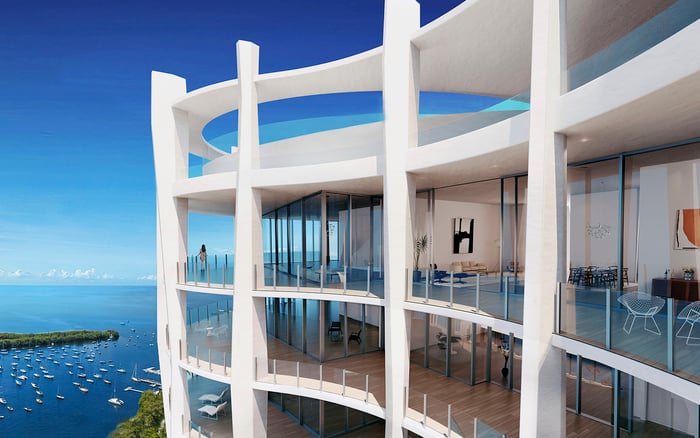
A seasonal departure from Park Grove Coconut Grove requires more than locking the front door and lowering the shades. The multi-tower waterfront development near Biscayne Bay features residences shaped by broad views, expansive glazing, and a close relationship between interior rooms and the landscape. Those qualities make a disciplined lock-up plan especially valuable during a prolonged summer absence.
The objective is not to create a complicated household bureaucracy, but to establish a concise operating brief for the residence, its outdoor areas, approved access, routine observation, and escalation if conditions change. Every instruction should align with current condominium documents, management procedures, insurance requirements, and applicable emergency guidance.
Before scheduling private vendors, owners should request current seasonal-vacancy and storm-preparation procedures from condominium management. Confirm how authorized entrants are registered, when vendors may access the property, what documentation is required, and which responsibilities belong to the association rather than the unit owner.
This distinction matters in a service-intensive complex with landscaped grounds, swimming and recreation facilities, fitness areas, spa and wellness amenities, and social spaces. Shared-property operations may be coordinated centrally, while interiors, furnishings, appliances, private terraces, and household systems remain part of the owner's preparation plan. Written confirmation prevents duplicated work and reduces assumptions.
Buyers weighing different operating environments across Coconut Grove may also compare management expectations at Four Seasons Residences Coconut Grove while assessing how each residence suits a seasonal ownership pattern.
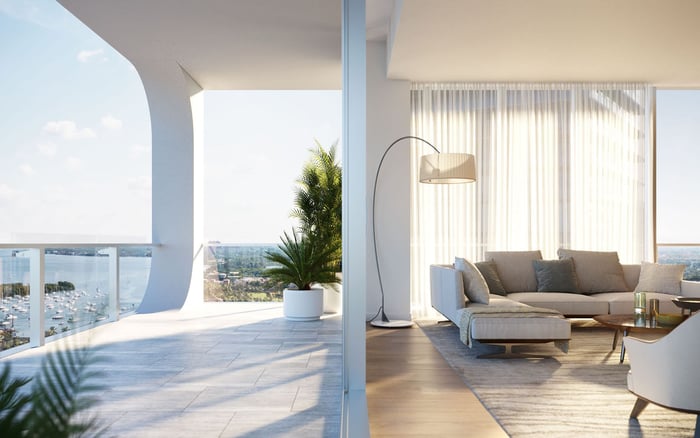
Waterfront living offers light, views, and an indoor-outdoor rhythm, but an unattended exterior area warrants deliberate review. Remove or secure movable furniture, planters, decorative objects, umbrellas, lighting accessories, and anything else that could shift in severe weather. Do not rely on weight or appearance alone when deciding what may remain outside.
A balcony or terrace should also be checked for drainage obstructions, loose accessories, and items leaning against the glazing. Photograph the cleared space before departure. This record helps the owner, household manager, and authorized representative verify the condition in which it was left.
Any work involving exterior fixtures, storm protection, railings, glazing, or building-envelope components should be coordinated with management before action is taken. Owners should not assume that a modification is permitted simply because it appears practical.
Park Grove residences use expansive glazing to connect living spaces with views of Biscayne Bay and the surrounding landscape. Before leaving, inspect accessible glass, frames, doors, seals, and nearby finishes for visible concerns, then direct any issue through the appropriate management or service channel. The purpose is early identification, not improvised repair.
Inside, move delicate furnishings, art, textiles, and electronics away from vulnerable openings when appropriate. Review window treatments, interior doors, cabinetry, plumbing fixtures, appliances, and decorative lighting during a room-by-room departure walk. Climate-control and other household-system settings should follow manufacturer guidance, insurer requirements, and building rules rather than a generic online checklist.
Owners considering a newer Grove residence may also review Mr. C Tigertail Coconut Grove as part of a broader discussion about layouts, outdoor space, and the practical demands of part-time occupancy.
A lock-up plan should divide tasks into three phases: pre-departure, recurring observation, and pre-return. The first closes the home methodically. The second gives an authorized person a defined inspection brief. The third prepares the residence for occupancy without last-minute improvisation.
The recurring brief might address visible signs of moisture, unusual odors, temperature irregularities, plumbing concerns, appliance alerts, pest activity, and the condition of doors and windows. The precise scope and frequency should be approved by the owner and reconciled with condominium rules, insurance terms, and vendor qualifications.
Second-home ownership works best when each visit produces a consistent written record. Ask the responsible person to follow the same checklist, photograph only agreed areas, document exceptions, and report completion. A stable routine is more useful than a stream of informal messages.
Luxury residences often involve several participants: condominium management, household staff, a property manager, cleaners, maintenance specialists, and the owner's representative. Appoint one primary decision-maker and one backup. Everyone else should know whom to contact, what they may authorize, and what requires owner approval.
Prepare a secure contact sheet listing names, roles, access windows, and escalation instructions. Avoid circulating alarm codes, keys, or personal information more broadly than necessary. Time-limit permissions where possible and cancel access when work is complete, subject to building procedures.
The owner should also define communication thresholds. Routine completion can be summarized in a scheduled update, while water intrusion, loss of climate control, damaged glazing, or an official building request should prompt immediate contact. If the owner cannot be reached, the representative needs a clearly defined authority limit.
For another perspective on managed seasonal living near the Grove, Vita at Grove Isle can be included in a buyer's operational comparison without assuming that access rules or services are identical.
On departure day, complete one walkthrough with the checklist in hand. Verify exterior clearance, close and inspect openings, review visible plumbing conditions, remove perishables and waste, confirm approved system settings, and ensure scheduled services are active. Photograph key rooms and outdoor areas, then send the final status to the designated representative.
The most refined lifestyle outcome is quiet continuity: a residence protected through disciplined preparation, a staff structure that understands its limits, and a return arranged with the same precision as the departure.
When should Park Grove owners begin summer lock-up planning? Begin early enough to confirm management requirements, vendor access, and any necessary service appointments before departure.
What should be removed from a private terrace or balcony? Remove or secure movable furniture, planters, umbrellas, decor, and other objects as permitted and directed by management.
Who should hold access to an unoccupied residence? Limit access to authorized people registered under current condominium procedures, with one primary representative and one backup.
How often should an empty residence be checked? Set the frequency with reference to condominium rules, insurance terms, household needs, and qualified professional advice.
Should owners change climate-control settings before leaving? Yes, but settings should follow equipment guidance, insurer requirements, and building procedures rather than a universal formula.
What should an inspection report include? Include the date, areas reviewed, checklist completion, noted exceptions, agreed photographs, and any action requiring approval.
Who handles common amenities during seasonal vacancy? Shared amenities are part of the complex's operations, while owners should confirm the precise division of responsibility with management.
Can private vendors perform storm-related work without approval? Owners should obtain any required management authorization before vendors access or alter exterior or building-related components.
What deserves immediate escalation? Visible water intrusion, damaged glazing, climate-control failure, security concerns, or an official building request merit prompt attention.
What should happen before the owner returns? Arrange an authorized pre-arrival review, confirm household systems, address exceptions, and prepare the residence for occupancy.
To compare the best-fit options with clarity, connect with MILLION.
If branded residences are on your mind — as a home or as an allocation — we would be glad to share what we are seeing, privately.
Begin a quiet conversation