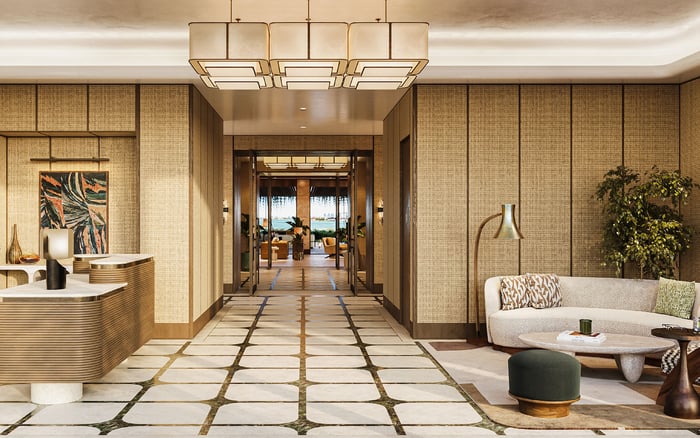
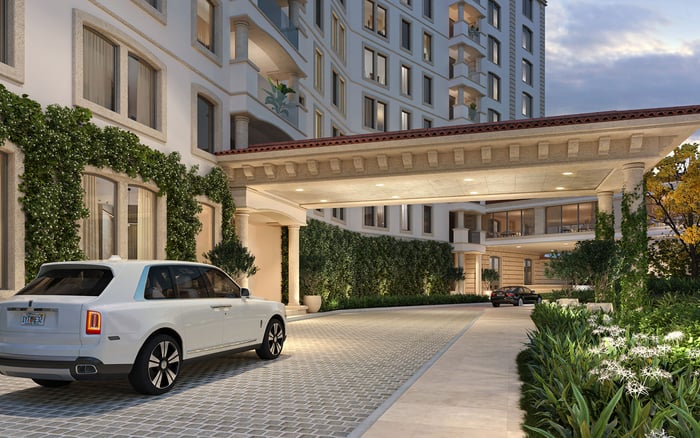
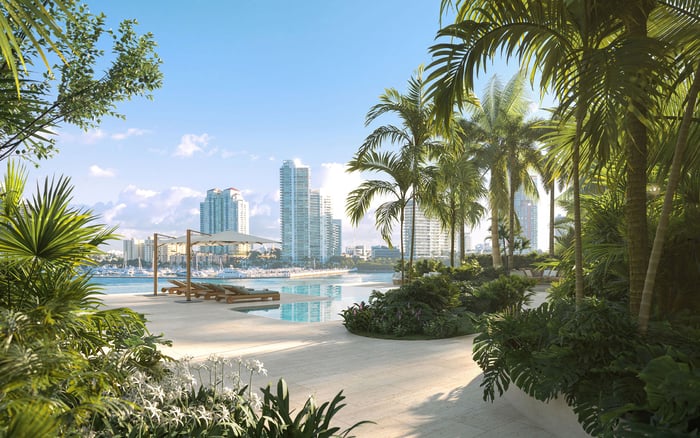
On Fisher Island, Palazzo del Sol and Six Fisher turn the private elevator into an operating philosophy. One favors formal, concierge-supported arrival; the other emphasizes a seamless, technology-augmented transition into a private vestibule.
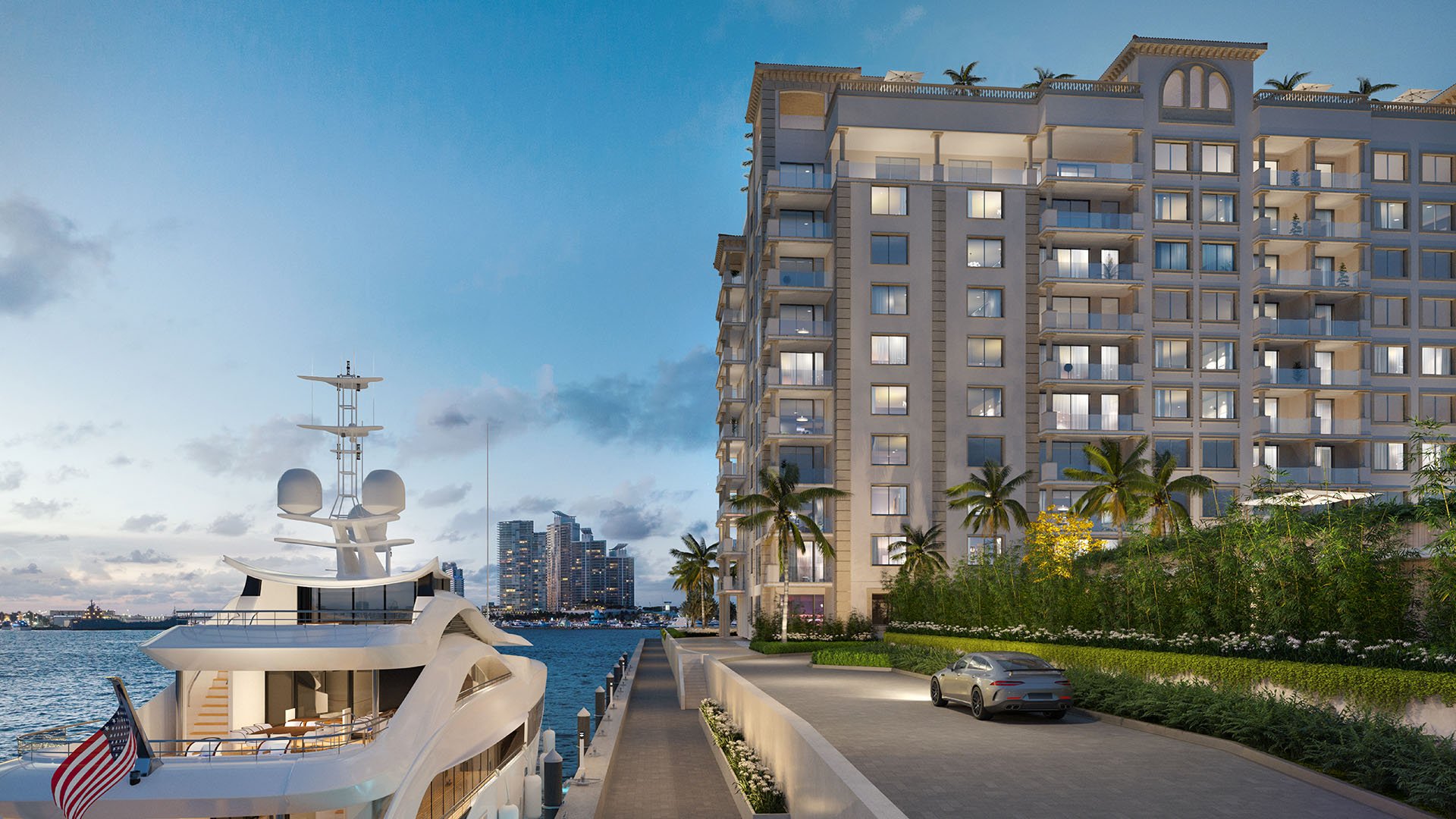
For a lock-and-leave owner, luxury is tested at the moment of return. A residence may have stood unoccupied for weeks or months, yet the arrival should feel calm, controlled and unmistakably residential. On Fisher Island, the private elevator is more than a convenience. It forms part of the privacy perimeter-a transition from the island’s controlled environment to the owner’s front door.
Palazzo del Sol and The Residences at Six Fisher Island interpret that transition through distinct expressions of luxury. Palazzo del Sol favors formality and concierge-supported access. Six Fisher presents a more seamless, technology-augmented sequence that culminates in a private in-residence vestibule. Both are designed to make re-entry feel composed after an extended absence.
At Palazzo del Sol, private elevator access is central to the resident experience, not an amenity added at the margins. Its role begins before the elevator doors open. The broader arrival sequence is formal, service-oriented and aligned with the property’s classical, European-influenced character.
That ceremony carries practical value. Concierge support can provide the oversight periodically occupied homes require, while the transition from common space to residence establishes a clear security perimeter. For buyers searching Palazzo del Sol Fisher Island, the relevant question is not simply whether the elevator is private. It is how effectively staff, controlled circulation and the residential entrance function as one continuous experience.
The result suits an owner who prefers hospitality to remain visible yet discreet. Returning home feels attended, while the final approach preserves the separation expected of an ultra-premium residence.
The Residences at Six Fisher Island positions the private elevator within an uninterrupted path from island access to the individual residence. The sequence culminates in a private in-residence vestibule, limiting exposure to shared residential circulation and creating a distinct transition zone before the home itself.
The approach is more technology-augmented than Palazzo del Sol’s traditional, concierge-led model. The distinction is conceptual, not a claim about any particular authentication method. Security, convenience and hospitality are intended to operate in concert, supporting frictionless access for owners whose time on the island may be periodic.
For a returning owner, the vestibule offers a useful pause between controlled building circulation and private space. It allows the threshold to feel less like a conventional condominium corridor and more like an integral room within the residence.
The contrast is as operational as it is stylistic. Palazzo del Sol uses private arrival to reinforce formality, service and a classical sense of procession. Six Fisher uses it to reduce friction and create a more direct transition into the home. Neither model treats the elevator as architectural hardware alone.
This is where second-home buyers should look beyond finishes. A private elevator has lasting value when it aligns with the building’s security posture, hospitality culture and daily management. The defining experience may occur after an absence: entering controlled circulation, reaching a private threshold and finding that the residence remains protected from unnecessary exposure.
The comparison also clarifies the role of human service. Palazzo del Sol’s concierge-supported sequence may appeal to owners who value a recognizable layer of personal oversight. Six Fisher may resonate with buyers who prefer service integrated into a smoother, technology-supported journey. The choice is less about which model is more luxurious than which one best matches an owner’s habits.
Prospective owners should experience the entire route rather than assess the elevator in isolation. Begin with island access, continue through the building’s controlled areas and finish at the residential threshold. Note where shared circulation ends, how intuitive the sequence feels and whether service is present where it adds confidence.
For lock-and-leave use, ask how the arrival model supports periodic occupancy and what oversight is available while the owner is away. Confirm specific service protocols and access technologies directly, as a general description of private access does not establish the details of day-to-day operation.
Privacy should also be evaluated as a series of layers. At Six Fisher, the private vestibule creates an additional buffer. At Palazzo del Sol, the formal common-to-private transition and concierge support define the perimeter. In both cases, the elevator is most compelling when it connects those layers without making the arrival feel institutional.
The island’s controlled, resort-style residential setting gives these arrival strategies added significance. Nearby residential references, including Palazzo della Luna and The Links Estates at Fisher Island, also help buyers consider how different forms of private living fit within the same exclusive context.
For MILLION readers, the decisive issue is alignment. Formal hospitality and seamless technology can both serve privacy, but each creates a different emotional rhythm. The better fit is the one that makes every return feel natural, protected and fully residential.
Why are private elevator arrivals important for lock-and-leave owners? They create a controlled transition into the residence and can make re-entry after an extended absence feel private and composed.
How does Palazzo del Sol approach private elevator access? It places private access within a formal, concierge-supported arrival sequence shaped by a classical expression of luxury.
What distinguishes the arrival at Six Fisher? The sequence emphasizes seamless, technology-augmented access and culminates in a private in-residence vestibule.
Does Six Fisher’s vestibule reduce exposure to shared circulation? Yes. The vestibule adds a transition zone between controlled building circulation and the residence.
Is Palazzo del Sol’s concierge relevant to periodic residents? Yes. Concierge support makes its arrival model pertinent to owners who value oversight while they are away.
Is one private-arrival model more secure than the other? The available facts support distinct approaches, not a definitive security ranking. Buyers should verify operational details directly.
Are specific access technologies disclosed for either project? The precise authentication methods are not specified here. Six Fisher is characterized more broadly as technology-augmented.
What should buyers inspect during a private tour? Follow the complete route from controlled access to the home, noting shared circulation, service touchpoints and the residential threshold.
Is lock-and-leave a named amenity package? It is better understood as an ownership use case supported by privacy, controlled access and property services.
Which approach may suit a service-oriented owner? Palazzo del Sol may suit buyers who prefer a formal, concierge-led sequence, while Six Fisher may appeal to those who favor a more seamless transition.
When you're ready to tour or underwrite the options, connect with MILLION.
If branded residences are on your mind — as a home or as an allocation — we would be glad to share what we are seeing, privately.
Begin a quiet conversation