At Glass House Boca Raton, the most successful finish strategy balances personal expression with construction discipline and future marketability. Buyers should separate coordinated developer packages from bespoke work, assess timing exposure by scope, and prioritize enduring material quality over highly permanent personalization.
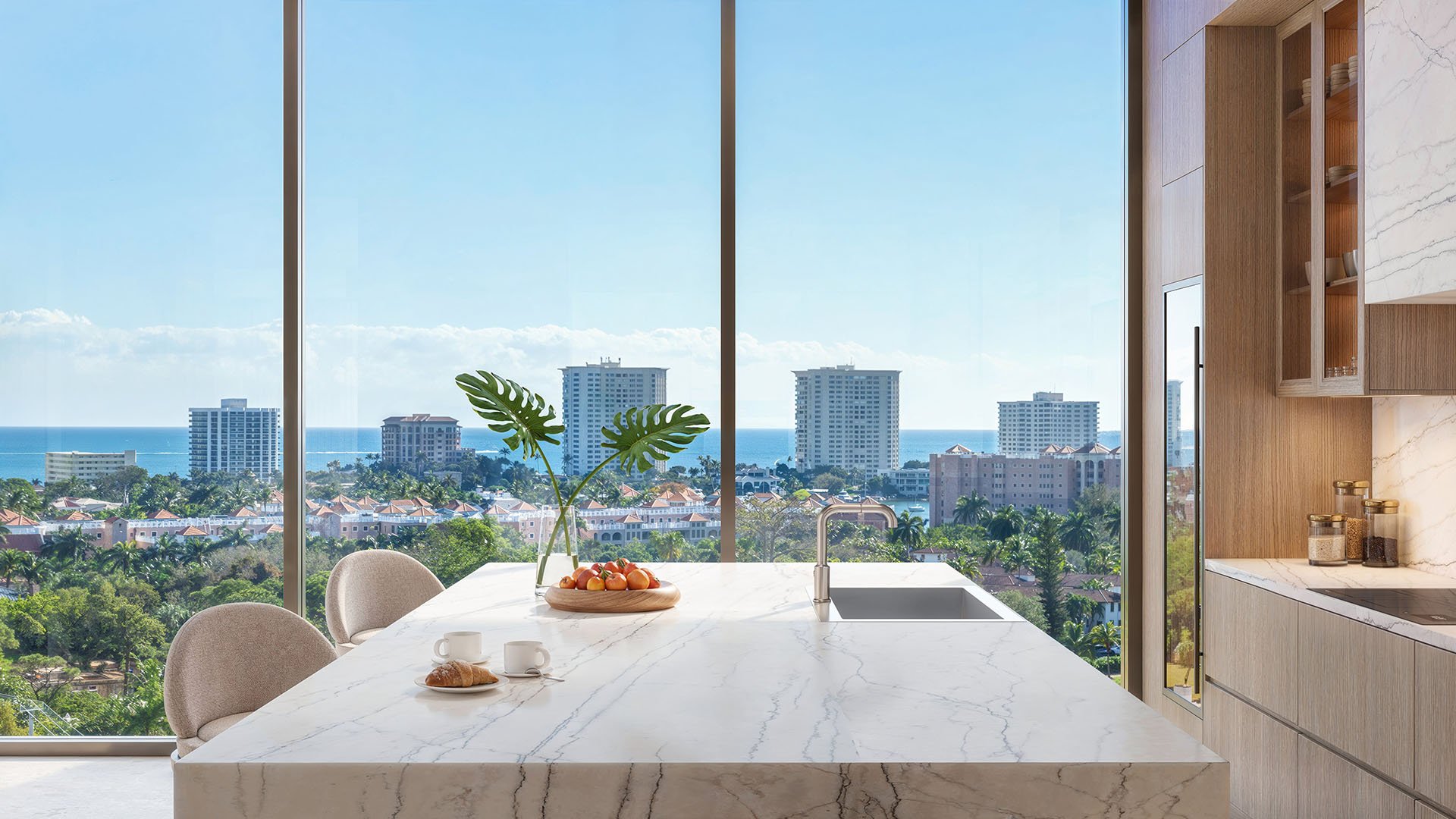
At Glass House Boca Raton, interior selections carry significance beyond personal taste. The boutique contemporary condominium is defined by glass-forward architecture, making the interplay of light, views, surfaces, cabinetry, and fixtures especially important to visual coherence.
For a buyer, the essential choice is not simply between one palette and another. It is between a coordinated developer finish package and a more bespoke program that may require additional review, procurement, installation, and trade coordination. Either approach can produce a refined home, but the implications for timing and eventual resale are materially different.
This is where design and architecture become part of the acquisition strategy. A residence can feel distinctly personal without introducing avoidable construction exposure or limiting its appeal to a future purchaser.
A standard developer package generally presents less scheduling risk because its materials, approvals, and installation sequence can be coordinated across multiple residences. The project team is more likely to be working within an established specification, a known vendor network, and a repeatable construction process.
That does not make a standard package inherently superior. It makes the timing profile easier to understand. For buyers who value predictability, simplicity, or a smoother path to walkthrough and punch-list completion, the coordinated option may be compelling.
Buyers evaluating the broader Boca Raton market can apply the same discipline when reviewing Alina Residences Boca Raton or The Residences at Mandarin Oriental Boca Raton. The relevant question is not whether customization exists in principle, but what the governing documents currently permit, when selections are due, and who bears the consequences of a change.
Cosmetic substitutions, such as a different color, fixture, or surface finish, are generally less complex than relocating walls or building systems. Layout revisions can affect multiple trades and may require additional design review. The more a request intersects with electrical, plumbing, mechanical, life-safety, or other coordinated work, the greater the potential timing exposure.
Late requests warrant particular caution. A change introduced after procurement or installation sequencing is underway may affect inspections, walkthroughs, punch-list completion, or closing readiness. Whether it changes a contractual closing obligation depends on the purchaser agreement and related project documents, so buyers should not rely on informal assumptions.
Long-lead imported cabinetry, stone, appliances, specialty lighting, and custom millwork can add another variable. Even when approved, a bespoke item may sit outside the developer's standard supply chain. Design ambition should therefore be paired with a realistic assessment of availability, fabrication, shipping, installation, and substitution rights.
Before authorizing custom work, a buyer should obtain the current finish schedule, purchaser agreement, change-order policy, construction timeline, and approved-vendor rules. Selection deadlines, design-review procedures, fees, cancellation provisions, and responsibility for delays should be confirmed in writing.
A focused diligence checklist should address:
Whether the requested change is cosmetic, structural, or systems-related.
Which party approves drawings, materials, vendors, and installation.
When deposits or change-order payments become nonrefundable.
What happens if a selected product becomes unavailable.
Whether substitutions require further buyer approval.
How unfinished or delayed custom work affects inspections and closing readiness.
This framework is particularly important in a pre-construction purchase, where a beautiful rendering does not replace operative contract language. The governing principle is straightforward: define the scope, deadlines, cost, and risk allocation before committing.
Neutral, contemporary finishes are generally compatible with glass-forward architecture and may appeal to a broader future audience. That does not require an anonymous interior. Texture, craftsmanship, stone quality, lighting, and proportion can create distinction while preserving a coherent architectural language.
Highly personalized colors, ornate built-ins, unconventional room configurations, or specialized lifestyle rooms may narrow the buyer pool. A future purchaser may appreciate the expense without sharing the original owner's priorities. Appraisers and buyers may also give greater weight to layout, views, floor level, and comparable sales than to the historical cost of upgrades.
For buyers also considering Mr. C Residences Boca Raton, the same resale lens is useful: assess whether an alteration improves daily function and perceived quality or merely reflects a preference the next owner may pay to reverse.
The most resilient approach often separates permanent investment from reversible expression. Upgraded surfaces, thoughtfully selected fixtures, and functional storage may elevate the everyday experience without overwhelming the architecture. Furnishings, decorative lighting, window treatments, art, and removable millwork can then provide individuality with greater flexibility.
A buyer should apply three filters. First, does the change improve function or material quality? Second, can it be executed within the project's approved process and timeline? Third, would a sophisticated future buyer understand its value without needing to share the same taste?
At Glass House Boca Raton, restraint can be a form of luxury. The objective is not to eliminate customization, but to direct it toward enduring quality, architectural clarity, and personal enjoyment while preserving optionality.
What is the principal advantage of a standard finish package? It generally carries less scheduling risk because materials, approvals, and installation can be coordinated across multiple residences.
Are cosmetic changes less risky than layout changes? Generally, yes. Color, fixture, and surface substitutions tend to require less coordination than relocated walls or building systems.
Can customization delay closing? Custom work may affect readiness milestones, but any effect on closing depends on the purchaser agreement and related project documents.
Which selections may have long lead times? Imported cabinetry, stone, appliances, specialty lighting, and custom millwork can introduce supply-chain risk beyond standard specifications.
What deadlines should a buyer confirm? Confirm selection cutoffs, design approvals, change-order dates, payment requirements, and any deadlines stated in the transaction documents.
Do upgrade costs translate directly into resale value? No. Future buyers and appraisers may prioritize layout, views, floor level, and comparable sales over the original upgrade expense.
Which finishes may appeal to a broader buyer pool? Neutral, contemporary finishes that complement the building's glass-forward architecture may support broader marketability.
What types of personalization are easier to reverse? Furnishings, decorative lighting, window treatments, art, and removable millwork generally preserve more flexibility than structural changes.
What should be reviewed before signing a change order? Review scope, drawings, price, fees, approval status, cancellation terms, product substitutions, deadlines, and responsibility for delays.
How can a buyer balance enjoyment with liquidity? Favor improvements to function and material quality, then express highly personal taste through elements that can be changed more easily.
If you'd like a private walkthrough and a curated shortlist, connect with MILLION.
If branded residences are on your mind — as a home or as an allocation — we would be glad to share what we are seeing, privately.
Begin a quiet conversation