Origin Bay Harbor Islands reflects a more selective ownership conversation in Bay Harbor Islands, where boutique scale, waterfront lifestyle, architecture, and interiors are increasingly evaluated as a single luxury proposition.
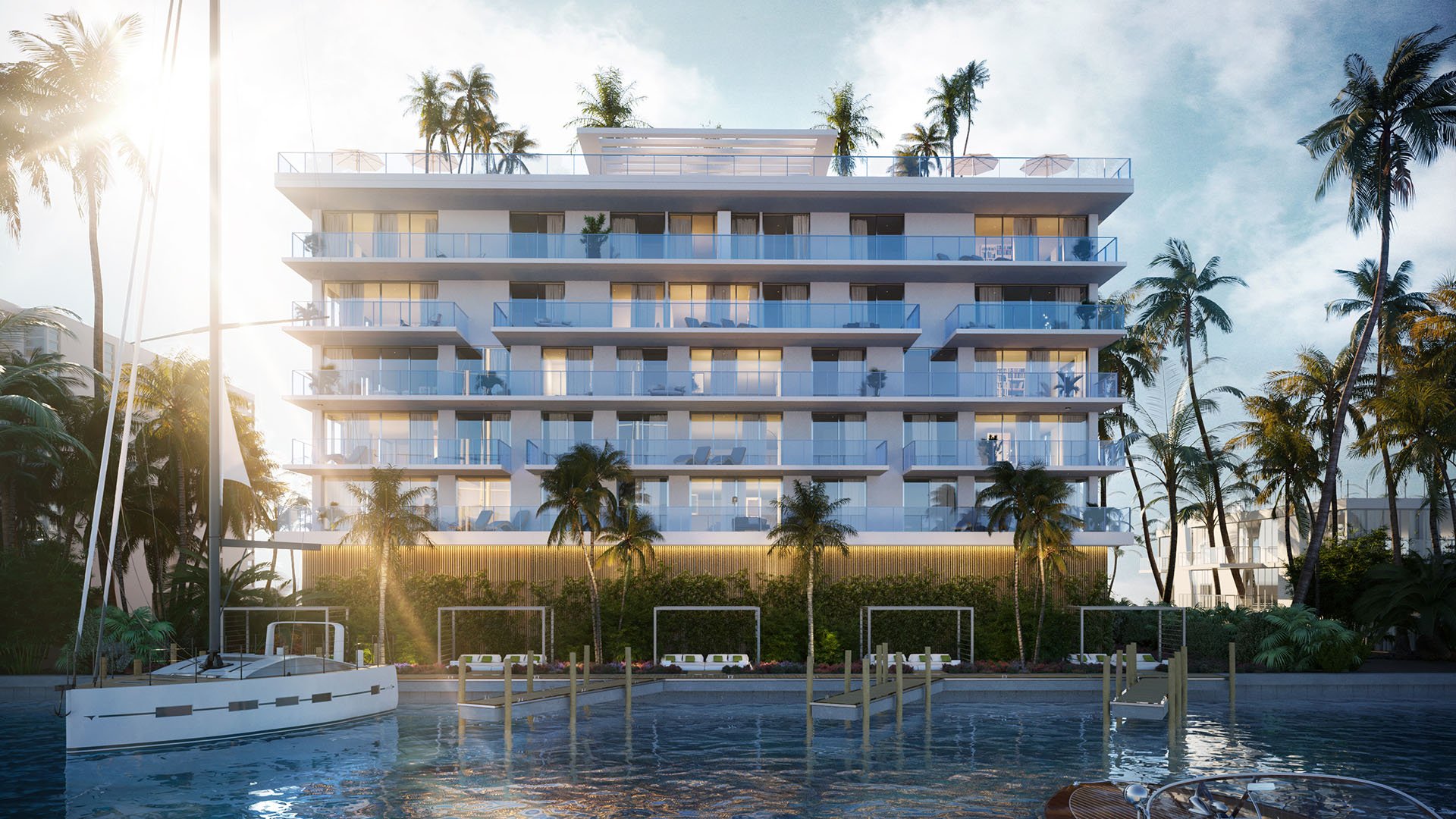
Origin Bay Harbor Islands arrives as the definition of luxury ownership in Bay Harbor Islands becomes more exacting. The conversation is no longer limited to residence size, amenity count, or a generalized waterfront address. For the most selective buyers, value is increasingly measured by how a building performs as a complete residential composition: architecture, interiors, scale, setting, and daily rhythm working in concert.
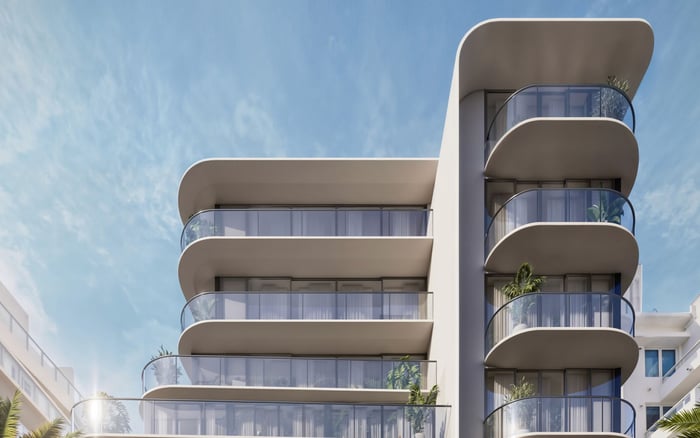
That is where Origin Bay Harbor Islands becomes relevant. It is positioned as a boutique luxury condominium within Bay Harbor Islands’ shift toward design-led ownership, a shift that favors buildings with a recognizable point of view over generic low-rise residential product. Its appeal is tied to design-forward ownership, where architecture and interiors are not decorative afterthoughts but central elements of the buyer proposition.
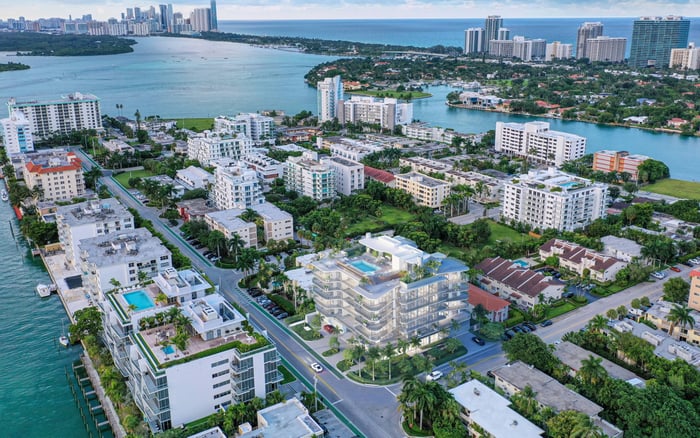
For affluent domestic and international buyers, that distinction matters because Bay Harbor Islands occupies a specific place on the South Florida map. It offers a quieter setting west of Bal Harbour while remaining close to high-end retail and dining. It also preserves a low-scale waterfront residential identity that differs sharply from Miami’s high-rise beachfront tower model.
Design-forward ownership is not simply a marketing phrase. In Bay Harbor Islands, it describes a more disciplined buyer mindset. The purchaser is not only asking how many features a building offers, but whether the building has coherence. Does the architecture suit the location? Do the interiors support a refined daily life? Does the scale create privacy rather than spectacle?
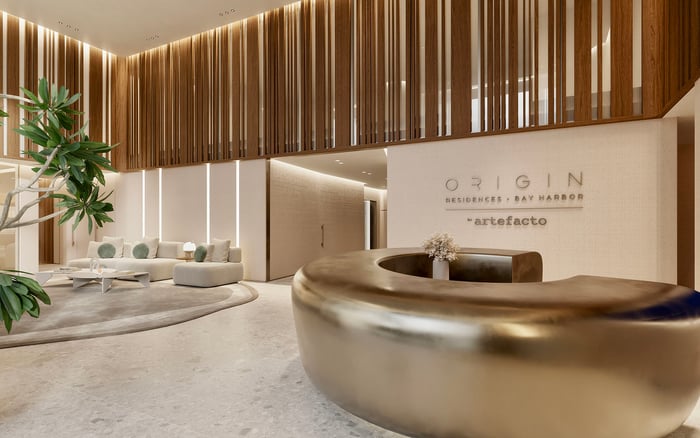
Origin fits that filter because it is framed for buyers who value design coherence over square footage or amenity volume alone. This is an important distinction in a market where luxury inventory can sometimes compete through accumulation: more space, more services, more visual drama. Origin’s positioning suggests another path: a curated residential experience that reads more like a private residential club than a large resort-style tower.
That club-like quality is especially suited to Bay Harbor Islands. The islands are not trying to imitate the energy of South Beach or the vertical intensity of Brickell. Their appeal is quieter, more residential, and more measured. In that context, a design-led boutique building can feel more aligned with place than a large-scale statement tower.
Boutique scale is one of the central value drivers in the Bay Harbor market because it changes the ownership experience. Smaller-feeling residential environments can create a stronger sense of discretion, familiarity, and calm. They also allow design decisions to carry more weight because the building is not relying on sheer size to make its case.
Origin’s boutique positioning places it within a category of island residences where privacy and design intent are part of the same story. That is why it can be discussed alongside nearby design-aware projects such as Onda Bay Harbor and Alana Bay Harbor Islands without reducing the comparison to a checklist. The more important question is not which building has the longest menu of amenities, but which building best reflects the way its buyer wants to live.
For some owners, that means a lock-and-leave residence with polish. For others, it means a primary home in a quieter enclave close to Bal Harbour’s shopping and dining ecosystem. In both cases, the common thread is a desire for an environment that feels intentionally composed.
Bay Harbor Islands gives Origin a location narrative that is naturally compatible with design-forward ownership. The area offers waterfront living, a lower-scale residential feel, and proximity to the luxury orbit of Bal Harbour. This combination helps explain why boutique, architecturally intentional buildings are gaining relevance there.
The location does not need to compete with Miami Beach on beachfront intensity or with Downtown Miami on skyline drama. Instead, it offers a different proposition: calm, access, and intimacy. That makes design more visible. In a quieter setting, architecture and interiors are not overwhelmed by scale or spectacle. They become the language of the home.
This is also why projects such as La Maré Bay Harbor Islands and The Well Bay Harbor Islands belong to the broader local conversation. Their presence reinforces the idea that Bay Harbor Islands is becoming a more curated residential market, where buyers expect buildings to express a clear lifestyle and design philosophy.
Origin Bay Harbor Islands can be read as both a response to current luxury-buyer demand and a signal of rising expectations for future boutique development. In the new-construction conversation across South Florida, recognizable design and branded or design-aware residences are increasingly used to differentiate boutique buildings. Origin’s relevance comes from combining lifestyle, architecture, interiors, and location into one ownership story.
This does not mean every buyer will make the same decision. Some will prioritize oceanfront height, others will want the energy of a larger tower, and others will seek the privacy of a single-family address. But for buyers drawn to Bay Harbor Islands, Origin reflects a very specific aspiration: to own in a setting where design is not merely visible, but central.
The most compelling part of that positioning is restraint. Origin does not have to present itself as Miami’s loudest residential statement. Its value lies in fitting the island’s quieter identity while raising expectations for what boutique condominium ownership can feel like.
What is the central appeal of Origin Bay Harbor Islands? Origin is positioned around boutique luxury, design coherence, waterfront lifestyle, and a quieter Bay Harbor Islands ownership experience.
What does design-forward ownership mean here? It means architecture and interiors are central to the residence’s value, not secondary to size or amenity count.
Why is Bay Harbor Islands suited to boutique condominiums? The area’s low-scale waterfront identity supports residences that feel private, composed, and less resort-like than larger towers.
How does Origin differ from Miami’s high-rise beachfront model? Origin aligns with a quieter island setting rather than the vertical scale and beachfront intensity associated with many Miami towers.
Who is the likely buyer for Origin? The project is positioned for affluent domestic and international buyers who treat design pedigree as a key selection criterion.
Is Origin more about amenities or overall design coherence? Its positioning emphasizes a coherent residential experience, where architecture, interiors, lifestyle, and location work together.
How does Bal Harbour proximity influence the appeal? Origin benefits from being west of Bal Harbour while remaining close to high-end retail, dining, and established luxury routines.
Why compare Origin with other Bay Harbor Islands projects? Nearby boutique projects help show how the islands are moving toward more curated, architecturally intentional residential offerings.
Does Origin reflect a broader South Florida trend? Yes. Boutique luxury buildings across the region increasingly use recognizable design and lifestyle positioning to stand apart.
What should buyers focus on when evaluating Origin? Buyers should consider whether its scale, design language, island setting, and private residential feel match their daily-life priorities.
If you'd like a private walkthrough and a curated shortlist, connect with MILLION.
If branded residences are on your mind — as a home or as an allocation — we would be glad to share what we are seeing, privately.
Begin a quiet conversation