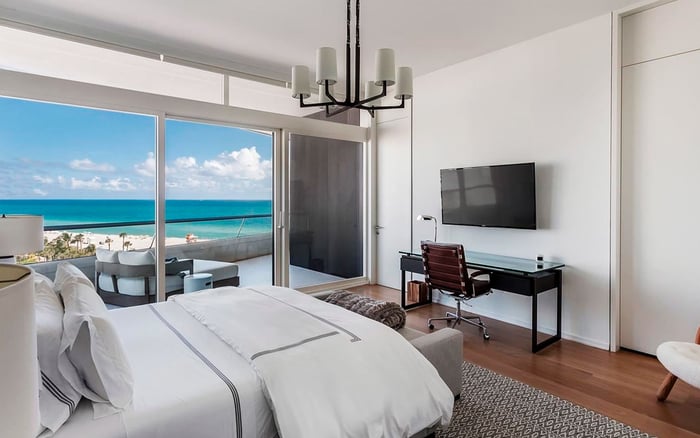
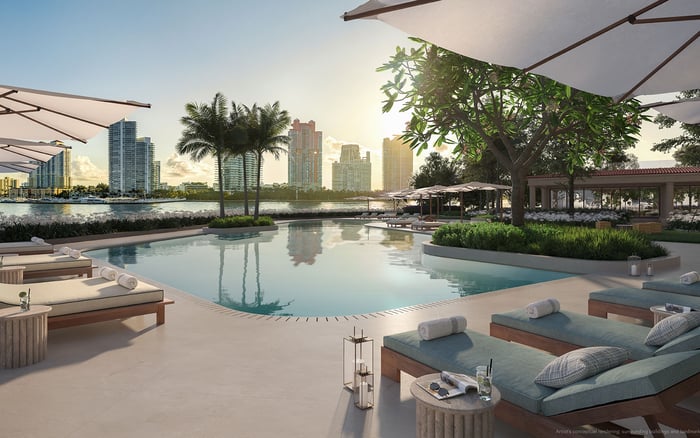
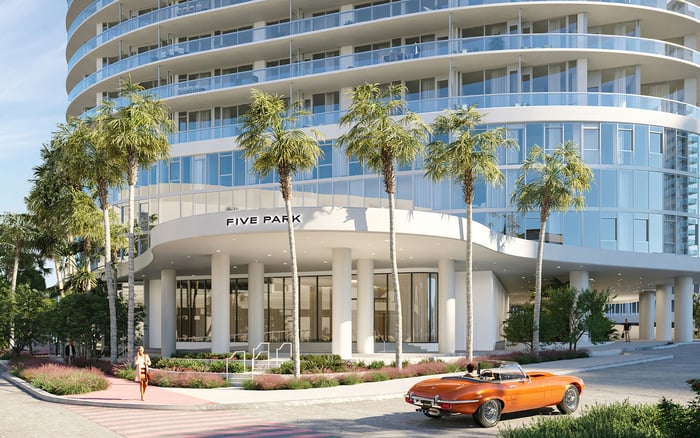
Neighboring development risk can quietly reshape the economics of a seasonal South Florida pied-à-terre. Beyond purchase price, buyers should consider view protection, privacy, noise, access, resale depth, and the timing of future construction around the building they choose.
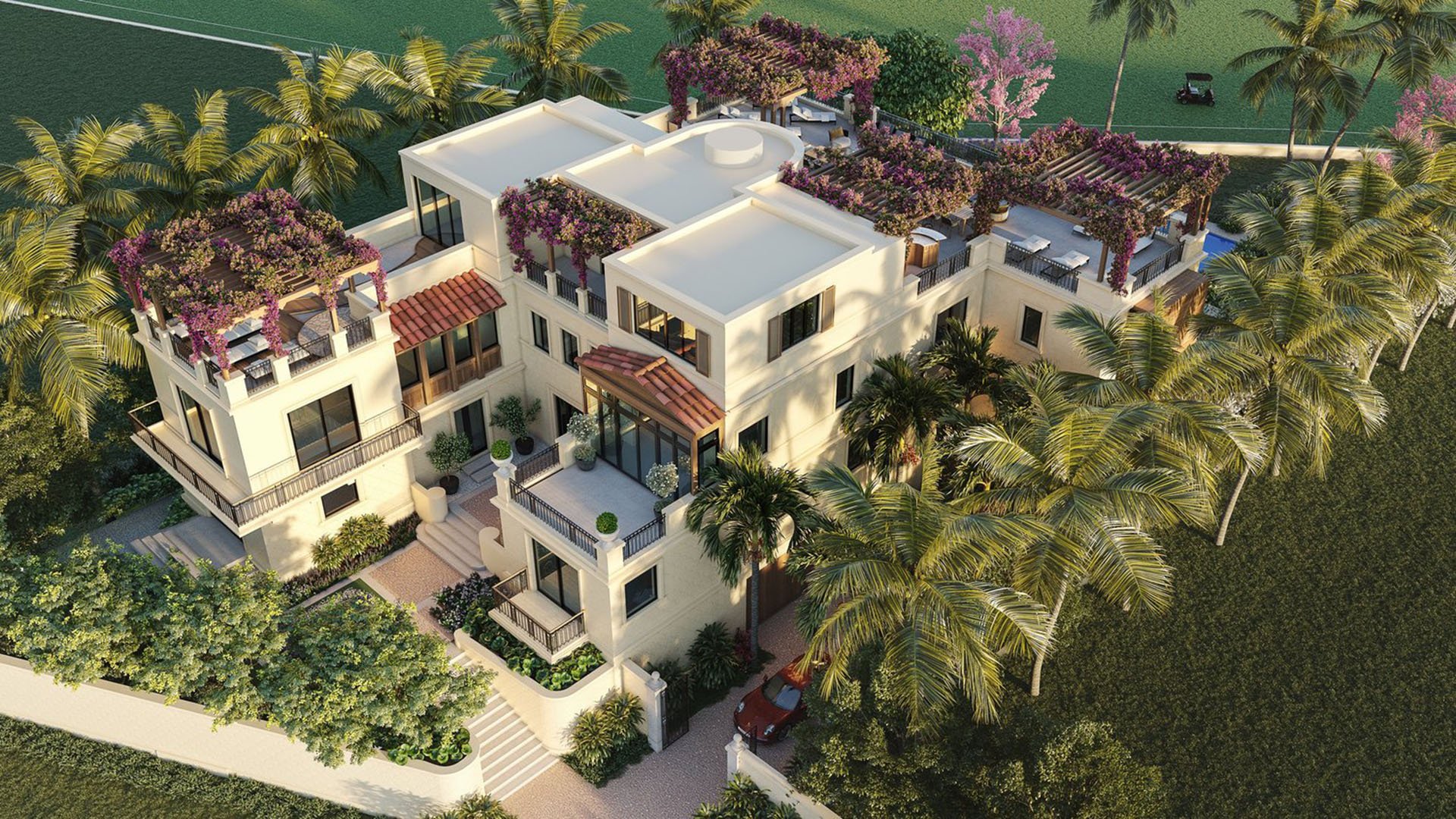
A South Florida seasonal pied-à-terre is often purchased for ease: a lock-and-leave residence, a familiar winter rhythm, a terrace for morning light, a lobby that knows your name, and a neighborhood that feels effortless from the season’s first arrival. Yet one of the most consequential costs may sit outside the unit, outside the building, and sometimes outside the buyer’s immediate field of view: neighboring development risk.
This is not merely the possibility that another tower, residence, hotel, marina, retail corridor, or civic improvement could emerge nearby. It is the way adjacent change can alter the lived value of a home. Privacy may feel different. A preferred sightline may become less rare. Access may feel less serene during construction. A quiet block may become more animated. None of these outcomes is inherently negative. In South Florida, thoughtful new development can strengthen a district. The buyer’s task is to separate neighborhood momentum from personal exposure.
That distinction matters most for a seasonal owner because use is compressed. If a full-time resident absorbs inconvenience across twelve months, a seasonal buyer may experience the most sensitive weeks of the year with greater intensity. The real cost of the pied-à-terre is therefore not only price, taxes, association costs, insurance, furnishings, and travel. It is also the risk-adjusted value of the specific experience being purchased.
In luxury real estate, the floor plan is only part of the asset. Buyers pay for air rights they do not own, light they cannot always protect, and privacy that may depend on what happens across the street, along the water, or on a neighboring parcel. A residence with a prized outlook can command a premium, but that premium should be tested against the surrounding development canvas.
In Brickell, for example, buyers comparing a polished urban lifestyle at The Residences at 1428 Brickell may look beyond the home itself and study the block experience, arrival sequence, sightlines, neighboring massing, and the future feel of the district. That does not diminish the appeal of vertical city living. It reframes the purchase as a layered decision: residence, building, street, and skyline.
The same principle applies along the coast. A buyer considering Miami Beach may be drawn to low-density elegance, beach proximity, and architectural discretion. At The Perigon Miami Beach, the larger question for any seasonal purchaser is how the surrounding setting supports the desired daily ritual: ocean mornings, private evenings, guest arrivals, and an easy return to the airport or marina. Neighboring risk is less about fear than control.
Development risk affects cost in ways that do not always appear on a closing statement. First, it can influence the value of the premium already paid. If a buyer pays more for a view, corner exposure, or a sense of openness, the durability of that attribute matters. Second, it can influence liquidity. When it is time to sell, buyers may discount uncertainty, even if the residence itself is exceptional. Third, it can influence rental optionality, should the owner ever choose to lease seasonally or longer term within applicable rules. A beautiful home with temporary disruption next door may require more careful timing and pricing.
There is also a psychological cost. A pied-à-terre is meant to reduce friction. If every arrival includes concern about noise, cranes, detours, or changed outlooks, the emotional dividend of the home narrows. Ultra-premium buyers often have choices across markets, and they tend to reward certainty. A residence that protects its core lifestyle proposition can feel more valuable, even if another option appears more dramatic at first glance.
This is where investment discipline becomes personal. The best purchase is not always the one with the boldest view today. It may be the one whose value proposition remains coherent under several future neighborhood scenarios.
Luxury buyers are naturally drawn to materiality: stone, millwork, glazing, ceiling heights, appliance packages, wellness programming, and service culture. Those details matter. But before finishes, read the neighborhood like a site plan. What surrounds the building? Which exposures matter most? Are the most valuable rooms oriented toward a protected condition, an active corridor, a low-scale edge, or a parcel that could evolve? How would the residence feel if activity increased nearby?
In Sunny Isles Beach, the vertical oceanfront landscape rewards buyers who understand not just elevation, but adjacency. A residence at St. Regis® Residences Sunny Isles belongs to a market where views, arrival, beach experience, and neighboring silhouettes all inform value. The prudent buyer asks not only, “What do I see?” but also, “What could someone else see of me?” Privacy is a luxury feature, and it can be changed by context.
Waterfront considerations add another layer. Waterfront is not a single category. Oceanfront, bayfront, riverfront, Intracoastal, marina-adjacent, and lakefront settings each carry different forms of exposure. The right diligence considers not only beauty, but orientation, glare, boat activity, public edges, service access, and the relationship between the residence and future improvements nearby.
The seasonal buyer should think in calendar terms. A full-time owner may tolerate a changing neighborhood because daily life offers offsetting benefits. A seasonal owner may arrive precisely when demand, traffic, events, and construction activity are most noticeable. If the home is intended for holidays, visiting family, art week, boating weekends, golf trips, or a winter base, the timing of neighboring activity can matter as much as the activity itself.
West Palm Beach illustrates the importance of rhythm. A buyer looking at Alba West Palm Beach may be evaluating not only residence design, but also how the broader neighborhood supports seasonal routines: dining, water access, cultural plans, family visits, and a comfortable cadence between privacy and convenience. The real question is whether the neighborhood’s evolution aligns with the owner’s intended use.
For this reason, a serious buyer should model three experiences: the best-case season, the ordinary season, and the interrupted season. If the home still makes sense under all three, the purchase is stronger.
Before contracting, buyers should ask direct, practical questions. Which neighboring parcels are vacant, underused, recently improved, or visibly transitional? Which exposures carry the greatest premium? Which rooms would be most affected by changed light, sound, or privacy? How dependent is the purchase thesis on one view? Does the association have reserves, rules, and governance that support a well-kept building through a changing neighborhood? How would a future buyer perceive the same risks?
None of these questions requires pessimism. They require elegance of thought. In South Florida’s luxury market, the finest purchases often combine desire with restraint. A residence can be seductive and still require scrutiny. A neighborhood can be rising and still introduce friction. A view can be magnificent and still need a contingency plan.
The seasonal pied-à-terre is ultimately a lifestyle instrument. It should perform beautifully when the owner arrives, rests, hosts, leaves, and returns. Neighboring development risk does not negate that dream. It clarifies the price of protecting it.
Why does neighboring development matter for a seasonal pied-à-terre? Because seasonal owners use the home during concentrated periods, any disruption or changed outlook can feel more significant.
Is all nearby development a negative for value? No. Thoughtful development can improve a district, but buyers should separate neighborhood improvement from unit-specific exposure.
What is the most vulnerable premium in a luxury condo purchase? A view premium can be vulnerable if it depends on neighboring parcels or sightlines outside the buyer’s control.
Should I avoid buildings near active growth corridors? Not necessarily. Growth can be attractive, but the residence should still work if the surrounding context changes.
How should I compare two similar pied-à-terre options? Compare privacy, light, access, construction exposure, resale depth, and how each home performs during your intended season.
Does a higher floor always reduce neighboring development risk? It may help with some exposures, but height alone does not solve privacy, noise, access, or resale uncertainty.
Why is exit strategy important for a second home? A seasonal home may be sold when lifestyle needs change, so future buyer perception matters from the start.
Can amenities offset neighboring development risk? Amenities can strengthen daily enjoyment, but they do not fully replace protected light, privacy, and a calm arrival experience.
What should I ask before making an offer? Ask how surrounding parcels could evolve, which exposures carry premiums, and how the home would feel during disruption.
What is the best mindset for buying in a changing neighborhood? Buy for the lifestyle you want, but price the purchase as if the neighborhood will continue to evolve.
If you'd like a private walkthrough and a curated shortlist, connect with MILLION.
If branded residences are on your mind — as a home or as an allocation — we would be glad to share what we are seeing, privately.
Begin a quiet conversation