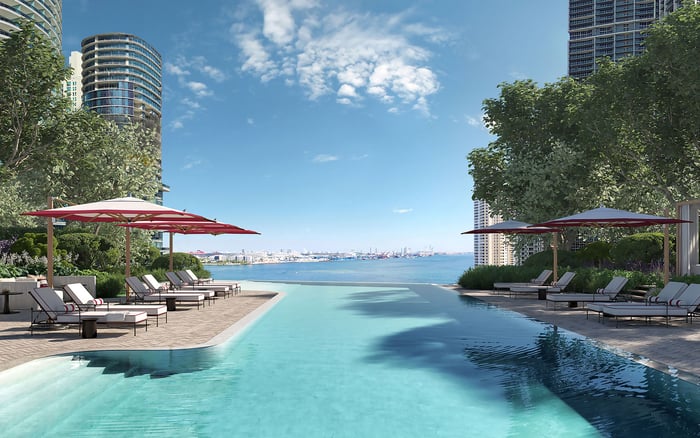
Miami Grand Prix interest can sharpen the distinction between flexible occupancy and private residential calm. Luxury buyers should evaluate rental rules, guest policies, enforcement, costs, and exit positioning before choosing a South Florida residence.

The Miami Grand Prix brings a defining ownership question into sharper focus: should a luxury residence preserve maximum personal flexibility or protect a quieter, more controlled residential environment? F1 interest may begin with a glamorous weekend, but sophisticated buyers look beyond a single stay. They consider how a property will function throughout the year, including family visits, spontaneous trips, extended absences, and eventual resale.
That distinction matters because short-stay flexibility does not automatically equate to superior value. For one buyer, the ability to accommodate frequent turnover may support an investment thesis. For another, restrictions may signal privacy, consistency, and a stronger sense of home. The useful question is not whether restrictions are good or bad, but whether the building’s operating model matches the owner’s intended use.
A high-profile weekend can make the potential utility of a South Florida home feel immediate. It also reveals the practical friction that may accompany temporary occupancy: arrival coordination, guest authorization, parking, deliveries, amenity access, and building security. Buyers should therefore treat short-term rental rules as part of the residence’s core architecture, not as a minor provision to review after negotiating price.
Restrictions can influence several dimensions of ownership. They may affect how easily friends, family, staff, or paying occupants can use the home. They can shape the atmosphere in elevators, pools, lobbies, and shared spaces. They may also determine the range of future purchasers who will find the property suitable. None of these considerations should be evaluated in isolation.
The most desirable arrangement is the one that is legible. Clear rules, consistent administration, and an ownership plan structured around those rules carry more value than assumptions drawn from neighborhood reputation or marketing language.
Miami offers buyers several ways to frame the same decision. A residence intended as an active urban base may require a different restriction profile from an oceanfront retreat or primary home. In Brickell, a buyer comparing 888 Brickell by Dolce & Gabbana with The Residences at 1428 Brickell should not assume that two properties in the same district offer interchangeable occupancy rights.
The same discipline applies in Miami Beach. A purchaser considering The Perigon Miami Beach should begin with the intended use: a private seasonal residence, occasional city base, family gathering place, or income-oriented holding. That answer should direct the document review and shape the questions asked before contract.
Grand Prix enthusiasm can make convenience especially compelling, yet ownership satisfaction often depends on what happens when the event calendar is quiet. Buyers sensitive to privacy may prefer fewer unfamiliar occupants and more predictable common areas. Those prioritizing flexibility may accept additional procedures or a more transient rhythm. Neither preference is inherently more luxurious. Precision of fit is the luxury.
Palm Beach invites a more deliberate version of the same analysis. A second-home buyer may place greater weight on continuity, discretion, and the confidence that a residence will feel familiar upon every arrival. Restrictions can support that objective when aligned with the owner’s lifestyle, but may feel limiting if the purchaser expects frequent guest use or rental optionality.
When considering Palm Beach Residences, buyers should not infer policy from branding or location. They should verify the governing documents, understand approval procedures, and model the owner’s realistic calendar. A home used for several extended periods requires a different framework from one expected to accommodate a rotating schedule of visitors.
For buyers comparing Miami and Palm Beach, the decision should not become a simplistic contest between energy and serenity. Both markets can serve highly private or highly active ownership patterns. Building-level rules, combined with the buyer’s habits, determine the better match.
A polished residence is only one layer of the acquisition. The declaration, bylaws, rules, application procedures, and management practices form the operating system behind daily life. Counsel should review the current documents and explain how the relevant provisions interact.
Begin with minimum-stay requirements, the number of permitted rental periods, approval timelines, fees, deposits, and renewal procedures. Then examine guest registration, family occupancy, service-provider access, parking rights, pet rules, and amenity privileges. Ask how violations are handled and whether enforcement has been consistent. A permissive clause may offer little practical flexibility if approvals are slow or operational requirements burdensome.
Buyers should also distinguish owner use from rental use. A building may differentiate among an owner’s guests, unaccompanied visitors, family members, and tenants. The contract and diligence period are the appropriate moments to clarify those distinctions rather than rely on an informal interpretation.
A useful shortlist begins with a written ownership brief. Identify expected nights in residence, likely trip duration, guest frequency, staffing needs, pet requirements, vehicle arrangements, and the importance of rental income. Then rank privacy, flexibility, service, location, and carrying-cost tolerance.
Next, stress-test the brief against three scenarios: a major event weekend, a normal month, and an extended absence. A property that performs beautifully in all three is more compelling than one selected around a single burst of demand. This method also helps distinguish genuine optionality from flexibility unlikely to be used.
Finally, consider exit positioning. A restrictive building may appeal to purchasers seeking residential calm, while a more flexible property may attract buyers who value optional use. The relevant issue is whether the policy is understandable, sufficiently durable for the intended hold, and compatible with the audience likely to consider the residence later.
The central principle is straightforward: event-driven attention should prompt better diligence, not hurried conclusions. Buyers can score each candidate across five categories: personal use, guest access, rental flexibility, privacy, and administration. Any material mismatch should be resolved before price dominates the discussion.
The Miami Grand Prix may make short stays feel especially valuable, but the best acquisition is designed around the owner’s broader life. The right restriction profile protects what the buyer values most, whether freedom of use, a composed residential atmosphere, or a carefully balanced combination of both.
Do Miami Grand Prix weekends make short-stay flexibility essential? No. They can highlight its potential utility, but the correct choice depends on the owner’s year-round plans.
Are stricter rental rules always better for privacy? Not automatically. Buyers should evaluate both the written restrictions and how access and enforcement operate in practice.
Should buyers rely on a sales presentation for rental policy details? No. Governing documents and professional legal review should determine what is permitted.
What is the first restriction to examine? Start with minimum-stay periods and permitted rental frequency, then review approval procedures and costs.
Can family and guests be treated differently from tenants? They may be. Buyers should clarify each occupancy category and its registration requirements.
Does the same neighborhood guarantee similar rental rules? No. Policies can differ at the building level, so each property requires separate diligence.
How should an event-focused buyer test a property? Model event weekends, ordinary stays, and extended absences to determine whether the rules support every scenario.
Can restrictions affect future resale positioning? They can influence which future buyers consider the residence compatible with their preferred ownership style.
What should a buyer ask management? Ask about approvals, guest access, fees, deposits, enforcement, parking, and amenity use.
Is maximum flexibility always the most luxurious choice? No. Luxury can mean optionality, but it can also mean privacy, predictability, and a composed sense of home.
When you're ready to tour or underwrite the options, connect with MILLION.
If branded residences are on your mind — as a home or as an allocation — we would be glad to share what we are seeing, privately.
Begin a quiet conversation