Major collector fairs do more than fill calendars. In Miami Beach, they sharpen what sophisticated buyers expect from residences: art-ready walls, nuanced lighting, secure arrivals, generous entertaining space, and a setting that feels calm after a week of public spectacle.
Major collector fairs have a way of clarifying taste. In Miami Beach, they turn a cultural week into a practical lens for how buyers want to live. A residence is no longer judged only by its view, finish package, or address. For the collector-minded buyer, the more revealing question is whether a home can absorb art, conversation, privacy, and daily ease without strain.
The Art-basel effect is not simply about owning more wall space. It is about how a residence performs during the most socially charged moments of the year, and during the quieter months that follow. A home must receive guests gracefully, protect important works, and offer retreat when the city becomes a stage. In buyer shorthand, Miami Beach remains the setting where cultural proximity and resort calm must coexist.
That shift explains why projects such as The Perigon Miami Beach resonate with clients who think beyond square footage. The appeal lies in how a residence can support an edited life: art, ocean, entertaining, wellness, and discretion, arranged with the discipline of a private gallery and the warmth of a home.
A decade ago, the conversation around premium Miami Beach residences often began with the panorama. Today, the view still matters, but it is only one part of a more nuanced hierarchy. Buyers who move through collector fairs spend days evaluating scale, proportion, texture, lighting, and negative space. They return to residences with sharper eyes.
That makes uninterrupted walls valuable. So are clean sightlines, restrained material palettes, and rooms that do not compete with the objects they hold. A highly decorative interior can feel complete, but a collector’s home must also feel adaptable. The architecture should create moments for art without turning every surface into a display.
Lighting becomes a defining question. Natural light is prized, but it needs control. Evening illumination should flatter both people and objects. Buyers increasingly ask whether a living room can transition from morning calm to dinner, then to an intimate salon where a single piece can command attention. This is why design restraint feels luxurious in Miami Beach: it gives owners room to bring their own cultural identity into the residence.
Collector fairs heighten the value of hospitality. The best homes do not merely host. They choreograph arrival, conversation, service, and departure. A guest should move from elevator or entry to living room, terrace, dining area, and powder room without crossing into the private life of the household. That separation of public and private zones is now a serious priority.
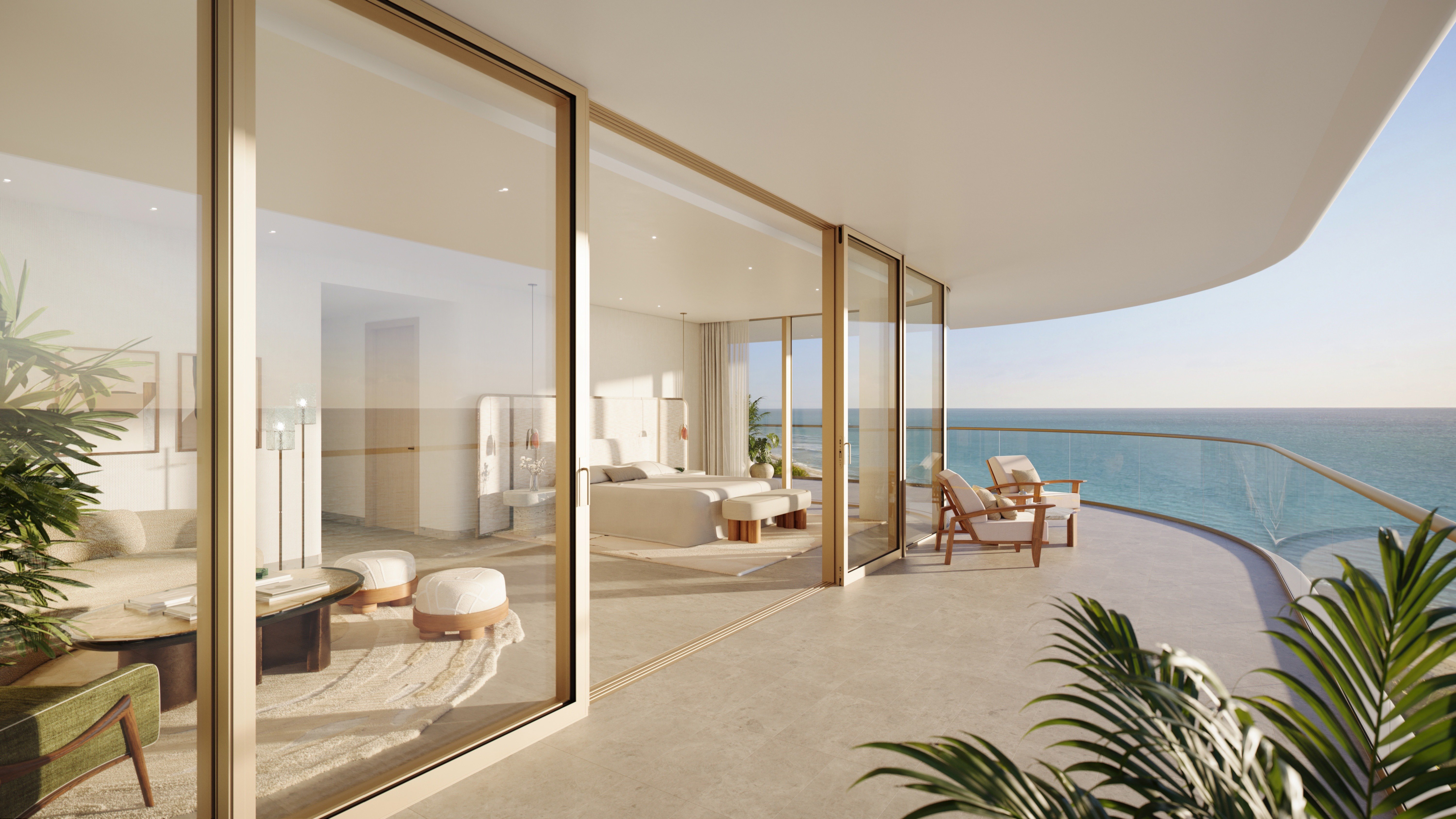
In this context, a terrace is more than an outdoor amenity. It is an extension of the reception room, a place where the evening opens to water and skyline while interiors remain composed. The ideal terrace supports conversation without sacrificing intimacy. It is large enough to gather, but not so exposed that it feels performative.
Residences such as Shore Club Private Collections Miami Beach sit squarely in this conversation because the buyer is thinking about lifestyle as sequence. Where do guests arrive? Where does a cocktail feel natural? Where can the host step away? How does the home feel the next morning, after the city’s social energy has receded?
For buyers with meaningful collections, privacy is not a mood. It is infrastructure. Major fair weeks bring visibility, and visibility can change how owners evaluate access, staff circulation, parking, building discretion, and the ability to receive deliveries or advisors without unnecessary exposure.
Security does not have to feel severe. In the luxury context, the best security is almost invisible. It appears through controlled arrival, thoughtful service access, attentive building operations, and layouts that allow owners to decide how much of the home is shared. A collector may enjoy conversation, but the collection itself requires boundaries.
This is also where boutique scale can become appealing. Some buyers favor the energy of a landmark building. Others prefer a quieter residential experience where the staff knows the household and the pace feels more residential than theatrical. The essential point is not size, but fit. A home should protect the owner’s rhythm as carefully as it protects the objects within it.
During major fairs, Miami Beach can feel intensely public. That is precisely why oceanfront living retains its power. The water provides a reset. It gives the eye distance after days of visual density. For collectors, this matters. A residence should be able to hold important art, but it should also offer a counterpoint to it.
The most compelling oceanfront homes balance sensory richness with restraint. Materials should be tactile but not loud. Rooms should feel open but not exposed. Views should be framed rather than overplayed. A buyer may come for the cultural calendar, yet the lasting value is often the daily quiet of waking up near the water.
At 57 Ocean Miami Beach, the broader appeal for this audience is easy to understand: a beachfront address can make wellness, privacy, and aesthetic living feel connected. For the collector, the beach is not merely a backdrop. It is part of the composition of life.
Collector fair culture rewards discernment. Buyers become more comfortable asking precise questions about craftsmanship, service, atmosphere, and long-term design relevance. This has strengthened interest in residences where architecture, interiors, and hospitality are presented as a coherent proposition rather than separate features.
The most sophisticated buyers are not chasing novelty for its own sake. They are looking for confidence. Does the residence feel current without being trendy? Can it support art that changes over time? Will the building experience remain polished outside the social season? Is the service culture discreet rather than performative?
That is why established hospitality and design cues can help, provided they do not overwhelm the private nature of home. Setai Residences Miami Beach, for instance, speaks to a buyer who values atmosphere as much as amenity. The point is not branding alone. The point is whether the brand language supports quiet, consistent living.
For Miami Beach buyers influenced by the collector fair circuit, the strongest residence is one that can evolve. Art walls, lighting, storage, service access, climate comfort, privacy, and terrace usability should be evaluated together. A beautiful room that cannot host art well may disappoint. A dramatic terrace without enough privacy may be used less than expected. A prestigious address that feels chaotic during peak weeks may not suit a discreet household.
The best approach is to walk a residence twice in the mind: once during a lively fair-week evening, and once on an ordinary weekday morning. If the home works in both scenarios, it has the right kind of depth. It can be social without being exposed, serene without being sterile, and expressive without depending on spectacle.
In Miami Beach, collector culture is not a temporary influence. It is part of the city’s luxury identity. The buyers who understand this are not simply purchasing a place near the action. They are acquiring a private stage for art, conversation, recovery, and belonging.
Why do collector fairs influence Miami Beach home priorities? They sharpen attention to display, lighting, privacy, and hosting. Buyers begin judging residences by how well they support art-centered living.
Is wall space really that important for luxury buyers? For collectors, yes. Clean, well-proportioned walls can be as meaningful as views because they allow important works to breathe.
What kind of lighting should an art-focused residence have? Buyers typically value layered lighting that can shift from daylight control to evening warmth. Flexibility matters more than theatrical brightness.
Does oceanfront living conflict with collecting art? Not necessarily. The key is a residence that balances views with controlled interiors, thoughtful materials, and a calm atmosphere.
Why is a terrace important during fair season? A terrace expands the social life of the home. It gives guests an open-air setting while allowing interiors to remain composed.
Are boutique buildings better for collectors? They can be, especially for buyers who value discretion and a quieter daily rhythm. The right choice depends on service expectations and privacy needs.
How should buyers evaluate entertaining flow? They should consider arrival, guest movement, service access, and separation from bedrooms. The best homes make hosting feel effortless.
Do branded residences appeal to collector-minded buyers? They can, when the brand supports design quality, service consistency, and atmosphere. Branding alone is not enough.
What is the biggest mistake buyers make after fair week? They may overvalue drama and undervalue daily livability. A residence should feel compelling in both social and quiet moments.
Should art storage be considered before purchasing? Yes. Even if most works are displayed, buyers should think about rotation, deliveries, packing, and secure back-of-house movement.
When you're ready to tour or underwrite the options, connect with MILLION.
If branded residences are on your mind — as a home or as an allocation — we would be glad to share what we are seeing, privately.
Begin a quiet conversation