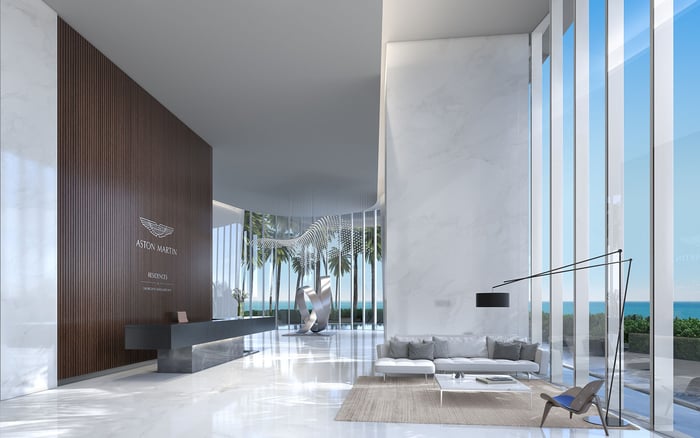
At Aston Martin Residences, line selection should focus on the permanent qualities and daily experience of a residence. Buyers can evaluate orientation, elevation, noise, exposure, privacy, and comparable units before translating strengths and compromises into an offer.

At Aston Martin Residences Downtown Miami, buyers should treat each residence as a distinct physical position rather than assuming that homes within the same building offer an equivalent experience. Square footage, finishes, and asking price matter, but they do not fully describe how orientation, elevation, neighboring sightlines, and terrace placement affect daily life.
Start by identifying the line and mapping how its principal rooms relate to the exterior. A view promoted in a listing may feel different from the sofa, dining table, or bed than it does while standing directly at the glass. Inspect the outlook from both seated and standing positions, then review the full lateral sightline from the terrace.
The objective is not simply to decide whether a residence has an appealing view. It is to determine which rooms benefit, whether the outlook feels open in normal use, and whether any obstruction or reciprocal visibility is likely to remain.
Orientation and elevation should be analyzed independently. Orientation shapes the direction and composition of the outlook, while elevation may influence foreground, distance, privacy, and exposure. A higher floor should not receive an automatic premium without considering whether it improves the qualities that matter to the buyer.
Compare candidates with a consistent inspection routine. Stand and sit in the living area, primary bedroom, and dining space. Examine the view straight ahead and at both angles. Note whether nearby terraces or windows enter the sightline and whether the building’s geometry changes the sense of openness.
Personal preference remains important. Some buyers may favor visual proximity to activity, while others may prioritize distance, privacy, or a broader outlook. The offer should reflect the buyer’s intended use rather than a generalized assumption that one elevation or direction is always superior.
Noise, glare, wind, and privacy require direct observation. Visit a serious candidate at more than one time of day when possible. Spend part of each inspection with exterior doors closed and part with them open, listening from bedrooms as well as entertaining areas.
Separate occasional sounds from persistent background noise. Do not assume that elevation alone resolves acoustic concerns; the practical question is what can be heard inside the specific residence and whether it affects the rooms used for sleeping, working, or relaxing.
Observe direct light and reflected brightness at the glass. Consider whether glare affects television placement, work areas, dining spaces, or bedrooms. On the terrace, evaluate comfort and usability rather than focusing only on the outlook.
Other Downtown Miami options, including Waldorf Astoria Residences Downtown Miami, can help a buyer clarify preferences. That comparison should define priorities, not replace a careful inspection of the target residence.
Privacy has several dimensions: direct views from nearby residences, reciprocal visibility across terraces, exposure from surrounding buildings, and the relationship between the entry and primary living spaces. An evening inspection can also reveal how interior lighting changes perceived visibility.
Distinguish permanent conditions from correctable interior issues. Window treatments may reduce glare or visibility, and furniture placement may improve how a room engages with its outlook. Those measures cannot change orientation, relocate a neighboring terrace, or remove an obstruction.
Durable advantages deserve greater weight because they may influence both present enjoyment and a future buyer’s assessment. The same discipline applies when comparing Aston Martin Residences with Baccarat Residences Brickell: each residence must be judged by its own position, sightlines, privacy, and usability.
Begin with the closest available comparison. Prioritize the same line and orientation, then consider a similar elevation, layout, interior condition, and terrace configuration. Broader price-per-square-foot figures can provide context, but they should not replace matched analysis.
Build the offer as a sequence of reasoned adjustments. Consider whether differences in openness, primary-room views, privacy, noise, and outdoor usability are meaningful to the buyer. Avoid counting the same compromise twice when it may already be reflected in the comparison.
Permanent strengths generally merit more emphasis than cosmetic upgrades. Move-in condition may reduce the effort required after closing, but it should not distract from an inferior position within the building. A disciplined offer pays for qualities the buyer values and accounts for compromises that cannot be readily corrected.
What should be compared first between two residences? Start with line and orientation, then assess elevation, layout, and the relationship between principal rooms and the exterior.
Is the highest available floor automatically the best choice? No. The preferred elevation depends on the buyer’s priorities for outlook, privacy, noise, and terrace comfort.
How should a buyer evaluate a claimed view? Inspect it from seated and standing positions in the rooms that will be used most often, then review the lateral sightlines from the terrace.
Why should a residence be visited more than once? Conditions such as sound, glare, and perceived privacy can change with the time of day.
How should noise be tested during an inspection? Listen in bedrooms and living areas with exterior doors both open and closed, and distinguish intermittent sounds from persistent background noise.
What should buyers examine on a terrace? Review wind, visibility, neighboring sightlines, and whether the space feels comfortable for its intended use.
Can window treatments resolve privacy concerns? They may reduce visibility or glare, but they cannot change direct sightlines, orientation, or neighboring terrace placement.
What makes a comparable residence useful? The strongest comparison shares the same line or orientation and is also similar in elevation, layout, condition, and outdoor configuration.
Should price per square foot determine the offer? No. It is a reference point that may not capture meaningful differences in outlook, noise, privacy, or terrace usability.
Which qualities deserve the greatest weight in an offer? Give the most weight to scarce, lasting qualities that align with the buyer’s priorities and cannot be easily changed.
For a tailored shortlist and next-step guidance, connect with MILLION.
If branded residences are on your mind — as a home or as an allocation — we would be glad to share what we are seeing, privately.
Begin a quiet conversation