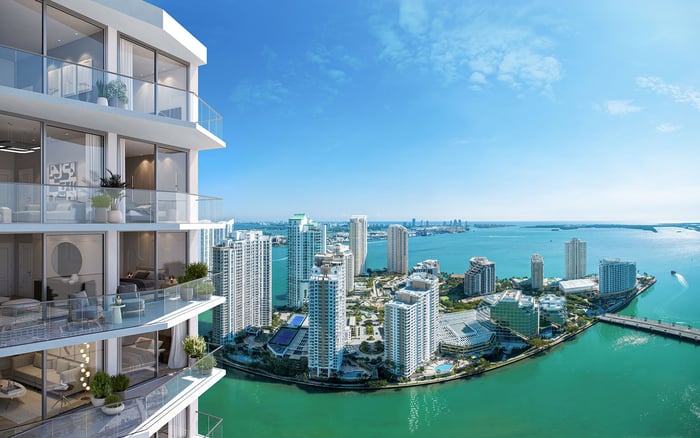
Leak-detection planning belongs at the beginning of a luxury home search, not after an inspection. For South Florida buyers, sensor readiness can clarify building discipline, ownership risk, maintenance culture, and long-term confidence before the first private tour.

In South Florida luxury real estate, the first tour is often treated as the emotional beginning of a purchase. The view, the arrival sequence, the balcony depth, the kitchen stone, the privacy of the primary suite: each can capture a buyer’s imagination in seconds. Yet the most disciplined buyers are increasingly doing something quieter before they step inside. They are asking how the residence, the building, and the operating team think about water.
Leak-detection sensors are not glamorous. They do not photograph like a skyline pool or a marble-clad bath. But in a coastal, design-driven market where residences may be used seasonally, managed by staff, or held as a second home, water intelligence can be a subtle marker of ownership quality. A refined shortlist should not only ask whether a home is beautiful. It should ask whether the home is alert, monitored, and prepared.
This does not mean every worthy property must present itself as a technology showcase. It means that before a private showing, a buyer should understand whether leak detection has been considered in the right locations, whether alerts reach the right people, and whether the building culture treats prevention as part of luxury service.
A sensor is only one element of a broader discipline. Its presence can suggest a more thoughtful maintenance environment, while its absence can open a useful conversation. The essential question is not simply, “Does the residence have leak sensors?” It is, “How would a water event be noticed, communicated, and addressed when the owner is not present?”
That question is especially relevant in high-rise condominiums, waterfront estates, and lock-and-leave residences. In a waterview home, the emotional premium often comes from proximity to the bay, ocean, canal, or Intracoastal setting. The practical premium should include systems that support confidence when the owner is traveling. A small leak in an unseen area is not merely a repair issue. It can become a design, scheduling, insurance, and neighbor-relations issue.
Before the first tour, ask the listing team to describe the water-sensitive zones. These may include laundry areas, air-conditioning equipment closets, water heaters, kitchens, wet bars, powder rooms, primary baths, terrace-adjacent interiors, and storage spaces that are not visited daily. The answer should be specific enough to show awareness, even if the exact configuration will later be confirmed by an inspector or building representative.
A serious buyer does not need to turn an early inquiry into an engineering audit. The goal is to decide whether the property deserves time, travel, and attention. Four questions can be enough to separate a polished presentation from a well-managed residence.
First, where are leak-detection sensors currently installed? A vague answer may not disqualify a property, but it should move the topic higher on the inspection agenda. Second, who receives alerts? In a luxury environment, the recipient might be an owner, property manager, concierge desk, building engineer, estate manager, or another designated contact. The important point is clarity. Third, what happens after an alert? A notification without an escalation path is a sound, not a system. Fourth, are sensors stand-alone, connected to a broader smart-home platform, or part of a building-level protocol?
These questions are particularly useful in Brickell, where many buyers compare high-rise residences by amenity package, views, and architectural identity. They are also useful in Miami Beach, where renovation histories, terrace living, and seasonal occupancy can make proactive monitoring feel less like a technical preference and more like a lifestyle safeguard.
In a condominium, the buyer is evaluating two layers: the private residence and the building ecosystem. A beautifully maintained unit may still depend on common-area protocols, vertical plumbing, mechanical rooms, staff response, and association procedures. For that reason, leak-detection readiness should be discussed alongside building operations, not only interior features.
In a single-family home, the conversation becomes more individualized. The owner may control more of the technology stack, vendor selection, and response plan. That control can be an advantage, provided the system is thoughtfully placed and regularly maintained. In larger homes, the key is not only whether sensors exist, but whether they cover the quiet spaces that staff and owners may not inspect every day.
Oceanfront residences deserve an especially careful review because the ownership experience is shaped by both beauty and exposure. “Oceanfront” as a lifestyle tag should be matched by an equal respect for systems, service access, and preventive thinking. This is not a warning against coastal living. It is an argument for buying it with the same intelligence one applies to art, aviation, or a private club membership.
Many buyers assume that a new-construction residence automatically reduces concern. New buildings can offer contemporary systems, fresh materials, and modern planning, but newness should not end the conversation. It should make the questions more specific.
For a pre-construction or newly completed residence, ask what has been planned, what is included, what can be upgraded, and whether leak detection is handled at the unit level, the building level, or both. If the buyer intends to customize closets, wet bars, secondary laundry, staff spaces, or smart-home controls, the sensor plan should be coordinated early. Retrofitting can be feasible, but pre-planning is cleaner.
The best developments tend to treat technology as invisible service rather than spectacle. A buyer should listen for that attitude. If the answer is framed only as a gadget, keep asking. If the answer connects detection, notification, building access, and response, the property may be showing signs of a more mature ownership environment.
Before scheduling tours, divide prospective properties into three groups. The first includes residences with clear sensor placement, clear alert recipients, and a credible response path. These should remain high on the list if the rest of the lifestyle criteria align. The second includes properties where the topic is not fully documented but the seller, developer, or building team can answer intelligently. These may still be strong candidates. The third includes properties where no one can explain how water events are detected or escalated. These are not necessarily unbuyable, but they require more diligence before emotional attachment sets in.
This approach protects the buyer from falling in love too early. It also helps advisors ask better questions on the buyer’s behalf. In a market where finishes can be replaced and views cannot, operational discipline becomes part of the intangible value. A residence that is easy to monitor, easy to access, and easy to protect may feel calmer to own.
Once the property makes the shortlist and the tour begins, verify the narrative. Open the laundry closet. Ask about mechanical areas. Look at under-sink spaces. Notice whether access panels are practical or concealed behind design decisions that complicate maintenance. In a luxury home, invisibility should not come at the expense of serviceability.
If there is a property manager, ask how often vacant residences are checked and how alerts are handled after hours. If there is building staff, ask whether they can access the residence in an emergency and what permissions are needed. If the home has been renovated, ask whether plumbing changes were coordinated with the broader monitoring plan. None of these questions should feel intrusive. They are part of the language of serious ownership.
The most elegant answer is rarely the longest. It is usually calm, direct, and operationally literate. “Here are the areas monitored, here is who receives the alert, and here is what happens next” is more reassuring than a showroom description of technology without responsibility attached.
Leak-detection sensors should not dominate the search. Architecture, location, privacy, services, and design still matter deeply. But sensor readiness belongs near the front of the conversation because it reveals whether a property is prepared for real life, not just presentation.
For South Florida buyers, the best shortlist balances desire with discipline. It recognizes that waterfront living, vertical luxury, seasonal use, and custom interiors deserve a protective layer. A home that can quietly signal trouble before it becomes visible is not less romantic. It is more complete.
Should leak-detection sensors influence my shortlist before touring? Yes. They can help you prioritize homes that show stronger operational readiness before you invest time in a private tour.
Are leak sensors only important for older residences? No. New and renovated homes also benefit from thoughtful monitoring, especially near water-connected fixtures and mechanical areas.
What is the first question I should ask? Ask where leak-detection sensors are installed and who receives the alert if moisture is detected.
Should condominiums and houses be evaluated differently? Yes. Condominiums involve both unit-level and building-level procedures, while single-family homes place more control on the owner.
Do sensors replace a property inspection? No. Sensors are a useful ownership feature, while inspections remain essential for evaluating condition and risk.
Why does this matter for a second home? A second home may sit vacant for extended periods, so alerting and response procedures become especially important.
Should I ask about building staff response? Yes. A sensor is more valuable when a clear person or team can respond promptly and appropriately.
Can leak detection be added after purchase? Often, yes, but buyers should confirm feasibility, placement, connectivity, and access before relying on a future upgrade.
Is this relevant for oceanfront property? Yes. Oceanfront living is highly desirable, and preventive systems can support more confident long-term ownership.
What if the seller has no information about sensors? Treat it as a due-diligence item, not an automatic rejection, and request further detail before moving forward.
If you'd like a private walkthrough and a curated shortlist, connect with MILLION.
If branded residences are on your mind — as a home or as an allocation — we would be glad to share what we are seeing, privately.
Begin a quiet conversation