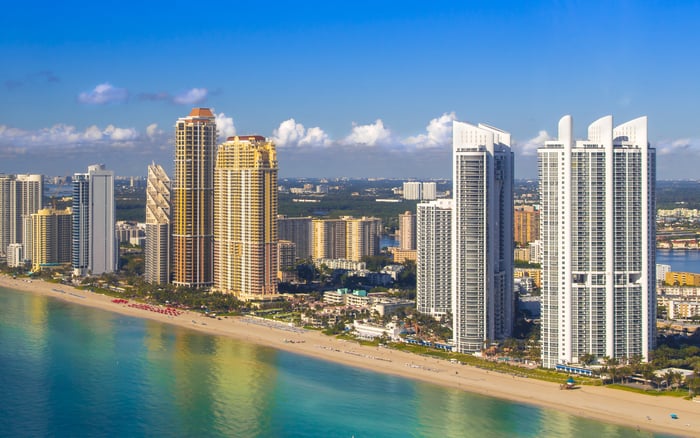
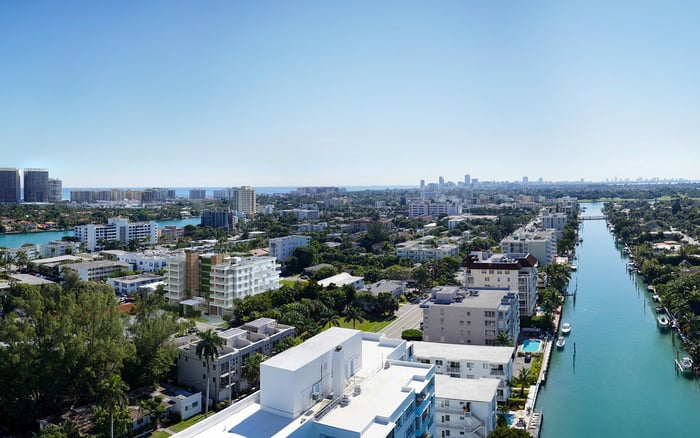
Oceanfront and protected waterfront residences answer different questions. For South Florida buyers, the right choice balances beach access and views with vessel-specific dockage, airport transfers, chauffeur logistics, and seasonal travel patterns.
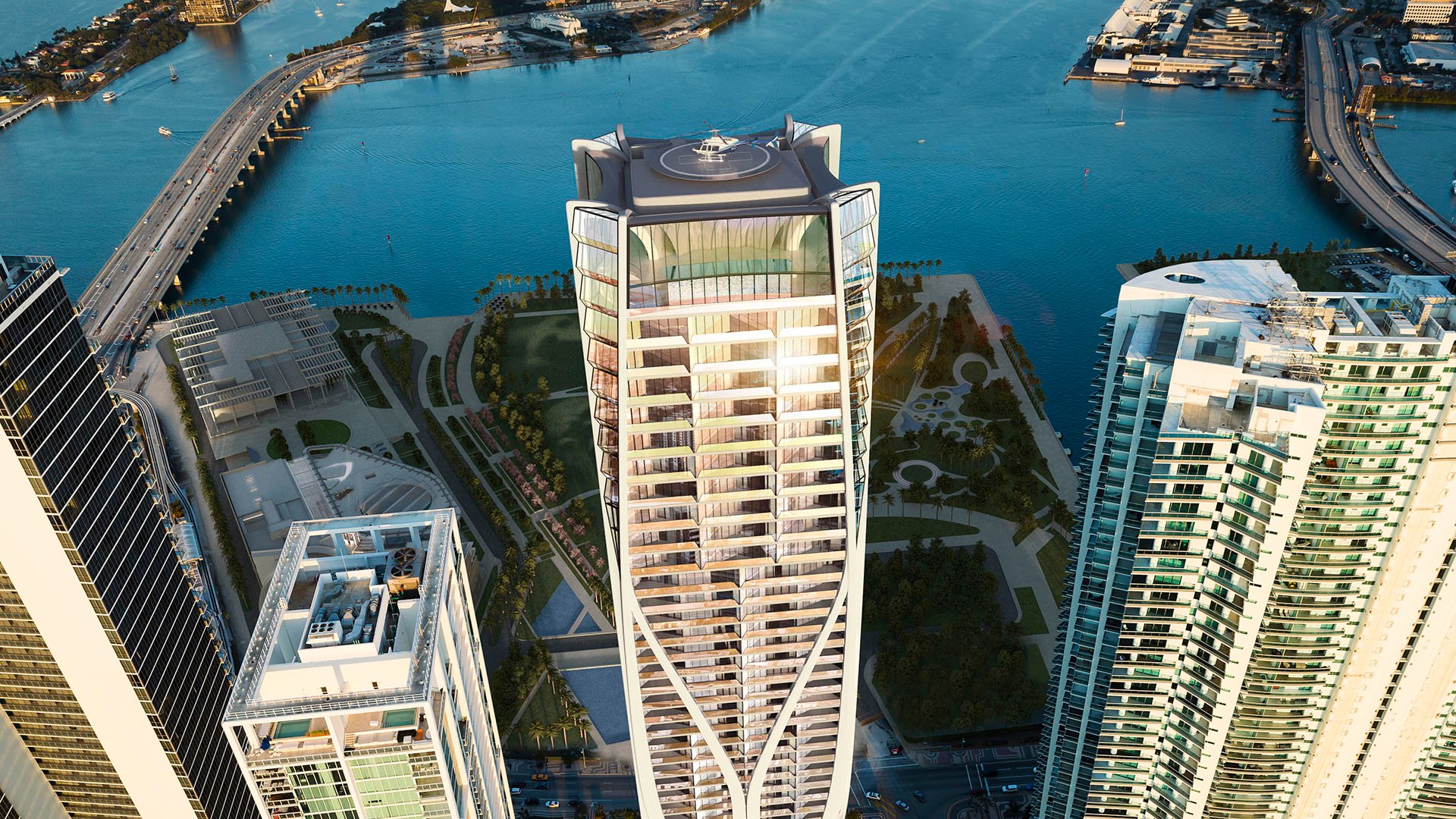
A direct Atlantic horizon and a bay framed by the Miami skyline offer different pleasures. One may place the beach at the center of the day; the other may better support a life organized around boating and city destinations. Neither is inherently the better purchase. The distinction matters when measured against the buyer's daily routines.
For a household arriving by private aviation, keeping a yacht locally, and relying on a driver, the view is only one part of the decision. Beach access, berth rights, navigable routes, airport ground time, and arrival procedures each deserve separate evaluation. An exceptional outlook establishes none of them.
The useful question is not ocean versus bay in the abstract. It is which residence best supports the days the owner intends to spend there.
Direct Atlantic oceanfront typically combines beach frontage with horizon views. Established luxury markets include Sunny Isles Beach, Miami Beach, Bal Harbour, Hillsboro Beach, and Palm Beach. Yet a market's identity is no substitute for inspecting the residence, its sightlines, and its route to the sand.
Miami Beach oceanfront condominiums often offer sunrise views, but orientation remains decisive. Buyers considering The Perigon Miami Beach should ask the same residence-level questions they would elsewhere: what is visible from the principal rooms, how is beach access arranged, and which rights accompany ownership?
In Sunny Isles Beach, a shortlist that includes Jade Signature Sunny Isles Beach should likewise distinguish the building's appeal from the specific home's daily experience. Review the outlook from the rooms used most often, rather than allowing a single terrace photograph to define the purchase.
For a buyer whose ideal morning begins at the beach, these questions may outweigh marina proximity. That is a coherent preference, provided yacht arrangements are evaluated separately. Direct oceanfront ownership does not necessarily include dockage.
Bay, Intracoastal, and canal residences may offer docks, sunsets, and skyline views, depending on location and orientation. The Intracoastal provides protected north-south waterfront distinct from exposed Atlantic frontage. These characteristics can suit a buyer who values boating as much as the horizon.
Protected water, however, is not the same as a legally protected view. Nor does a bay-facing residence establish dock rights, privacy, or a particular sunset exposure. Treat each as a separate diligence question. Ask what documentation, if any, supports a claim that sightlines will remain unobstructed.
For buyers considering St. Regis® Residences Brickell, any marina-related offering should receive its own review. Confirm whether it includes an individual owner's berth entitlement, accommodates the intended vessel, and has current availability. Verify operating status and the actual terms before making a marina part of an ownership plan.
Protected waterfront may also suit a city-oriented routine, but it does not automatically mean shorter drives. Test the destinations that matter to the household rather than treating an address category as a transportation advantage.
A usable berth must work for the vessel and its intended cruising pattern. South Florida's waterways connect to the Atlantic through multiple inlets, making the complete dock-to-inlet route a central consideration.
Ask a qualified marine professional to assess depth, tidal conditions, bridge clearance, dock dimensions, turning space, no-wake segments, and inlet access for the actual yacht. Deep water, wide waterways, and routes without fixed bridges are desirable attributes, but broad descriptions do not establish clearance for a specific vessel.
Fixed bridges do not open. A yacht's air draft therefore cannot be accommodated by choosing a different opening time. Current conditions and vessel requirements need professional confirmation before a route is treated as suitable.
Apply that review at the property level rather than relying on a neighborhood's reputation. A buyer considering Vita at Grove Isle should not infer vessel access from the wider area's boating appeal.
Finally, distinguish physical suitability from permission to use a slip. Public facilities may have waitlists; private arrangements may involve controlled access, leases, or deeded slips. Confirm tenure, availability, vessel limits, and crew access directly.
Relevant gateways include Miami-Opa-locka Executive, Miami International, Fort Lauderdale Executive, and Palm Beach International. Assess airport selection against the actual destination and the household's arrival pattern, not straight-line distance alone.
For an Opa-locka arrival followed by a South Beach transfer, test the actual road itinerary rather than relying on an unverified drive-time estimate. Treat the result as a traffic-dependent observation, not a transfer commitment.
Compare the full journey from the fixed-base operator, or FBO, to the residence. Include vehicle pickup, chauffeur staging, the road transfer, residential security, and the final arrival sequence. A map estimate ending at the property boundary is not the same as reaching the front door.
For frequent arrivals, evaluate repeatability alongside the fastest observed trip. The practical question is whether the transfer fits the owner's schedule under the conditions in which that owner actually travels.
A driver changes the experience of ground travel, not the need to account for congestion. Have the chauffeur test candidate homes against the same itinerary, with comparable departure times and destinations.
Include weekday peaks, winter peaks, and major-event periods. Record FBO pickup arrangements, staging options, causeway routing, security procedures, and total door-to-door time. Repeat the exercise for the marina and regular city destinations, not just the airport.
Do not assume that one waterfront neighborhood will always outperform another. Base the purchase decision on observed journeys and a realistic scheduling buffer, without turning a quiet-day drive into a year-round promise.
Separate non-negotiable requirements from preferences. The beach-first buyer may accept an off-site berth; the yacht-first buyer may prioritize a verified route over an Atlantic horizon. A frequent flyer may place greater weight on dependable ground transfers than on either view category.
Keep four questions distinct: what can be seen, what can be accessed, what the vessel can navigate, and how the household will arrive. The right residence is the one whose verified attributes support the intended lifestyle, not simply the most persuasive panorama.
Explore a residence search shaped around your waterfront priorities with MILLION.
If branded residences are on your mind — as a home or as an allocation — we would be glad to share what we are seeing, privately.
Begin a quiet conversationNo. Oceanfront may suit beach-and-horizon priorities, while protected waterfront may better serve boating or city-oriented routines, subject to property-level verification.
No. Sightlines and beach access are separate attributes, and the rights and access arrangements for the specific residence must be confirmed.
No. A bay view does not establish berth rights, slip availability, or suitability for a particular vessel.
No. Protected water describes the waterfront setting, not a legal assurance that a residence's sightlines will remain unobstructed.
It should address depth, tides, bridge clearance, dock dimensions, turning space, no-wake segments, and the route to the intended inlet.
Fixed bridges do not open, so their vertical clearance constrains vessels with substantial air draft. Have a qualified marine professional verify route suitability for the actual vessel and current conditions.
No. Confirm operating status, availability, ownership or leasing terms, vessel limits, and crew access directly before relying on a berth.
Relevant options include Miami-Opa-locka Executive, Miami International, Fort Lauderdale Executive, and Palm Beach International. Evaluate each alongside the residence's actual ground route and arrival arrangements.
Test the complete FBO-to-residence journey at the times the household expects to travel. Treat observed drive times as traffic-dependent, not guaranteed.
Test comparable door-to-door itineraries during weekday peaks, winter peaks, and major events. Include pickup, staging, causeways, residential security, and trips to the marina.