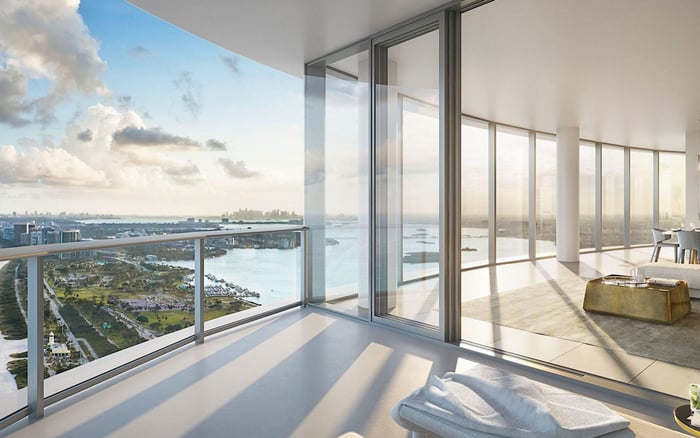
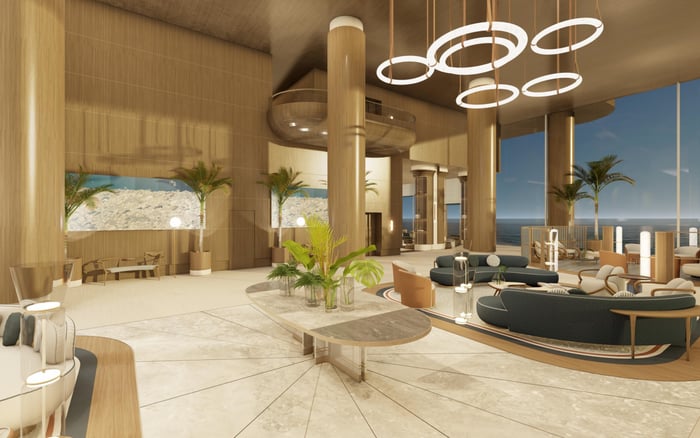
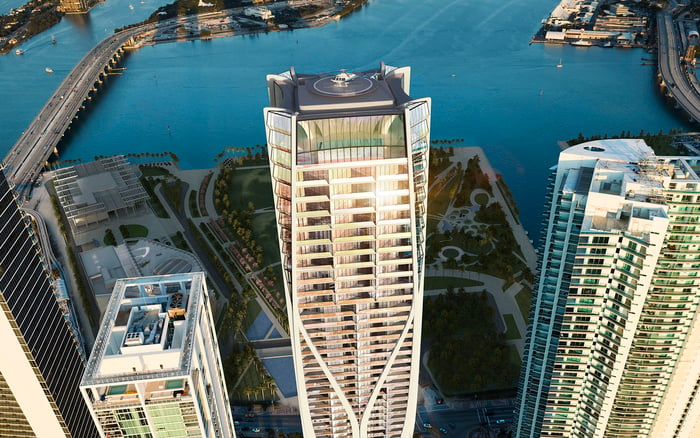
For family-scale condo buyers in South Florida, height is not only about view corridors. Wind behavior can affect daily comfort, terrace use, furnishings, maintenance expectations, and the way a residence truly lives over time.
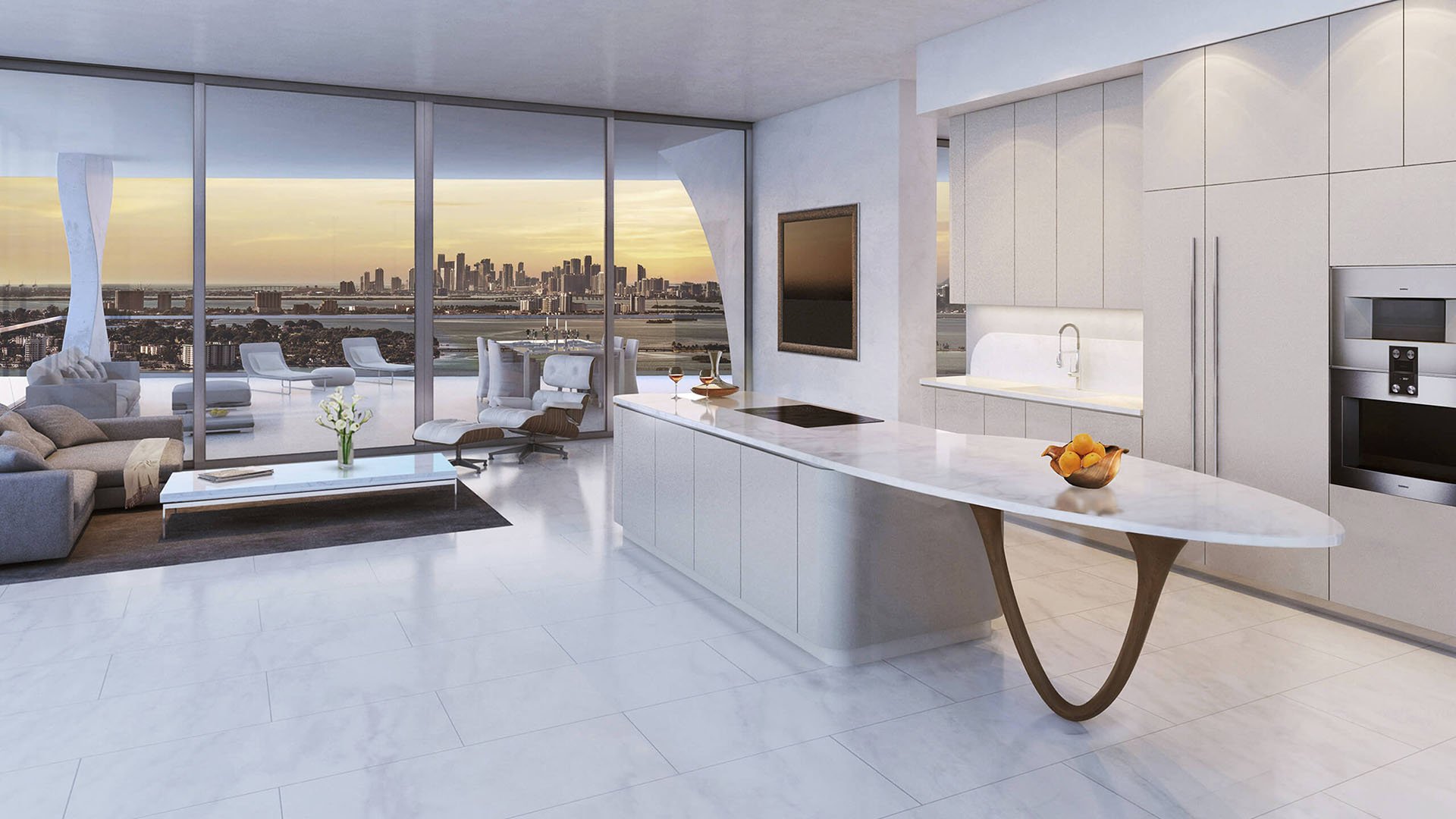
In South Florida, a high-floor family condo often begins with a clear emotional promise: better light, broader water views, and a greater sense of privacy above the city or shoreline. For a buyer planning to live with children, guests, pets, school-day routines, and year-round entertaining, height also introduces a second calculation. Wind behavior can quietly change how a residence performs, how often outdoor space is used, and what the home truly costs to enjoy.
The issue is not whether high floors are desirable. They often are. The more precise question is whether a particular high-floor home supports the way a family expects to live. A balcony that photographs beautifully may feel very different on a breezy afternoon. A deep terrace may prove more practical than a dramatic but exposed ledge. A flow-through plan may offer appealing ventilation, but it also deserves close attention to door operation, pressure changes, sound, and day-to-day comfort.
For buyers comparing High-floors in markets such as Brickell, Sunny Isles Beach, Miami Beach, Fort Lauderdale, and West Palm Beach, wind is not a niche technical concern. It is part of the luxury equation.
The real cost of wind is rarely a single line item. It appears through repetition. If a family avoids the terrace because breakfast feels too gusty, the premium paid for outdoor square footage becomes less efficient. If lightweight furniture must be replaced with heavier pieces, the furnishing budget changes. If sliding doors are difficult to manage in certain conditions, the home feels less effortless. If parents are uncomfortable allowing young children to move freely near exterior areas, the emotional value of the floor plate narrows.
This is especially relevant for family-scale units, where the buyer is usually paying for more than bedrooms. The purchase may include a large Balcony, a private Terrace, expansive glazing, corner exposure, and an entertaining plan designed to blur indoor and outdoor life. Wind can make each of those features feel cinematic, or require more discipline.
In a tower environment such as The Residences at 1428 Brickell, buyers naturally focus on elevation, views, privacy, and interior volume. The more sophisticated review adds another layer: how the home behaves when doors are opened, when children move between interior and exterior spaces, and when daily rituals shift from a still morning to a breezier evening.
An investor may evaluate a high-floor condo through rentability, scarcity, and resale narrative. A family evaluates it through habit. Can the children eat outside without plates sliding around? Can grandparents sit comfortably on the terrace? Can a dog step out without anxiety? Can a parent open a door with one hand while carrying groceries, a school bag, or a toddler?
These questions sound domestic, but they are financial. Luxury pricing often assigns meaningful value to outdoor space, especially when paired with water views or skyline exposure. If that outdoor space is not comfortable for the people who live there, the effective cost per usable square foot changes. The home may still be beautiful, but its utility is not the same.
This is why the best walk-throughs are not rushed. Buyers should stand on the terrace, open and close doors, listen to sound at the glazing, and notice whether furniture placement feels natural or defensive. In residences with Flow-Through-units, the experience can vary depending on orientation, openings, and how the family intends to use both sides of the home.
A terrace should be evaluated as a room, not as an accessory. Families should ask how many months of the year they expect to use it, at what time of day, and for what purpose. A breakfast terrace, a sunset cocktail terrace, and a children’s play terrace have different tolerances for wind.
Depth matters because it can create a more sheltered feeling. Ceiling conditions, side walls, corner exposure, rail design, and furniture weight all influence comfort. So does adjacency. A terrace directly off the kitchen may be more valuable for a family than a larger outdoor space that feels detached from the daily flow of the home.
On the shoreline, buildings such as The Perigon Miami Beach and St. Regis® Residences Sunny Isles invite buyers to think carefully about the relationship between elevation, exposure, and ritual. The view may be the headline, but usability is the asset that compounds over time.
Luxury buyers often notice finishes first: stone, millwork, appliances, lighting, and ceiling height. Wind behavior asks them to notice movement. How does the front door feel when terrace doors are open? Does the residence encourage natural airflow, or does it create moments of pressure that make doors slam? Is there a comfortable way to ventilate the home without making it feel unsettled?
These observations do not require the buyer to become an engineer. They require attention. A high-floor residence should feel composed. If a family must constantly manage openings, move cushions, secure accessories, or warn children about doors, the home demands labor. Labor is the opposite of luxury.
In vertical neighborhoods such as Brickell, this can be particularly important because the lifestyle often combines city energy with private elevation. A buyer drawn to Baccarat Residences Brickell may be seeking a refined urban home where the residence feels calm above the street. Calm is not only visual. It is acoustic, tactile, and operational.
Outdoor furnishings for high floors should be selected with more rigor than casual patio pieces. Weight, materials, cushion security, drainage, and corrosion resistance can all influence the ownership experience. A family may need fewer delicate accessories and more substantial pieces that remain stable and attractive.
Maintenance expectations should also be discussed before closing. Exterior glass, tracks, door hardware, balcony surfaces, and rail areas may require thoughtful upkeep in coastal or high-exposure settings. The point is not to avoid height. It is to budget for height with clarity.
For family buyers, the furnishing plan should be developed early. If the terrace is central to the purchase decision, the cost of making it comfortable should be considered part of the acquisition, not an afterthought. A high-floor home that requires premium outdoor furniture, custom storage, and more frequent attention may still be the right decision, but it should not be an accidental one.
The luxury market often treats higher as automatically better. Families should resist that reflex. A slightly lower floor with a calmer terrace, easier outdoor dining, and a more relaxed relationship to wind may deliver a richer daily life than a higher residence with a more dramatic but less usable exposure.
This is especially true when the buyer is choosing between similar floor plans within the same building. If the view difference is meaningful only in marketing language, but the comfort difference is meaningful every day, the lower option may be the smarter luxury purchase.
In waterfront settings such as Rivage Bal Harbour, the decision is not simply about selecting the most elevated available home. It is about matching the family’s tolerance for exposure with the architecture, the terrace design, and the intended rhythm of life.
Before committing, buyers should visit more than once when possible. They should experience the residence at different times of day, spend real time outside, and ask how the terrace would function for meals, children, pets, and guests. They should test door operation, consider furniture layouts, and imagine ordinary scenes rather than only celebratory ones.
They should also compare units within the same building. A corner residence may behave differently from an interior stack. A deep terrace may feel different from a shallow balcony. A plan with multiple exterior openings may create a different sensation than a more contained layout.
The goal is not to make wind the enemy of high-floor living. The goal is to price it correctly in the buyer’s mind. When the residence, the exposure, and the family’s lifestyle align, height can be extraordinary. When they do not, the view can become more expensive than it first appears.
Why does wind matter more in a family-scale condo? Families use outdoor areas in more varied ways, from meals to children’s play, so comfort affects daily value more directly.
Does a higher floor always mean stronger wind? Not always in the same way, but elevation can change exposure and should be evaluated in person rather than assumed.
Can a balcony still be valuable if it is sometimes windy? Yes, if the space remains usable for the family’s preferred routines and can be furnished appropriately.
What should buyers test during a showing? Open doors, stand on the terrace, listen to interior sound, and imagine normal daily use rather than only the view moment.
Are flow-through units more sensitive to wind behavior? They can feel different because openings on multiple sides may affect airflow, pressure, and how doors operate.
Should outdoor furniture be part of the purchase budget? Yes. High-floor terraces may require heavier, better-secured, and more durable furnishings than casual outdoor spaces.
Can wind affect resale value? It may influence buyer perception if outdoor space feels less usable than expected, especially in premium-view residences.
Is a lower floor sometimes the better family choice? Yes. A calmer, more usable terrace can be more luxurious than a higher floor that feels difficult to enjoy.
How many times should a buyer visit before deciding? More than once is ideal when possible, especially at different times of day and in different weather conditions.
What is the central takeaway for South Florida buyers? Treat wind as part of the real cost of ownership, alongside view, layout, finishes, and monthly expenses.
For a confidential assessment and a building-by-building shortlist, connect with MILLION.
If branded residences are on your mind — as a home or as an allocation — we would be glad to share what we are seeing, privately.
Begin a quiet conversation