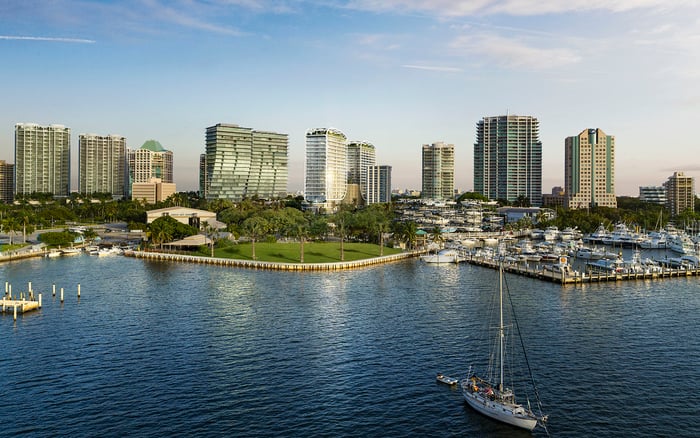
Flood-zone exposure is not just a line on a map. For boutique residences across South Florida, it can shape insurance, financing, association budgets, building systems, resale strategy and the confidence with which a buyer holds an asset over time.
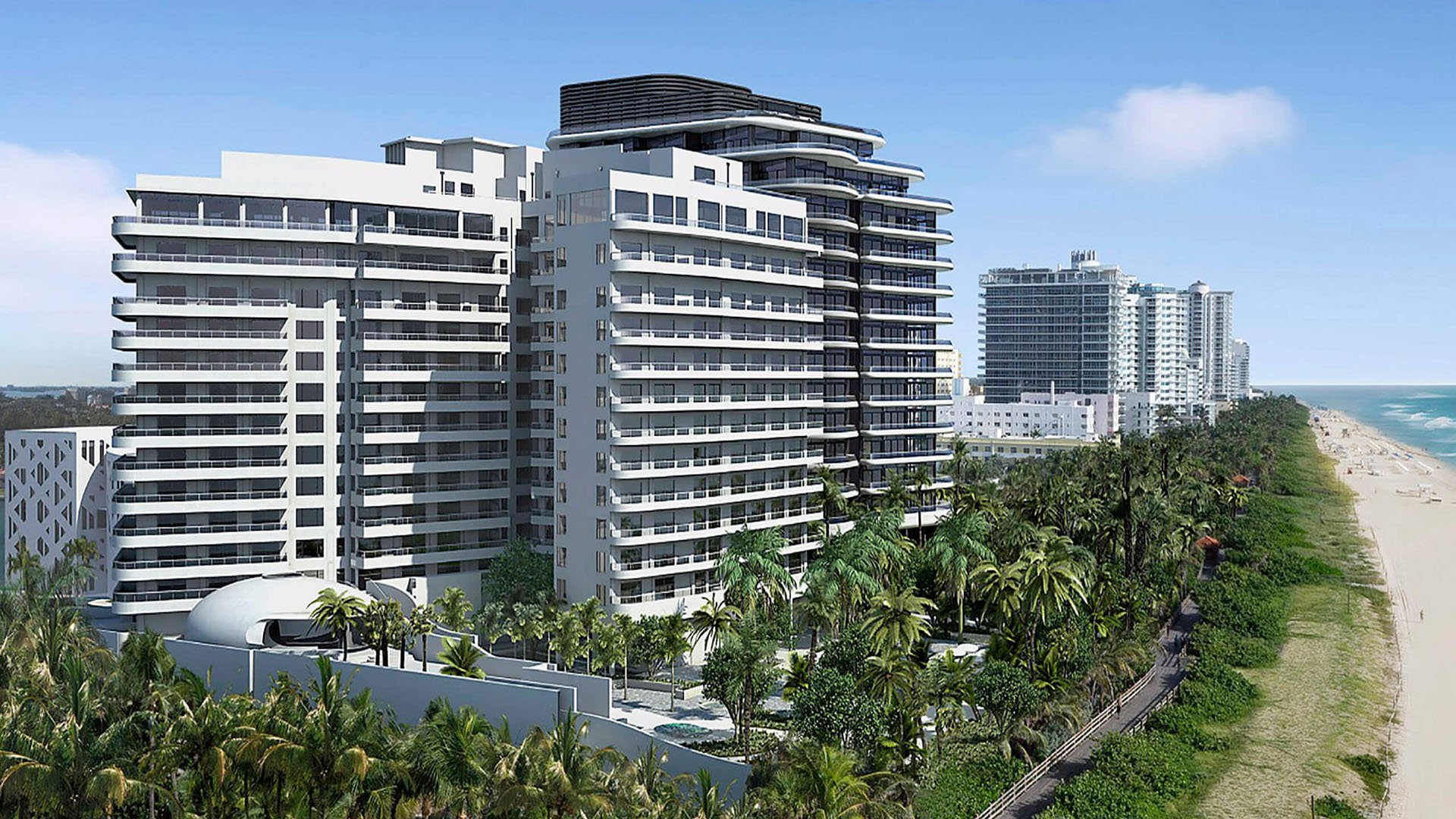
In South Florida, water is part of the architecture of desire. It frames the terrace, animates the arrival sequence, and gives a boutique residence much of its emotional value. Yet the same proximity that creates beauty can also reshape the economics of ownership. Flood-zone exposure does not automatically make a property unsuitable, but it can alter the true cost of buying, holding, and eventually selling a residence.
For the ultra-premium buyer, the question is rarely whether a home is near water. The sharper question is how intelligently the building, association, and acquisition strategy account for that exposure. A waterfront address in Miami Beach, Brickell, Fort Lauderdale, or Bay Harbor Islands may carry very different implications depending on elevation, garage design, mechanical placement, insurance structure, reserve planning, and access during severe weather.
This is where headline pricing can mislead. Two residences with similar views and finish levels may carry different ownership profiles if one faces higher insurance pressure, greater association volatility, or more complex mitigation requirements. In a boutique building, where fewer owners share fixed costs, those differences can become more visible.
Luxury buyers often evaluate residences through design, privacy, services, and scarcity. Flood-zone exposure adds another layer: durability. It asks whether the property is positioned to preserve comfort and liquidity amid changing weather, regulatory, and insurance conditions.
A flood-zone designation can influence insurance requirements, lender review, and buyer perception. It may also affect the pace and depth of due diligence. Sophisticated purchasers increasingly want to understand not only what is inside the unit, but also how the entire building manages water, power, access, and maintenance. This is especially true for waterfront properties, where the view premium is inseparable from environmental exposure.
In practical terms, the real cost may appear in recurring carrying expenses, potential association assessments, more detailed inspections, or a future buyer’s underwriting. None of this automatically negates the appeal of a residence. Instead, it expands the definition of value, rewarding buildings with thoughtful planning and transparent operations.
Boutique residences are prized for privacy, calmer amenities, and a more residential atmosphere. The tradeoff is scale. A smaller owner base may create a more intimate building culture, but it can also mean that major insurance, repair, or capital-planning decisions are spread across fewer residences.
That dynamic matters in flood-exposed areas. If a building needs to modify drainage, protect lower-level systems, improve waterproofing, or adapt parking areas, the financial impact may be more concentrated than in a larger tower. Buyers should review association budgets, reserve posture, and planned capital work with the same care they bring to floor plan and finishes.
The goal is not to avoid boutique living. It is to distinguish between buildings that are merely small and those that are well governed. A building with a disciplined board, clear documentation, and a practical maintenance culture can offer a more reassuring ownership experience than a larger property with less clarity.
Area names alone do not tell the full story. Miami Beach, Brickell, and Fort Lauderdale each contain pockets with different elevation profiles, street conditions, water adjacency, and building typologies. A residence one block from the bay may face a different operating reality than a home farther inland, even if both share the same neighborhood identity.
In Miami Beach, buyers comparing ocean-adjacent living at The Perigon Miami Beach should look beyond the beach lifestyle and ask how the building handles arrival, parking, equipment, and storm protocols. In Brickell, a waterfront or near-water tower such as Una Residences Brickell invites a similar review of access, lower-level design, and the relationship between view premium and long-term carrying profile.
Fort Lauderdale adds another dimension because waterfront living is deeply tied to boating culture, canals, and marina access. A buyer considering Riva Residenze Fort Lauderdale may find that water access is central to the lifestyle thesis, making building resilience and association planning part of the luxury proposition rather than a technical footnote.
Insurance is the most obvious category, but it is not the only one. Flood-zone exposure can affect the entire ownership model.
First, there is the direct cost of coverage. Buyers should understand what the association policy covers, what belongs to the individual owner, and where deductibles may create exposure after a major event. In a condominium, the boundary between building and unit responsibility deserves careful review.
Second, there is maintenance. Salt air, water-intrusion risk, and high humidity can require closer attention to exterior systems, waterproofing, glazing, doors, elevators, pumps, and mechanical rooms. A building that budgets for preventive maintenance may feel more expensive on paper, but less surprising in practice.
Third, there is financing. Lenders may request additional documentation when flood exposure is present, particularly around insurance and building compliance. Cash buyers are not immune. Even without lender requirements, resale buyers may ask the same questions later.
Fourth, there is liquidity. A residence with exceptional design can still face narrower buyer demand if future purchasers perceive carrying costs as uncertain. Conversely, a well-documented building in a flood-aware location may attract buyers who value clarity and preparedness.
The most elegant due diligence starts early. Buyers should request flood-zone information, elevation context, association insurance details, reserve materials, and available documentation on building systems before becoming emotionally anchored to the residence.
Particular attention should go to the lowest levels of the property. Where is critical equipment located? How is parking protected? Are elevators, electrical rooms, generators, pumps, and life-safety systems positioned with water exposure in mind? How does the building communicate during severe weather? Are there written protocols for access, staffing, and post-event inspection?
For boutique residences, governance matters as much as hardware. Meeting minutes, budgets, and capital planning can reveal whether a building treats resilience as a recurring discipline or an occasional reaction. The strongest luxury assets tend to integrate these concerns quietly, without compromising design or service.
Flood-zone exposure should be priced, not feared. Many of South Florida’s most desirable addresses exist because they are close to water. The issue is whether the buyer understands the obligations that accompany the privilege.
A thoughtfully chosen residence can still be an excellent lifestyle and investment decision. The calculus improves when the building is newer or well maintained, when systems are intelligently located, when association documentation is transparent, and when carrying costs are realistic. It improves further when the buyer plans to hold the property with a long-term view rather than relying only on short-term appreciation.
Bay Harbor Islands illustrates this middle ground well. A boutique-oriented property such as The Well Bay Harbor Islands can appeal to buyers seeking a quieter residential scale, yet the same buyer should still evaluate flood exposure, insurance, and building operations with discipline.
The best luxury underwriting is not pessimistic. It is precise. In South Florida, the true cost of a boutique residence includes the aesthetic premium of water, the operating realities of water, and the governance structure that connects them.
For buyers, this means treating price per square foot as only one metric. The deeper questions are more durable: How stable are the carrying costs? How resilient is the building? How transparent is the association? How will a future buyer read the same exposure? A residence that answers those questions well can command confidence even in a complex coastal market.
The result is a more mature view of luxury. Not simply a spectacular balcony or a discreet lobby, but a home whose beauty is supported by systems, planning, and financial clarity.
Does flood-zone exposure always make a boutique residence more expensive to own? Not always, but it can affect insurance, maintenance, financing review, and association budgeting.
Why are boutique buildings different from larger towers? Smaller owner counts can mean fixed costs and capital projects are shared by fewer residences.
Should a cash buyer still care about flood-zone exposure? Yes. Even without lender requirements, insurance, resale, and association costs remain relevant.
What building areas deserve the closest review? Parking, mechanical rooms, elevators, drainage, generators, and lower-level access are key areas.
Can waterfront residences still be strong long-term assets? Yes, especially when the building is well planned, well maintained, and financially transparent.
How can flood exposure affect resale? Future buyers may scrutinize carrying costs, insurance history, and building preparedness more closely.
Is a newer building automatically safer from flood-related costs? Not automatically. Newer design can help, but documents and systems still need careful review.
What should buyers ask the association before closing? Ask about insurance, reserves, planned work, storm protocols, and responsibility for unit-level repairs.
Does flood-zone exposure matter more on lower floors? It can, particularly where parking, storage, lobbies, or equipment are positioned near grade.
What is the smartest way to approach this risk? Treat it as part of total cost analysis rather than a simple reason to accept or reject a property.
If you'd like a private walkthrough and a curated shortlist, connect with MILLION.
If branded residences are on your mind — as a home or as an allocation — we would be glad to share what we are seeing, privately.
Begin a quiet conversation