A buyer-focused look at why private elevator access control can affect more than privacy in a South Florida preconstruction condo, including operating costs, governance, resale positioning and contract diligence.
Private elevator access control is often sold as a symbol of discretion: a quiet ride from porte cochère to residence, fewer shared thresholds and a sharper divide between public and private life. For a South Florida preconstruction condo buyer, the more important question is not simply whether the arrival feels exclusive. It is what that exclusivity will cost to operate, maintain, govern and eventually resell.
In a high-end tower, access control is not a single feature. It is a system of elevators, credentials, software permissions, staff protocols, visitor procedures, fire and life safety coordination, service access, package movement and long-term maintenance obligations. When those elements are well designed, daily life can feel seamless. When they are under-specified, they can become a recurring point of friction, buried inside monthly assessments or future capital planning.
For preconstruction buyers, the real cost begins before closing, when condominium documents, budget assumptions and the sales presentation may not speak with equal precision. A private elevator sounds simple in a rendering. The economics are more layered.
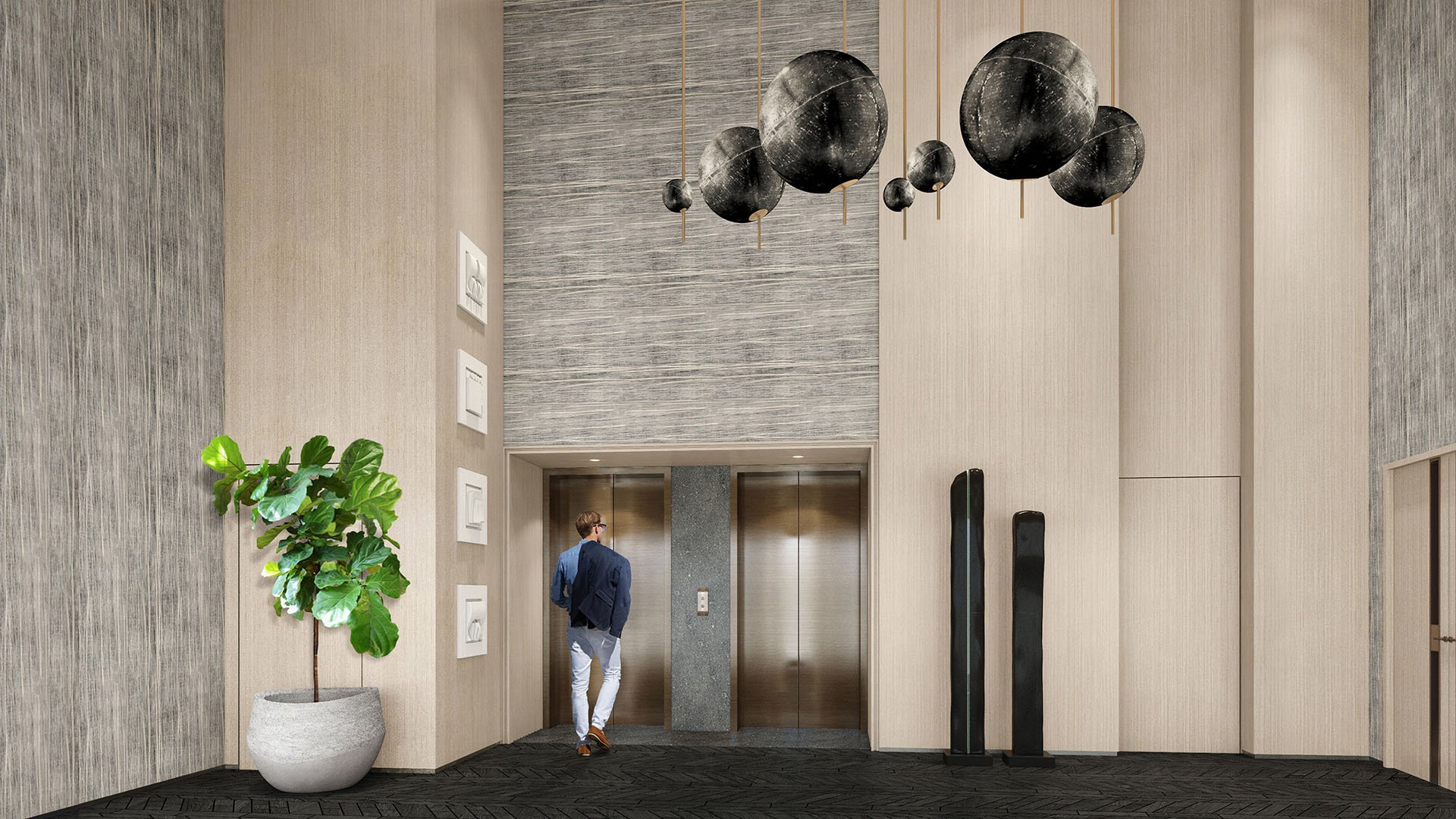
A private elevator is not merely a cab that opens near a foyer. The more consequential feature is control: who can call the elevator, which floors they can reach, how guests are admitted, how staff move through the building and what happens when systems require service.
That control may be managed through fobs, cards, mobile credentials, destination dispatch, elevator attendants, concierge approval or a combination of technology and staffing. Each approach carries a different cost profile. A building with sophisticated digital permissions may require ongoing software, hardware and support. A building that relies heavily on staff needs clear procedures and sufficient personnel coverage. A building that separates residents, guests, vendors and service providers may carry greater operational complexity.
This is why access design should be evaluated alongside architecture, views and finishes. In Brickell, where residents often balance privacy with dense urban movement, a buyer studying projects such as The Residences at 1428 Brickell should ask how arrival, elevator assignment and visitor authorization are intended to work during ordinary days, peak social moments and building maintenance.
The purchase price may reflect the perceived value of a private arrival, but the continuing cost is usually carried through the association structure. Buyers should look for the categories that support the promise: elevator maintenance, access-control systems, security or concierge staffing, reserves, replacement planning, insurance coordination, utility consumption, cleaning and lobby-level operations.
A private elevator arrangement can also influence the building’s physical plan. More elevator cores, fewer units per landing or deeper separation between service and resident circulation may enhance privacy, but they can reduce efficiency. In luxury real estate, that may be a worthwhile trade. It is still a trade, and it should be understood as part of total ownership cost rather than as a decorative amenity.
The issue becomes more important when a building is positioned around a high-service lifestyle. If residents expect staff to pre-clear guests, manage deliveries, coordinate vendors and protect the serenity of a private foyer, those expectations must be matched by an operating budget that can support them. Underfunded service can make an expensive feature feel uneven.
South Florida places unusual pressure on access systems because many owners use residences seasonally, host visiting family, employ household staff, receive frequent deliveries and expect hotel-caliber service even in private condominium settings. The best access-control strategies account for that reality without making owners feel as if they live inside a checkpoint.
In Miami Beach, privacy often intersects with resort-style living and highly visible social calendars. A buyer comparing beachside residences such as The Perigon Miami Beach may care as much about how guests are received as how residents arrive. The elegance of the experience lies in reducing exposure without creating inconvenience.
In Sunny Isles Beach, where vertical living and oceanfront expectations are central to the ownership experience, private access control can become part of the building’s identity. When looking at the broader Sunny Isles Beach market, including projects such as St. Regis® Residences Sunny Isles, buyers should consider whether the access sequence supports the level of discretion associated with the address.
Private elevator access can support resale value when it is intuitive, reliable and easy to explain. A future buyer can quickly understand the appeal of direct arrival, controlled floor access and limited shared circulation. The feature becomes less persuasive if the system feels complicated, outdated or costly without a clear lifestyle benefit.
This is where pricing, trends and investment thinking overlap. Buyers often focus on the visible premium paid for a private-entry residence. The more durable question is whether the building’s access concept will still feel current when the owner decides to sell. Technology changes, resident expectations evolve and service standards rise. A system that cannot be updated cleanly may create future negotiation pressure.
The same principle applies in boutique and low-density settings. In Bal Harbour, for example, a buyer evaluating a refined waterfront environment such as Rivage Bal Harbour should ask whether privacy is created by architecture alone, by controlled technology, by service culture or by all three. The strongest buildings tend to make access feel effortless, not theatrical.
The most effective due diligence is direct and practical. Ask how many residences share an elevator bank. Ask whether elevators open directly into residences, into private vestibules or into semi-private landings. Ask who can access each floor and how temporary guest permissions are issued. Ask how vendors, housekeepers, caregivers and deliveries are handled. Ask what happens when an elevator is out of service.
Then move from lifestyle to budget. Which contracts support the system? How often are credentials, readers or software expected to be updated? Are elevator reserves sized for the promised level of service? Does the preliminary budget separate elevator maintenance from broader building operations? Are there plans for staffed access points, and are those costs reflected in assessments?
The answers do not need to be alarming to matter. A premium residence can justify premium operating costs. The concern is mismatch: a luxury promise supported by ordinary budgeting, or a technically complex system explained only through marketing language.
Preconstruction buyers should assume that the final experience will be shaped by documents as much as by design. Renderings and sales conversations can describe an elegant private arrival, but the declaration, budget, rules and association governance will determine how that feature is operated after turnover.
Look for flexibility. Can the association update access technology without an unusually burdensome process? Are rules broad enough to handle household staff and extended family without compromising security? Is there a clear distinction between resident convenience and building-wide cost responsibility? These governance details can influence daily satisfaction as much as marble, millwork or ceiling height.
A sophisticated buyer does not need to reject a building because access control adds cost. The goal is to price that cost intelligently. In luxury preconstruction, the best value is not always the lowest assessment or the most elaborate amenity. It is the building where privacy, operations and financial planning are aligned.
Is private elevator access always more expensive? Not automatically, but it can add operating complexity through maintenance, staffing, technology and reserve planning.
What is the main cost risk for a preconstruction buyer? The main risk is assuming the feature is fully priced into the purchase when some long-term costs may appear through association budgets.
Should I ask how many residences share an elevator? Yes. The number of residences per elevator bank can affect privacy, wait times, service access and perceived exclusivity.
Does private elevator access improve resale value? It can support resale when the system is reliable, intuitive and aligned with the building’s broader luxury positioning.
What documents should be reviewed? Buyers should review condominium documents, preliminary budgets, rules, reserve assumptions and any materials describing access protocols.
Can access-control technology become outdated? Yes. Buyers should ask how systems may be updated and whether future upgrades are contemplated in budget planning.
How does guest access affect daily living? Guest access determines how smoothly residents can host family, friends, household staff and service providers without sacrificing privacy.
Are private elevators only relevant in penthouses? No. Many luxury buyers value controlled access across full-floor, half-floor and large-format residences, not only penthouses.
What should investors consider? Investors should evaluate whether the privacy premium is matched by sustainable operating costs and strong future buyer appeal.
What is the simplest buyer takeaway? Treat private elevator access as a building system with financial consequences, not just as an architectural flourish.
When you're ready to tour or underwrite the options, connect with MILLION.
If branded residences are on your mind — as a home or as an allocation — we would be glad to share what we are seeing, privately.
Begin a quiet conversation