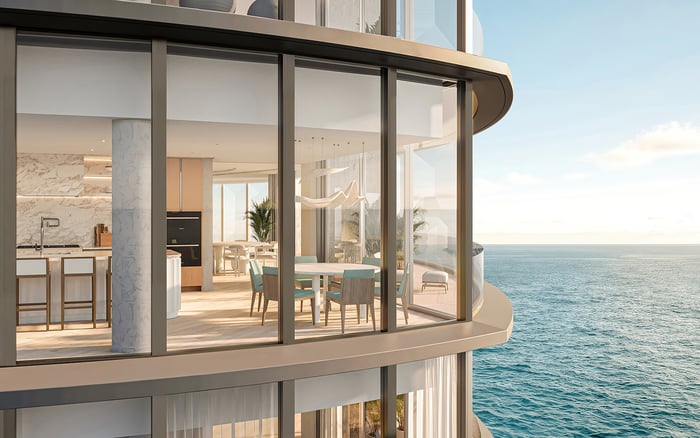
For families considering Bal Harbour, the decisive questions are more specific than a neighborhood walk score. The right evaluation connects the actual lobby-to-beach and lobby-to-dining routes with written confirmation of club privileges, private dining rules, guest access, and the building operations that shape everyday ease.

A family purchase should begin with recurring household needs rather than a general walkability label. List the trips that matter most, such as reaching the beach, dining, shopping, meeting a driver, or returning home with children and equipment.
During each property tour, distinguish between a destination that appears close on a map and one that feels practical in use. The relevant questions include where the route starts, how the household exits the building, what must be carried, and whether the same trip remains manageable with children or a caregiver.
Start every route at the residence’s lobby rather than at the edge of the property. Walk to the destinations your household expects to use, then repeat the exercise at different times to observe how the experience changes.
Pay attention to crossings, shade, waiting time, entry procedures, and the transition between the building and the surrounding area. When considering Rivage Bal Harbour, buyers can use this route-based approach to decide whether the location supports their own schedule rather than relying on a generalized description.
Beach access should also be evaluated as a complete sequence. Consider elevators, gates, storage, equipment handling, and the return to the residence. If a household is also evaluating Oceana Bal Harbour, the same practical test can help organize the comparison without assuming that one family’s preferred routine will suit another.
Being near a club, hotel dining room, or private venue does not by itself confirm access. Any benefit that influences a purchase should be verified through the applicable written materials and reviewed with the appropriate advisers.
Ask who receives the privilege, whether it applies to the owner or household, and how guests and caregivers are treated. Buyers should also request clarity on fees, reservations, age requirements, cancellation terms, spending requirements, and any conditions affecting continued or transferred access.
Private dining calls for similarly careful review. Families may wish to ask when children are permitted, whether a caregiver can accompany them, how peak periods are handled, and whether guest privileges differ from household privileges. A polished amenity is valuable only when its operating rules fit the way the family expects to use it.
A residence should be assessed from curb to unit and from unit to the household’s regular destinations. Observe the valet process, resident and service circulation, elevator use, delivery handling, and storage arrangements. Ask how groceries, packages, strollers, bicycles, and beach equipment move through the property.
Access procedures deserve equal attention. Families should understand how children, guests, caregivers, drivers, tutors, and service professionals enter the building. The goal is to determine whether the property’s security and service routines can support the household without creating avoidable friction.
A Bal Harbour decision can become clearer when buyers compare it with nearby residential settings. Touring The Delmore Surfside gives a family another context in which to test routes, arrivals, and access routines.
A comparison with The Well Bay Harbor Islands can broaden the exercise further. The purpose is not to declare one location universally better, but to identify which setting best matches the household’s repeated movements and preferred level of service.
First, map the household’s most important trips and complete them under realistic conditions. Second, document every club or dining privilege that contributes to perceived value. Third, review the residence as an operating system, including arrivals, elevators, storage, deliveries, guest entry, and access to regular destinations.
A family should choose only after these three filters point in the same direction. Architecture and amenities may shape the initial shortlist, but practical routes and clearly documented privileges determine whether a residence can support everyday life.
What should families evaluate instead of relying only on a walkability label? They should test the specific routes, entry points, carrying needs, and timing that define their own routine.
Where should a route test begin? Begin at the actual lobby so the evaluation includes elevators, exits, gates, and building procedures.
Why should buyers repeat the same walk at different times? Repeating it helps reveal changes in traffic, waiting, shade, activity, and access procedures.
How should families assess beach access? Review the entire sequence, including building circulation, gates, equipment handling, storage, and the return home.
Does proximity to a club confirm access? No. Eligibility and use rights should be confirmed in the applicable written materials.
Which club terms deserve written confirmation? Confirm who is covered, applicable fees, guest treatment, age rules, reservations, cancellation terms, and transfer conditions.
What should buyers ask about private dining? Ask about children, caregivers, guests, booking priority, service periods, cancellations, and spending requirements.
Which building operations matter to a family? Valet flow, elevators, deliveries, storage, service circulation, and guest entry can all affect everyday convenience.
Why compare Bal Harbour with nearby communities? A comparison helps buyers identify which daily geography and operating style best fit their household.
What is the final test before choosing a residence? Confirm that the routes, documented privileges, and building operations all support the family’s expected routine.
To compare the best-fit options with clarity, connect with MILLION.
If branded residences are on your mind — as a home or as an allocation — we would be glad to share what we are seeing, privately.
Begin a quiet conversation