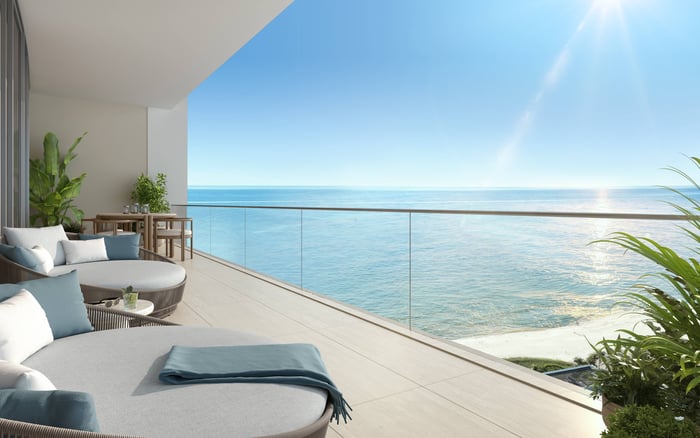
A discreet buyer’s guide to understanding how dock rights, slip assignments, boating access, fees, transferability, and condo documents can reshape the economics of a South Florida waterfront purchase.

In South Florida, a waterfront condominium is rarely priced by the view alone. For buyers who own a boat, or plan to, the real cost of ownership can hinge on a quieter detail: the legal status of the dock right and the exact slip assignment. Two residences may look similar from the terrace, yet carry very different economics once boating access is examined.
A water view is an amenity. A usable, transferable, properly sized slip can be an asset. That distinction matters in Miami Beach, Fort Lauderdale, Pompano Beach, Bay Harbor Islands, and every canal, bay, river, and Intracoastal setting where boating is part of the purchase rationale. Buyers comparing residences such as Riva Residenze Fort Lauderdale and The Ritz-Carlton Residences® Pompano Beach should separate the romance of waterfront living from the documents that govern actual water use.
Dock rights can take several forms. A slip may be deeded with the residence, assigned as a limited common element, leased from the association, licensed under a separate agreement, or used through an internal waitlist or reservation system. Each structure can affect financing, resale, carrying costs, insurance review, and the buyer’s ability to place a specific vessel.
The most valuable arrangement is not always the most obvious. A deeded slip may feel definitive, but it still requires review for size limits, association controls, maintenance obligations, and transfer rules. A leased or licensed slip may serve a seasonal owner well, but it may not carry the same resale signal as a right that automatically follows the unit. In a market where buyers often underwrite lifestyle as carefully as square footage, precision becomes leverage.
Terms such as boat-slip, marina, and waterfront should be treated as starting points, not conclusions. Marketing language may describe the experience. The declaration, bylaws, rules, dock agreement, and closing documents define the right.
The first question is whether the slip transfers with the residence. If the answer is no, the buyer is not purchasing the full boating lifestyle that may have influenced the asking price. If the answer is yes, the next question is whether approval is automatic, conditional, or subject to board discretion.
The second question is whether the slip fits the buyer’s vessel. Length, beam, draft, height clearance, lift capacity, power, water access, and maneuverability can matter as much as the slip number itself. A beautiful assignment that cannot accommodate the boat is not a premium feature for that owner.
The third question is cost. Slip charges may sit outside condominium assessments. There may be electric charges, water charges, lift maintenance, seawall reserves, dock repairs, insurance allocations, special assessments, or administrative fees. A buyer focused only on the residence price may miss the recurring cost of the marine component.
A fourth question is priority. Some buildings assign slips to specific residences. Others use seniority, lottery, lease terms, or association control. A buyer who assumes immediate boating access may discover that the right is less immediate than expected.
In the ultra-premium market, uncertainty is rarely neutral. If a future purchaser cannot easily determine whether the slip transfers, whether the vessel will fit, and what the carrying costs are, that buyer may discount the residence or avoid it altogether. Clear rights, by contrast, can sharpen a property’s competitive position, particularly where comparable inventory offers only views, shared access, or no practical boating option.
This is especially relevant in boutique waterfront settings. A buyer considering Bay Harbor Islands properties such as La Baia North Bay Harbor Islands and Onda Bay Harbor may be drawn to scale, privacy, and a quieter bayfront rhythm. The due diligence, however, should still ask the same core question: what exactly is owned, assigned, leased, or controlled?
Certainty also affects negotiation. A residence with a clean, transferable dock right may justify a different value conversation than one where boating access depends on association approval or separate availability. For a seller, clean documentation can support pricing. For a buyer, unclear documentation can support caution.
A disciplined buyer treats the slip like a second asset attached to the residence. The review should begin before contract deadlines expire, not after. Counsel should examine the condominium declaration, amendments, rules and regulations, dock or marina agreements, estoppel materials, and any written assignment or license.
The buyer should also request the practical operating details. Is there a current slip map? Is the assignment exclusive? Are rentals permitted? Can the slip be sold separately from the unit? Are lifts allowed? Who maintains pilings, seawalls, utilities, and common dock elements? Are there pending repairs or capital projects affecting the waterfront area?
For a purchaser comparing urban bayfront living at Aria Reserve Miami with coastal or Intracoastal settings, this diligence is not about diminishing the appeal of the water. It is about pricing the lifestyle correctly. The most elegant acquisition is one where the view, the legal right, and the boating reality all align.
Do not pay for an assumption. Pay for a documented right. In South Florida, the distance between those two ideas can be meaningful, particularly when the residence is positioned as a waterfront boating opportunity.
A terrace facing the bay may satisfy one buyer completely. Another buyer may need dockage that supports a specific vessel, transfers at resale, and carries predictable costs. Both may be correct, but they should not pay the same premium for different rights.
The best strategy is simple: read the documents, verify the assignment, price the obligations, and understand whether the boating access is permanent, conditional, revocable, or separate from the residence. In a market defined by nuance, that clarity is part of the luxury.
Does every South Florida waterfront condo include a boat slip? No. Waterfront frontage and boating access are separate matters, and a residence may offer views without any private slip right.
What is the difference between a deeded slip and an assigned slip? A deeded slip is typically tied more directly to ownership, while an assigned slip may depend on condominium documents, rules, or association control.
Can a slip assignment change after closing? It can, depending on the governing documents and the form of the right. Buyers should verify whether the assignment is fixed, conditional, or revocable.
Should the boat be measured before contract deadlines expire? Yes. Length, beam, draft, lift capacity, and clearance can determine whether a slip is actually useful for the buyer’s vessel.
Can dock rights affect resale value? Yes. Clear, transferable, practical boating rights may broaden buyer interest, while unclear rights can create hesitation.
Are marina costs always included in condo assessments? Not always. Slip fees, utilities, repairs, lift maintenance, and waterfront capital costs may be billed separately.
Can a buyer rent out a slip if it is not being used? Only if the documents allow it. Some communities restrict rentals, limit users, or require association approval.
What documents should be reviewed for dock rights? The declaration, bylaws, rules, amendments, dock agreements, estoppel materials, and any written slip assignment should be reviewed.
Is a waitlist the same as a slip right? No. A waitlist may offer future access, but it is not the same as a current, exclusive, transferable right.
Why is this especially important for luxury buyers? Because the waterfront premium can be substantial, and the legal quality of the slip right may change the true cost of ownership.
For a tailored shortlist and next-step guidance, connect with MILLION.
If branded residences are on your mind — as a home or as an allocation — we would be glad to share what we are seeing, privately.
Begin a quiet conversation