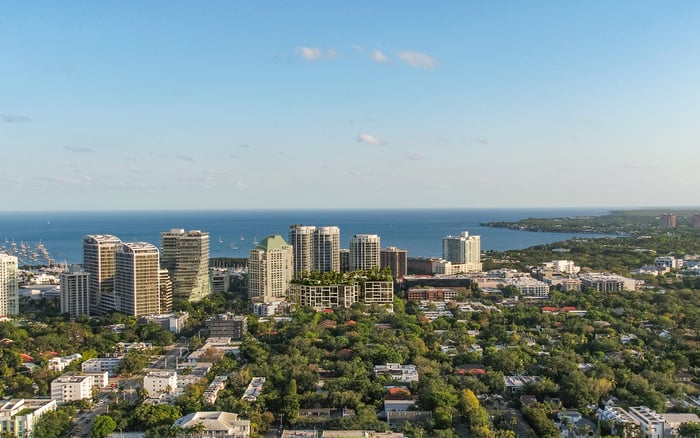
A discreet buyer’s framework for weighing walkability, privacy, arrivals, views and lifestyle convenience before purchasing in Grove Isle.
For affluent buyers, walkability is rarely about counting steps. It is about the quality of movement between home, car, waterfront, dining, wellness, social life and the quiet return. In Grove Isle, the central question is not simply whether daily needs feel close. It is whether convenience can be enjoyed without compromising the sense of removal that makes the address desirable.
A buyer should approach this decision through two lenses. The first is lifestyle: how naturally the property supports morning routines, dinner plans, pet walks, guest arrivals and access to the broader Coconut Grove orbit. The second is discretion: how much exposure is created each time one leaves the residence, receives a visitor, opens a Terrace door or uses common areas. Walkability has value only when it does not turn private life into a visible routine.
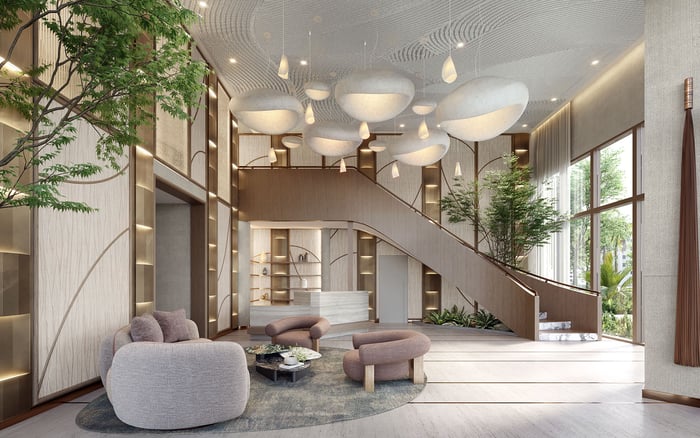
This is where Vita at Grove Isle becomes a useful reference point for the conversation. It sharpens the buyer’s focus on the rare balance between Grove Isle living and the practical expectations of a modern luxury residence. The issue is not whether a buyer wants connection or seclusion. The best purchases are often those that can provide both, depending on the hour and the occasion.
Before touring, buyers should write down their actual week, not the aspirational version. How often do you dine out? Do you prefer walking for coffee, driving to private appointments or being collected at the entrance? Are children, household staff, trainers, security personnel or visiting family part of the routine? A property can appear wonderfully convenient during a weekend showing and feel less graceful once weekday logistics begin.
Walkability should be tested across several categories: essential errands, leisure routes, wellness habits, social evenings and quiet strolls. The best route is not always the shortest. A shaded, calm and visually comfortable path may matter more than a direct path that feels exposed. Similarly, an easy drive or private drop-off may be preferable to a walk that passes too many public-facing edges.
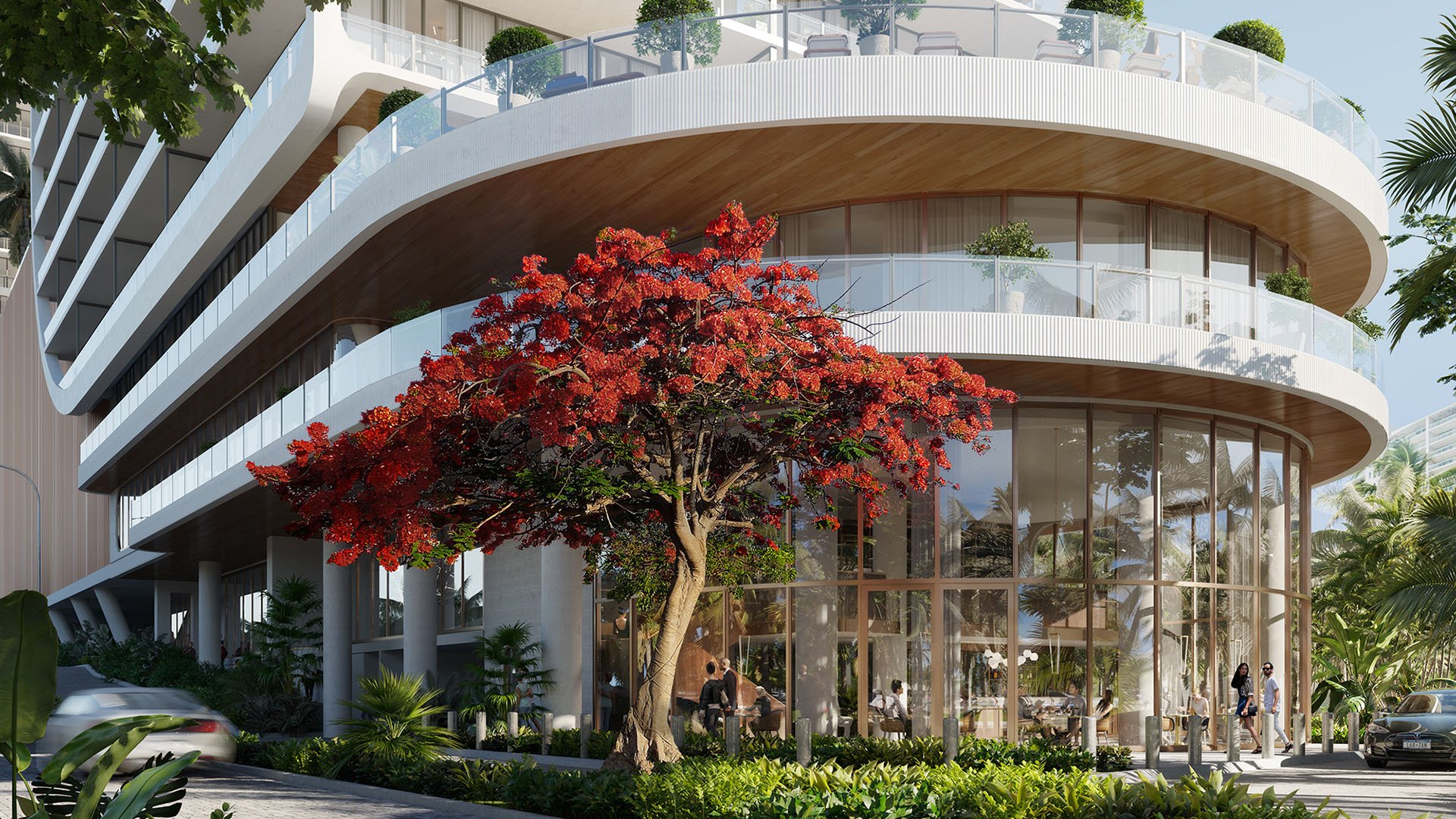
For buyers also considering the mainland Coconut Grove lifestyle, Four Seasons Residences Coconut Grove offers a useful contrast in how residential living can frame access, services and neighborhood connection. The comparison should be less about which address is more convenient and more about which rhythm feels natural.
Privacy is often marketed as a single attribute, but sophisticated buyers should treat it as a layered experience. The first layer is arrival. How visible is the approach? Where do guests wait? How are vendors, deliveries and household support managed? The second layer is vertical circulation. Does the route from lobby to residence feel calm, or does it create unnecessary overlap with others?
The third layer is the residence itself. Consider sightlines from nearby buildings, shared areas, walkways, boats, roads and neighboring terraces. A Waterview may be exquisite, but the orientation must be studied at different times of day. Reflection, lighting and evening use can change the privacy profile of a room. A residence that feels secluded in daylight can become more exposed at night if interior lighting is not considered.
The fourth layer is amenity privacy. Pools, fitness areas, dining rooms, lounges and spa spaces should be evaluated not only for design, but also for circulation. Ask how residents arrive, where staff enter, how guests are hosted and whether there are quiet alternatives when common areas are active. Privacy is the cumulative result of these decisions.
A polished showing can obscure the realities of daily life. Buyers should request enough time to understand the property’s edges: the approach, the garage, lobby sequence, elevator experience, amenity transitions and outdoor areas. If possible, observe the setting in the morning, late afternoon and evening. The sound profile, light quality and activity level may change meaningfully.
Pay particular attention to the moment when public life meets private residence. A home can be near beloved restaurants, parks and waterfront routes, yet still feel protected if its threshold is well designed. Conversely, a seemingly secluded property can feel less private if every movement passes through a highly visible common point.
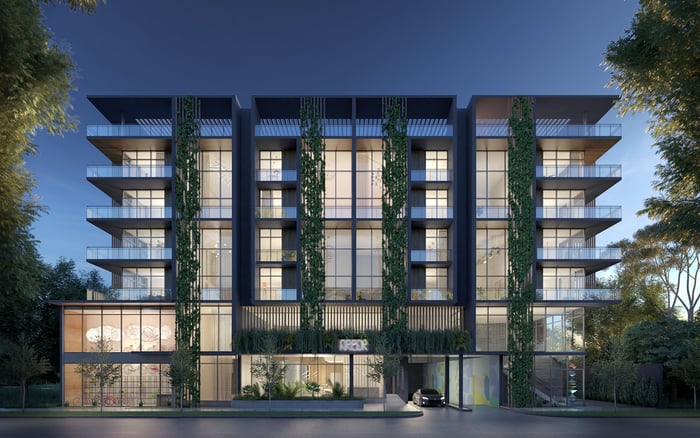
For comparison, Arbor Coconut Grove reflects the appeal of a more intimate Coconut Grove residential scale. A buyer comparing this type of neighborhood experience with Grove Isle should ask whether the priority is immediate village texture, a quieter return or a more controlled transition between the two.
Luxury buyers often focus on views first, then discover the softer issues later. Noise, light and social visibility deserve equal attention. Walkability can bring desirable energy nearby, but that energy must not intrude into bedrooms, terraces or primary living spaces. Listen for mechanical sounds, traffic rhythms, service activity, voices, music and boating activity where relevant. Do this without assuming that one perfect showing hour tells the whole story.
Light is similarly important. A beautiful exterior condition may produce glare, reflections or exposure depending on orientation and time of day. Buyers who entertain frequently should study how the residence performs after sunset. If the Terrace is central to the lifestyle, confirm whether it feels intimate when used for dinner, reading or conversation, not just when photographed.
Social visibility is more personal. Some buyers enjoy a livelier residential environment. Others want the ability to disappear. Neither preference is wrong, but the purchase should match the temperament of the household. A discreet buyer should be especially wary of routes where neighbors, staff, guests and service providers repeatedly intersect.
The strongest buyers do not evaluate Grove Isle in isolation. They compare it with the broader Coconut Grove field and ask which version of privacy is most valuable. Some properties offer closer access to the neighborhood’s daily texture. Others prioritize a more composed residential envelope. The right answer depends on how often a buyer expects to walk, host, travel and retreat.
Mr. C Tigertail Coconut Grove is relevant for buyers who want to examine another residential experience within the Grove’s broader lifestyle pattern. The Well Coconut Grove adds another lens, especially for those who place wellness and routine at the center of the purchase decision. These comparisons help define whether Grove Isle’s privacy premium aligns with the way the household actually lives.
Some buyers use the shorthand Coconut-grove to separate neighborhood convenience from the more insulated character they may be seeking in Grove Isle. The label matters less than the conclusion: if the buyer wants constant proximity to village life, the analysis will differ from that of a buyer who wants access on demand and retreat by default.
Walkability can support long-term desirability, but only when it is paired with composure. Future buyers in the upper end of the market will likely ask the same questions: Can I move easily? Can my guests arrive elegantly? Can my family live privately? Can I enjoy views without feeling watched? Can services operate without disrupting the home?
The best purchase is one where convenience feels optional rather than forced. If every daily need requires a car, the home may feel less connected. If every activity exposes the owner to unnecessary visibility, it may feel less private. Grove Isle buyers should seek the middle ground: a residence that allows easy access to the broader Grove lifestyle while preserving a sense of personal domain.
A disciplined buyer should rank each candidate property across five criteria: arrival privacy, route quality, amenity circulation, residence sightlines and after-dark comfort. The home that wins is not necessarily the one with the shortest walk. It is the one that supports an elegant life with the fewest compromises.
Is walkability always a positive for a Grove Isle buyer? Not automatically. Walkability is valuable when it adds convenience without increasing noise, exposure or unwanted overlap with others.
What should I test before purchasing? Test arrival, guest flow, parking, outdoor routes, amenity access, elevator experience, views and nighttime privacy before making a decision.
How should I evaluate a Terrace? Use it at different times of day if possible, and study sightlines, sound, wind, lighting and comfort after sunset.
Should I prioritize Waterview or privacy? The strongest residence should offer both, but if forced to choose, long-term comfort often depends on privacy as much as the view.
Does a Gated-community label guarantee discretion? No. True discretion also depends on circulation, staffing protocols, guest handling, residence orientation and amenity design.
How do I compare Grove Isle with Coconut-grove inventory? Compare the rhythm of daily life, not just location. Some buyers want constant neighborhood texture, while others want access with a quieter return.
Should Marina access influence my walkability decision? It can, if boating is part of the lifestyle, but it should be evaluated alongside privacy, service movement and sound conditions.
How many times should I visit before purchasing? More than once is prudent. Morning, late afternoon and evening visits can reveal different privacy and convenience patterns.
What is the biggest mistake buyers make? They often measure distance instead of experience. A short route can still feel exposed, noisy or inconvenient in daily use.
Can privacy and walkability coexist in Grove Isle? Yes, but the buyer must evaluate thresholds, sightlines, services and daily routines with the same discipline used for finishes and views.
To compare the best-fit options with clarity, connect with MILLION.
If branded residences are on your mind — as a home or as an allocation — we would be glad to share what we are seeing, privately.
Begin a quiet conversation