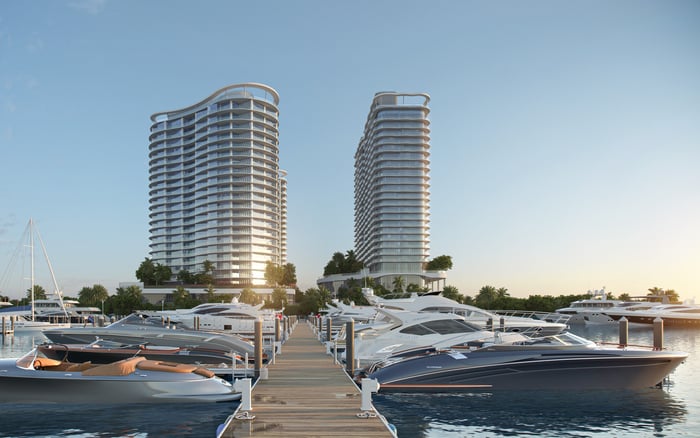
A buyer-focused editorial guide to evaluating marina access, dock rights, operating realities, and long-term value before purchasing in Las Olas.

In Las Olas, the romance of the water can distract even sophisticated buyers. A terrace over the canal, a short run to open water, and the easy rhythm of Fort Lauderdale living all carry obvious appeal. Yet the strongest waterfront purchases are not led by scenery alone. They begin with a disciplined marina strategy.
For a serious boater, the residence and the vessel operate as one lifestyle system. The wrong arrangement can turn a beautiful home into a logistical compromise. The right one can protect privacy, simplify daily use, and give future buyers a clear reason to compete for the property. This is where Las Olas differs from a simple waterfront search. The question is not only whether the home is on the water. It is whether the water works.
Buyers should treat marina access as a core due diligence category, on par with structural condition, association governance, and neighborhood positioning. Whether the purchase is a single-family estate, a boutique condominium, or a lock-and-leave residence near Las Olas Boulevard, the boating component deserves its own review.
Before evaluating any dock or slip, buyers should define how the vessel will be used. A day boat, a tender, a sportfish, and a larger yacht create very different requirements. The buyer who wants spontaneous sunset cruises has a different profile from the owner planning longer coastal trips or frequent guest entertaining.
This exercise should be practical rather than aspirational. How often will the boat move? Who will handle it? Will there be crew, a captain, or family-only use? Does the owner expect to provision at the residence, board discreetly, and return late without friction? These questions matter because the most luxurious marina arrangement is not always the largest. It is the one that aligns with how the owner actually lives.
Buyers comparing Las Olas with broader Fort Lauderdale options may also want to tour residences such as St. Regis® Residences Bahia Mar Fort Lauderdale to understand how a more resort-oriented waterfront environment feels against a private residential canal setting.
Waterfront does not automatically mean practical boating. A property can photograph beautifully and still fail a serious vessel test. Buyers should examine usable dockage, not merely the canal view. That means understanding the physical arrangement, the approach, the maneuvering room, and any limitations that could affect present or future use.
The same principle applies in condominium settings. A deeded slip, an assigned slip, a waitlist, a license, and a revocable use right are not interchangeable. Each structure carries different implications for control, transferability, financing, and resale. Boat-slip documentation should be read with the same seriousness as a purchase contract.
A buyer should ask for all relevant governing documents early. The goal is to determine whether the boating right is durable, exclusive, transferable, and appropriately matched to the intended vessel. If the answer is unclear, the property should not be treated as a complete boating solution.
A marina is not only infrastructure. It is a governed environment. Rules may address vessel size, maintenance, guest access, fueling, noise, commercial use, tenders, lifts, insurance, hurricane plans, and contractor access. The written rules matter, but so does the operating culture.
Some waterfront communities are highly owner-directed and private. Others are more hospitality-driven, with concierge-style services and greater daily activity. Neither is inherently superior. The best choice depends on the buyer’s appetite for privacy, service, and oversight.
When touring Fort Lauderdale waterfront condominiums, a property like Four Seasons Hotel & Private Residences Fort Lauderdale can be useful as a lifestyle comparison point, particularly for buyers weighing hotel-caliber services against the quieter cadence of a Las Olas canal residence.
The elegance of private water access often comes with operating complexity. Buyers should look beyond acquisition price and ask what the marina component costs to own, insure, maintain, and govern. Line items may include dock maintenance, lift servicing, utilities, association fees, management expenses, dredging exposure, storm preparation, and insurance requirements.
The more serious the vessel, the more important this underwriting becomes. A buyer who focuses only on the residence may miss the cost profile of the boating platform attached to it. This is especially important for second-home owners who will rely on local management, captains, or caretakers when they are not in residence.
An elegant waterfront purchase should feel effortless in use, but it rarely becomes effortless by accident. It becomes effortless because the costs, obligations, and responsibilities were understood before closing.
In Las Olas, boating value is deeply tied to ease. Buyers should think through the route from residence to water, from dock to departure, and from return to home. Small points of friction can become meaningful over time. Where do guests park? How is gear moved? Can provisions be loaded discreetly? Is the dock visible from principal rooms? Is there a comfortable transition from pool, terrace, or kitchen to the vessel?
The answers influence both lifestyle and resale. A buyer who plans to use the boat often should prioritize directness, privacy, and simplicity. A buyer who views boating as occasional entertainment may accept more separation if the residence itself is exceptional.
For those considering alternatives beyond Las Olas, Riva Residenze Fort Lauderdale offers another point of comparison within the Fort Lauderdale residential market, especially for buyers studying how different waterfront settings shape daily routines.
A serious marina strategy should make the property easier to explain. Future buyers should be able to understand what they are acquiring, how it works, what rights come with it, and what limitations apply. Ambiguity narrows the audience. Clarity expands it.
This does not mean every buyer needs the largest dock or the most elaborate boating setup. It means the property’s water story should be coherent. A compact residence with clean marina rights may outperform a grander property with unclear access. Likewise, a residence without private dockage can still be compelling if its location, services, and lifestyle proposition are honest and well matched.
For Las Olas buyers, the best purchase is not necessarily the most visually dramatic. It is the one where architecture, address, governance, boating rights, and daily use form a complete proposition.
Las Olas buyers often face a subtle choice between private waterfront living and more service-rich residential environments. Private canal homes may offer immediate access, discretion, and control. Full-service condominiums may offer staffing, amenities, security, and a more simplified ownership experience.
Neither path is automatically more luxurious. The better choice depends on temperament. Some owners want to step directly from their garden to the dock. Others prefer a residence where the boating lifestyle is one component of a broader managed environment.
A tour of The Ritz-Carlton Residences® Fort Lauderdale can help buyers calibrate service expectations before deciding whether Las Olas privacy or a branded residential framework better supports the way they intend to live.
Before writing an offer, buyers should be clear on several points: the nature of any dock or slip right, the allowed vessel parameters, transferability, association approval requirements, insurance obligations, maintenance responsibility, storm protocols, and the practical user experience from home to boat.
They should also consider whether the property still makes sense without the boat. The strongest acquisitions are resilient. If the owner’s vessel changes, if boating use declines, or if a future buyer values the water differently, the residence should remain desirable on its own merits.
Las Olas rewards buyers who combine emotion with restraint. The water is the invitation, but the marina strategy is the discipline that determines whether the purchase will feel as good in year five as it did on the first showing.
What is the first marina question a Las Olas buyer should ask? Ask what legal right, if any, comes with the dock or slip, and whether that right transfers with the residence.
Is waterfront property always suitable for boating? No. Waterfront appeal and usable dockage are separate issues, and both should be evaluated independently.
Why does boat-slip documentation matter so much? It determines control, use, transferability, and sometimes the property’s appeal to the next buyer.
Should non-boaters still care about marina strategy? Yes. Even occasional or future boating potential can influence lifestyle flexibility and resale positioning.
How should buyers compare Las Olas with other Fort Lauderdale waterfront options? Compare privacy, service level, access, governance, and the everyday experience of moving from residence to water.
Can condominium marina rights be different from single-family dockage? Yes. Condo rights may be deeded, assigned, licensed, or governed by association rules that require careful review.
What operating costs should be reviewed before closing? Buyers should examine maintenance, utilities, insurance, management, association fees, and storm-related responsibilities.
Does a larger dock always create more value? Not necessarily. The most valuable setup is the one that is clear, usable, well governed, and aligned with likely buyers.
When should a buyer involve marine specialists? Early in diligence, especially when vessel size, lifts, navigation, insurance, or maintenance obligations are material.
What makes a marina strategy serious rather than cosmetic? It connects legal rights, vessel use, operating costs, access, governance, and resale into one coherent ownership plan.
To compare the best-fit options with clarity, connect with MILLION.
If branded residences are on your mind — as a home or as an allocation — we would be glad to share what we are seeing, privately.
Begin a quiet conversation