A refined guide to reading the human, operational, and lifestyle signals that determine whether a Miami Beach condominium will feel effortless as a full-time residence.
Buying in Miami Beach for full-time life is different from buying a beautiful pied-à-terre. A second-home buyer may be satisfied by a spectacular view, a polished lobby, and the promise of ease for select weeks of the year. A full-time resident lives with the building at every hour: early mornings, school runs, work calls, deliveries, holidays, stormy afternoons, and quiet Sunday evenings. Culture is what remains after the tour ends.
In practical search shorthand, Miami Beach, South of Fifth, oceanfront, boutique, pets, and new construction are not just tags; they are lifestyle filters. They suggest how a building may feel, but they do not answer the deeper question: does the residence support the buyer’s daily rhythm without friction? That answer comes from studying governance, staff tone, resident behavior, rules, service cadence, and the way common spaces are actually used.
A buyer comparing 57 Ocean Miami Beach with other Miami Beach options should look beyond the visual language of the residence and ask whether the building’s rhythm complements the way they live. The right culture is rarely loud. It is measured, consistent, and quietly protective of everyday comfort.
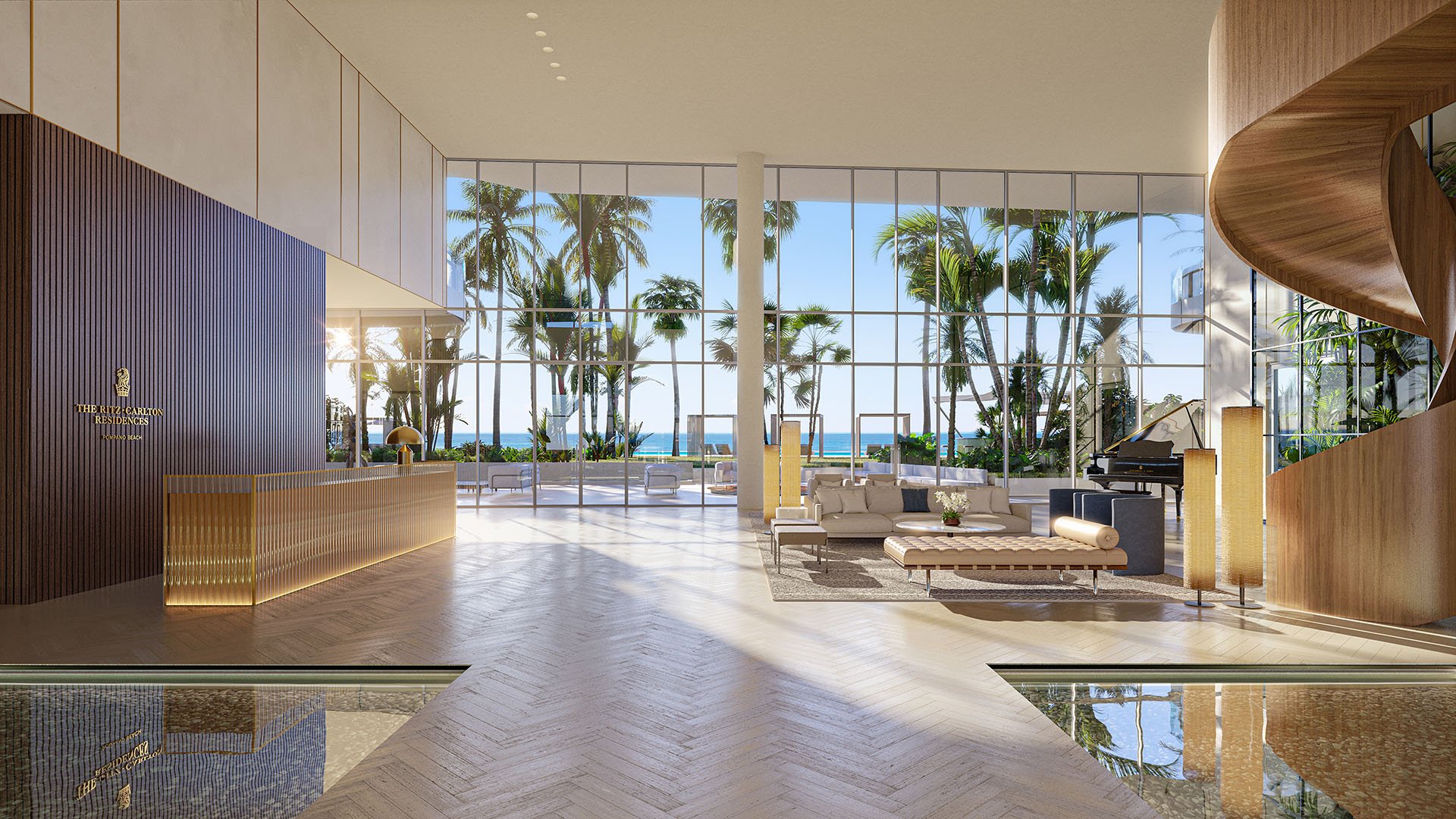
The lobby is the building’s social contract in physical form. Observe how staff greet residents, how visitors are handled, whether delivery activity feels controlled, and whether the room reads as a hotel lobby, a private club, or a discreet residential foyer. None of these models is universally superior. The question is which one supports full-time life.
A highly social building may suit buyers who want connection and energy. A quieter building may better serve those who value anonymity and calm. A boutique culture can feel intimate, but it can also mean every personality carries more weight. A larger building may offer greater separation, but buyers should understand whether scale creates convenience or detachment.
Spend time in the lobby at different moments. A midweek morning reveals staff choreography. Late afternoon shows how residents return from the beach, work, or school. Weekend evenings suggest whether the building becomes animated or remains composed. The best due diligence often happens in silence: watching, listening, and noticing whether the energy relaxes you or asks you to adapt.
Condominium documents are not merely legal requirements. For a full-time buyer, they are a portrait of daily life. Guest policies, pet provisions, renovation protocols, delivery procedures, move-in rules, staff access, valet structure, and amenity reservations all influence whether a building feels effortless or restrictive.
If you entertain often, guest registration and parking protocols matter. If you travel frequently, access procedures for household staff and family members matter. If you work from home, renovation hours and noise rules matter. If pets are part of the household, the practical experience of elevator use, service areas, and outdoor routines matters as much as any written permission.
Buildings such as The Perigon Miami Beach will naturally attract buyers who are already thinking about architecture, privacy, and long-term residential fit. Yet even in the most design-forward setting, the rules determine how gracefully life unfolds. A beautiful residence can still feel misaligned if the operating culture conflicts with the household’s routine.
Luxury service is not defined by theatrical attention. For full-time residents, the highest form of service is anticipation without intrusion. The doorman who knows when to step forward and when to disappear, the management team that communicates clearly, the valet operation that stays calm under pressure, and the maintenance staff that protects the atmosphere of the building all shape the experience.
Ask practical questions. How are maintenance requests handled? How are residents notified about building work? What is the tone of communication from management? Are policies applied evenly? Does the staff seem empowered, or merely reactive? These details reveal whether the building culture is stable.
A full-time buyer should also notice whether amenity spaces are treated as extensions of private life or as social stages. A gym, spa, pool deck, or lounge can be beautifully designed and still feel uncomfortable if the resident culture is not aligned. The question is not whether an amenity exists. The question is whether you would use it on an ordinary Tuesday.
Miami Beach contains many versions of luxury. Some buildings feel resort-like, others clubby, residential, wellness-oriented, architectural, or deeply private. The right choice depends on the buyer’s preferred level of visibility.
For some, a residence such as Shore Club Private Collections Miami Beach may enter the conversation because the buyer wants an address with a strong lifestyle identity. For others, the priority may be a quieter building where the residence is a sanctuary rather than a social platform. Neither approach is inherently better. The mistake is buying one culture while imagining another.
Before purchasing, buyers should ask themselves direct questions. Do I want to know my neighbors? Do I want staff to know my patterns? Will visiting family feel welcomed or processed? Do I prefer a building where residents gather, or one where privacy is the primary luxury? In full-time life, these preferences become daily realities.
A sales presentation is designed to be elegant. A resident visit should be more investigative. Arrive early. Return later. Walk the immediate area at different hours. Notice the transition from car to lobby, lobby to elevator, elevator to residence, and residence to amenity. The more often a sequence repeats, the more important it becomes.
If a buyer is considering Five Park Miami Beach or another prominent Miami Beach building, due diligence should include the surrounding rhythm as well as the building itself. Full-time life is shaped by access, daily errands, outdoor routines, visitors, and the emotional quality of arriving home. A dramatic residence can lose its ease if the approach feels misaligned with the household’s habits.
Speak with discretion. Ask your advisor about owner occupancy patterns, rental culture, renovation sensitivity, board temperament, and any known operational concerns. The goal is not gossip. The goal is pattern recognition.
Every building culture makes tradeoffs. A highly controlled building may provide privacy and order but less spontaneity. A flexible building may feel relaxed but introduce more variability. A social building may be energizing but less discreet. A very quiet building may be peaceful but not warm.
Buyers should decide which compromises are acceptable before emotions take over. A residence can be renovated. A view can be furnished around. A floor plan can often be adapted. Building culture is harder to change because it is shared by owners, staff, management, documents, and precedent.
For buyers drawn to Setai Residences Miami Beach, or to any established Miami Beach address, the same principle applies: evaluate the culture as carefully as the finishes. The most successful purchase is not simply the most impressive residence. It is the one that makes daily life feel natural.
Before making an offer, imagine a normal week rather than a perfect weekend. Picture groceries arriving, guests visiting, a pet needing a late walk, a contractor requesting access, a car being retrieved in the rain, a package going missing, a neighbor renovating, or a child coming home with friends. If the building’s systems and culture still feel composed in those scenarios, the fit is stronger.
The best Miami Beach buildings do not demand that residents perform luxury. They allow them to live well, privately and consistently. For full-time buyers, that distinction is everything.
What does building culture mean in a Miami Beach condo? It means the shared rhythm created by residents, staff, rules, management, privacy norms, and daily use of common spaces.
Why is culture more important for full-time buyers? Full-time owners experience the building every day, so small operational details become part of their quality of life.
Should I visit a building more than once before buying? Yes. Visit at different times of day and week to understand the building’s real pace beyond a formal showing.
Are condo rules as important as amenities? For full-time living, yes. Rules determine how guests, pets, deliveries, renovations, and shared spaces function.
How can I tell if a building is too social for me? Observe the lobby, pool, elevators, and amenity areas, then ask whether the energy feels appealing or intrusive.
What should pet owners evaluate before purchasing? They should review pet rules, elevator etiquette, outdoor access, staff attitude, and the practical ease of daily routines.
Does a boutique building always feel more private? Not always. Smaller buildings can feel intimate, but fewer residences may also make daily interactions more visible.
How should remote workers evaluate building fit? They should focus on noise rules, renovation protocols, delivery flow, privacy, and the calmness of common areas.
Can building culture change after purchase? Yes, but slowly. Board leadership, ownership patterns, management quality, and resident expectations can shift over time.
What is the best way to shortlist comparable options for touring? Start with location fit, delivery status, and daily lifestyle priorities, then compare stacks and elevations to validate views and privacy.
For a tailored shortlist and next-step guidance, connect with MILLION.
If branded residences are on your mind — as a home or as an allocation — we would be glad to share what we are seeing, privately.
Begin a quiet conversation