A discreet buyer’s guide to evaluating privacy in Coconut Grove before committing to a luxury condominium, townhome, or house, with emphasis on access, sightlines, service flow, noise, and long-term livability.
For the luxury buyer, privacy is often treated as a single attribute: a gated entry, a high floor, a discreet lobby, a deep setback. In Coconut Grove, it is more layered. The neighborhood’s appeal is intimate and textured, which means privacy must be tested across several dimensions: how one arrives, who can see into the residence, how sound travels, how staff and guests move, and whether the surrounding rhythm supports the life the buyer intends to lead.
A polished sales presentation can make almost any residence feel serene at noon on a weekday. A serious buyer should return when the neighborhood is active, when school runs, dinner traffic, service deliveries, dog walks, weekend guests, and valet patterns reveal the true operating environment. Privacy is not the absence of people. It is the ability to live with control over exposure.
For that reason, Coconut Grove should be assessed less as a postcard and more as a daily system. The best residence is not necessarily the most hidden; it is the one whose architecture, access, and management align with the owner’s tolerance for visibility.
The first pressure test is the arrival sequence. Before studying finishes, views, or amenities, identify how many moments of exposure occur between the street and the front door. Is there a direct path from parking to residence? Can guests be received without turning the lobby into a social checkpoint? Are deliveries and staff entries separated from owner circulation, or do they overlap at inconvenient points?
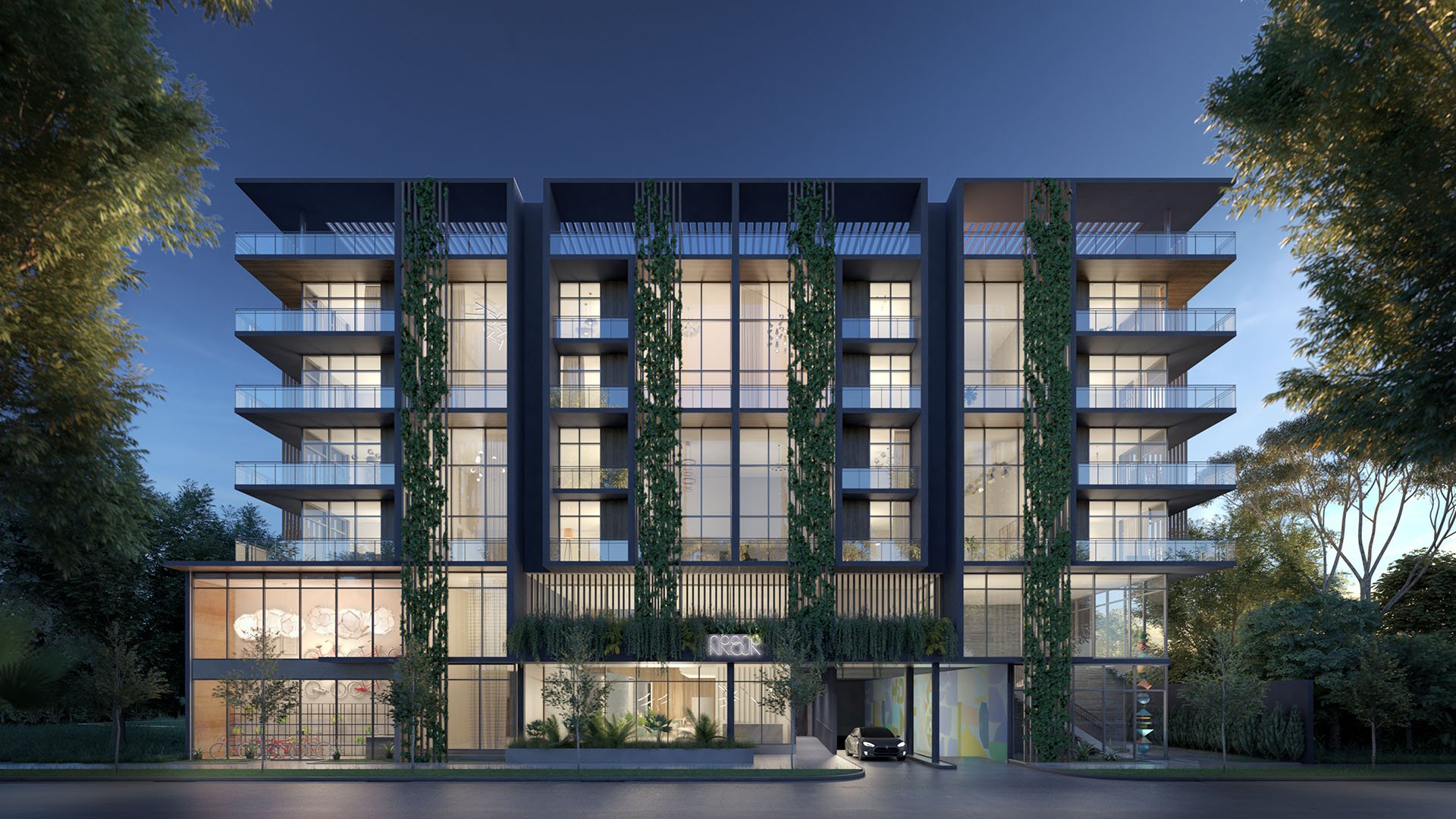
This is where a buyer should compare building typologies. A more intimate condominium such as Arbor Coconut Grove may appeal to buyers who prefer a residential scale, while larger hospitality-influenced environments can offer more layers of staffing and protocol. Neither is automatically more private. The question is whether the building’s choreography fits the household.
Drive the approach more than once. Arrive with a chauffeur, arrive alone, arrive as a guest would, and arrive during a busy evening. Notice whether the property allows discretion or requires performance. For high-profile owners, that distinction matters.
Privacy is often lost through glass, terraces, neighboring balconies, and aligned windows. A residence may feel secluded from the living room yet become exposed once shades are open or outdoor space is in use. Buyers should stand at every major window and terrace edge, then reverse the exercise from the street, driveway, neighboring walkways, and amenity areas.
Ask simple questions. Who can see the primary suite when lights are on at night? Does the terrace allow outdoor dining without feeling watched? Are neighboring residences close enough to create a visual dialogue the owner does not want? Can landscaping, window treatments, or furniture placement solve the issue without compromising the architecture?
This is particularly important for buyers comparing condominium living with house-like alternatives. At The Lincoln Coconut Grove, for example, the appeal for a privacy-minded buyer may lie in how the floor plan and access feel in daily use, not simply in the project name or design language. Proper due diligence studies the lived experience.
A quiet home is not only about decibels; it is about psychological distance. A residence can be visually private but acoustically revealing. Before committing, visit at different times and listen without conversation. Open doors. Stand on terraces. Sit in the primary bedroom. Notice mechanical sound, hallway sound, pool activity, garage activity, nearby conversation, and the rhythm of arrivals.
Buyers should not assume that height alone solves sound, or that greenery alone creates silence. Construction quality, window systems, corridor design, elevator placement, amenity adjacency, and service areas all influence whether a residence feels insulated. In a luxury purchase, acoustic privacy deserves the same attention as stone selection or kitchen design.
For clients considering Four Seasons Residences Coconut Grove, the pressure test should include both the private residence and the broader operating environment: where people gather, how staff move, how amenity spaces are positioned, and whether the owner’s preferred routine intersects with other residents.
Boutique scale can feel personal, quiet, and residential. It can also mean everyone recognizes everyone. A larger managed residence can create anonymity through staffing, protocol, and multiple circulation paths. It can also increase activity. Privacy-minded buyers should avoid assumptions and compare how each model behaves.
At Mr. C Tigertail Coconut Grove, the question is not whether branded or serviced living is inherently more public. The question is whether the owner values a professionally managed arrival, hospitality-style responsiveness, and a certain social polish, or whether the owner prefers fewer touchpoints altogether.
A useful exercise is to write a day-in-the-life brief. Who comes to the residence each week? Personal assistants, trainers, chefs, drivers, children’s friends, visiting family, yacht crew, security consultants, pet care, art handlers, contractors? Then test whether the building can absorb that activity discreetly. Privacy fails most often at the operational level, not the architectural one.
Outdoor space is one of Coconut Grove’s great emotional draws, but it must be evaluated carefully. A large terrace is not necessarily private. Its value depends on orientation, screening, overhead exposure, neighboring setbacks, and how it relates to amenity decks or adjacent residences.
If a buyer entertains often, the terrace should be tested for guest flow. If the buyer wants morning coffee in solitude, the test is different. If the residence will serve as a second home, privacy may depend on how confidently the building manages the unit during long absences.
Amenities deserve equal scrutiny. A beautiful pool, wellness suite, or lounge can enhance life, but it can also introduce visibility. Walk the route from residence to amenity spaces. Ask whether the owner can use them without feeling observed, or whether private in-residence alternatives are more appropriate. At The Well Coconut Grove, a wellness-oriented buyer should evaluate not just the amenity concept, but the privacy of the journey to and from those spaces.
A disciplined buyer should score every property across five dimensions: arrival control, visual exposure, acoustic insulation, service circulation, and lifestyle fit. A residence that performs well across all five is rare, but the exercise clarifies tradeoffs. One buyer may accept more visibility in exchange for a superior terrace. Another may prioritize a subdued entry over a dramatic view. A third may want gated-community discipline, boutique scale, or the feeling of a private house within a managed setting.
The most important rule is to test the property as you will actually live. Do not rely on a staged tour. Bring the decision makers. Ask to revisit. Study the approach, the elevator ride, the corridor, the parking, the staff zones, and the late-day atmosphere. Privacy is rarely revealed in the first impression; it appears through repetition.
Coconut Grove can be deeply compelling for buyers who value discretion, but the right purchase requires clear-eyed pressure testing. The prize is not simply seclusion. It is a residence where daily life feels effortless, controlled, and quietly protected.
What is the first privacy issue to test in Coconut Grove? Start with arrival. The route from street or garage to residence reveals how exposed daily life may feel.
Are higher floors always more private? Not always. Height can improve visual separation, but sound, neighboring sightlines, and elevator traffic still matter.
Is a boutique building better for privacy? Boutique scale can feel discreet, but it may also be more socially recognizable. The operating style matters as much as size.
Should buyers visit more than once before deciding? Yes. A residence should be seen at different times of day to understand sound, traffic, lighting, and activity.
How should terraces be evaluated? Stand outside, look back toward the residence, and study nearby balconies, amenity areas, and street visibility.
Do amenities reduce privacy? They can, depending on placement and circulation. The key is whether owners can use them without unnecessary exposure.
What should high-profile buyers ask about staff flow? They should ask how deliveries, assistants, drivers, service providers, and guests move without crossing private routines.
Can landscaping solve privacy concerns? Sometimes, but it should not be the only solution. Architecture, orientation, and management should carry the larger burden.
Is a single-family home always more discreet than a condominium? Not necessarily. Houses can have street exposure, while a well-managed condominium may offer controlled access and staffing.
What is the best final test before making an offer? Walk through a normal day in the property and identify every moment where visibility, sound, or access feels uncontrolled.
When you're ready to tour or underwrite the options, connect with MILLION.
If branded residences are on your mind — as a home or as an allocation — we would be glad to share what we are seeing, privately.
Begin a quiet conversation