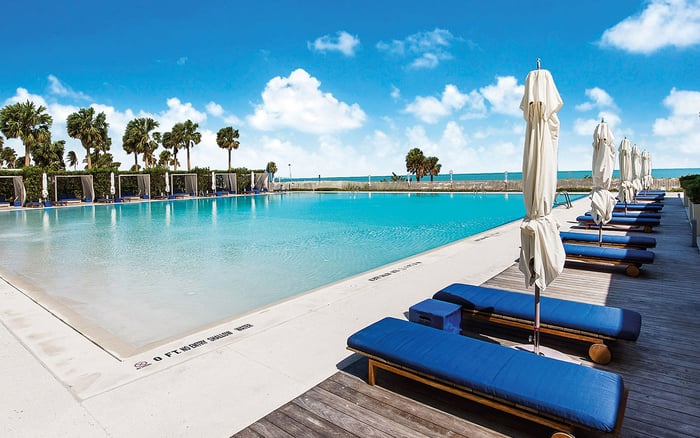
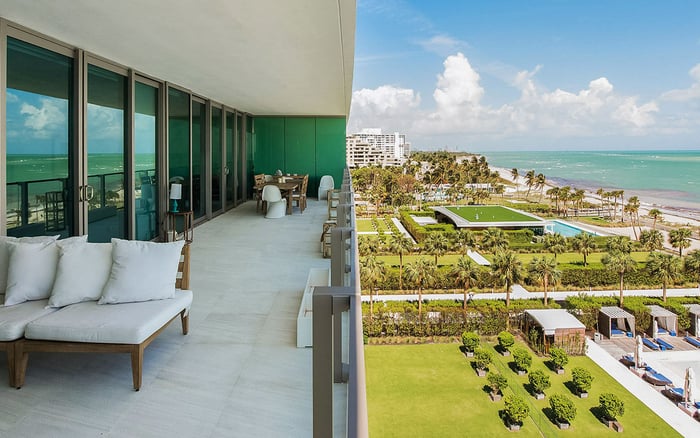
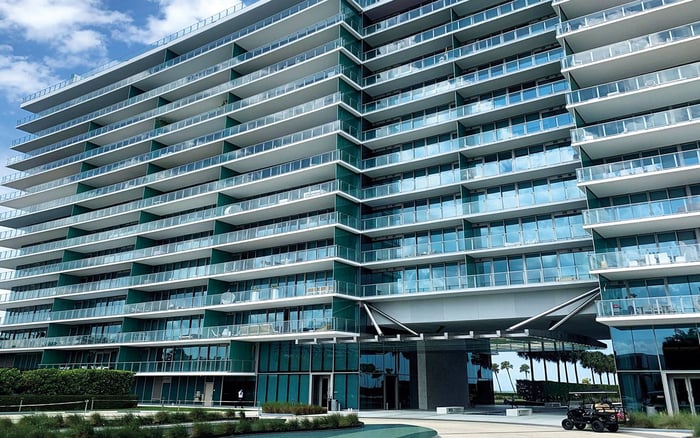
Brickell’s off-site beach privileges and Bal Harbour’s local beach-entry infrastructure answer different lifestyle priorities. Buyers should evaluate access, cabana entitlements, and guest permissions separately before assigning value to any amenity.
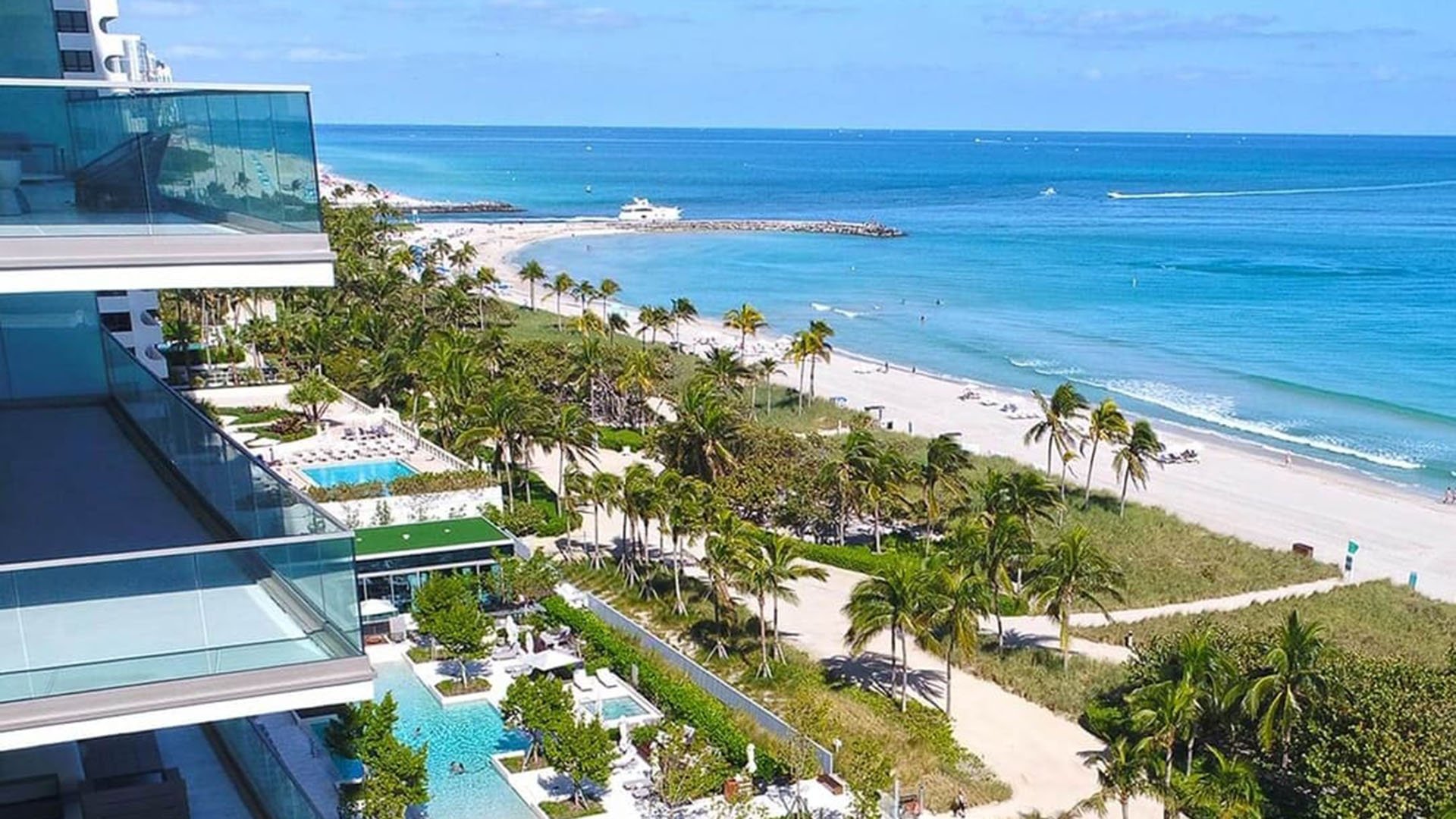
For a luxury buyer comparing Brickell and Bal Harbour, beach access is not a single amenity. It is a sequence: leaving the residence, entering the beach or club, securing a place to settle, and welcoming the people who will share the afternoon. An appealing amenity description may answer only one of those questions.
The distinction is not that one neighborhood universally offers more generous privileges. The Brickell examples here connect a residence to an off-site beach experience, while Bal Harbour offers a local, credential-controlled beach-entry route. Neither model establishes what every condominium permits, what a particular cabana conveys, or whether visitors may arrive independently.
The clearest comparison separates three matters: the route to the sand, the rights to a cabana, and the permissions granted to guests. For buyers who entertain frequently, the third may be as consequential as the first.
At Una Residences Brickell, the advertised amenities include exclusive resident access to Grand Bay Club in Key Biscayne. The off-site model is clear: the home and the beach experience occupy different locations. A buyer can favor that arrangement without confusing it with an ocean beach at the residence.
Historically, SLS Brickell’s advertised amenities included VIP beach access at SLS Hotel South Beach, with cabanas, lounges, fresh towels, and seaside beverage and snack service. Those details describe a serviced beach visit. They do not establish ownership of a particular cabana, guaranteed availability, or unrestricted use by a resident’s guests.
Historically, SLS Lux Brickell’s advertised amenities similarly included VIP access to Hyde Beach at SLS Hotel South Beach, with lounges and towel service. Poolside cabanas were listed separately among the residential amenities. A cabana at the building’s pool and a beach privilege at another property are distinct offerings, even when presented as part of the same lifestyle.
For a buyer seeking a Brickell home with occasional beach days, this arrangement may appeal. The practical test is whether the current terms suit the household’s routine. Confirm the destination, operating terms, reservations, and charges rather than treating a historical offering as a present entitlement.
Bal Harbour’s 102nd Street Beach Access Path provides a Village-managed route to the beach. Its entrances have locked gates accessible only with the Bal Harbour All Access Card. The card also serves as a key fob for Waterfront Park, with beach-path entry included starting spring 2026.
This is an access credential-not evidence of a cabana reservation, chair service, or private club membership. Nor does a park credential establish the guest rules of a residential beach operation. Buyers should distinguish municipal entry from condominium amenities and any separately operated services.
When evaluating Oceana Bal Harbour, focus on what the specific residence’s documents establish, not what the neighborhood’s beach infrastructure might suggest. Confirm the entry arrangements and service rules for the property itself.
The same discipline applies to Rivage Bal Harbour: establish which beach arrangements belong to the residential offering and which depend on separate credentials or agreements. A local beach route can support a beach-centered routine, but it cannot substitute for unit-specific diligence.
“Cabana” can describe an available amenity without defining a property right. The essential question is whether the buyer receives ownership, an exclusive-use entitlement, a reservation opportunity, or simply access to a service where cabanas may be offered. None should be assumed from the word alone.
In Bal Harbour, cabanas are defined as permanent or portable bath cabins with specified accessory facilities, not sleeping or living quarters. Within the Ocean Front District, cabanas and enclosed parking structures are permitted in specified setback areas, subject to conditions, including a side setback of at least 25 feet from each side lot line.
Those provisions address physical form and placement. They do not establish a purchaser’s entitlement to a particular cabana, its transferability, or who may use it. Zoning permission and private ownership rights answer different questions.
If a cabana materially influences the purchase decision, ask counsel to identify the document creating the claimed right. Request written confirmation of exclusivity, recurring charges, reservation priority, maintenance obligations, transfer terms, and any restrictions on use by tenants or visitors. Do not value an advertised convenience as though it were a documented asset.
A resident’s access does not automatically establish whether a spouse, adult child, houseguest, or visiting friend can enter independently. The available amenity descriptions establish no universal owner-accompaniment requirements, independent guest access, or guest caps across either market.
Ask concrete questions. Must the owner be present? Is advance registration required? Can visitors obtain credentials? Are there separate limits for the pool, beach club, and cabana? What reservations and fees apply when several guests join the same visit?
Distinguish personal visitors from rental activity. Vacation-rental enforcement is not a substitute for an association’s rules on an owner’s invited guests. Likewise, permission to occupy a residence is not proof of permission to use every associated amenity.
For a household that hosts regularly, request a written explanation of a typical visit, from arrival through amenity use. That is more useful than a broad assurance that a building is guest-friendly.
Second-home ownership makes these distinctions especially important. If family members will visit while the owner is elsewhere, establish whether they can occupy the home, access the relevant facilities, and reserve services without the owner present. These are separate questions, not a single guest approval.
Request current condominium rules alongside any beach-club or cabana agreement. Confirm who administers each benefit, which terms can change, and whether the benefit transfers with a resale. Where different entities control the residence, beach entry, and service, seek confirmation from the party responsible for each permission.
Brickell’s off-site examples suit a buyer comfortable making the beach a separate destination. Bal Harbour’s local access infrastructure supports a different routine, but property-specific rights still need to be established. Neither should be treated as a neighborhood-wide promise.
The strongest purchase is one whose documented privileges fit ordinary life: a quiet beach morning, a family visit, or an afternoon entertaining friends. Evaluate access, cabanas, and guest permissions separately, and the comparison becomes clearer.
For a discreet comparison of residences aligned with your beach and hosting priorities, connect with MILLION.
If branded residences are on your mind — as a home or as an allocation — we would be glad to share what we are seeing, privately.
Begin a quiet conversationThe Brickell examples offer off-site beach privileges, while Bal Harbour has a local, credential-controlled beach-entry route. Neither establishes uniform amenity rules for every residence.
Una Residences advertises exclusive resident access to Grand Bay Club in Key Biscayne. Buyers should confirm the current agreement and its guest provisions.
Historical marketing included cabanas among the South Beach services, but it did not establish ownership of a particular cabana. Current entitlements require separate confirmation.
No. Historical marketing separately described residential poolside cabanas and off-site VIP access to Hyde Beach at SLS Hotel South Beach.
The locked gates are accessible with the Bal Harbour All Access Card. That entry credential does not establish cabana or beach-service entitlements.
No. Municipal access credentials and private beach-club guest permissions are separate matters that buyers should verify independently.
Bal Harbour’s code definition describes cabanas as bath cabins with specified accessory facilities, not sleeping or living quarters.
No. Zoning addresses permitted structures and placement, while ownership or exclusive-use rights must be established through the relevant property documents or agreement.
The advertised offerings do not establish a universal answer. Confirm owner-presence requirements, registration, guest caps, reservations, and fees for each amenity.
Request current condominium rules and any beach-club or cabana agreement. Review guest permissions, charges, exclusivity, reservation priority, and transferability.