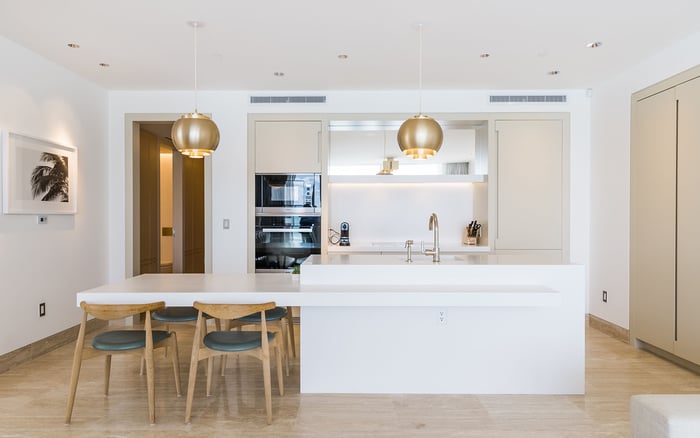
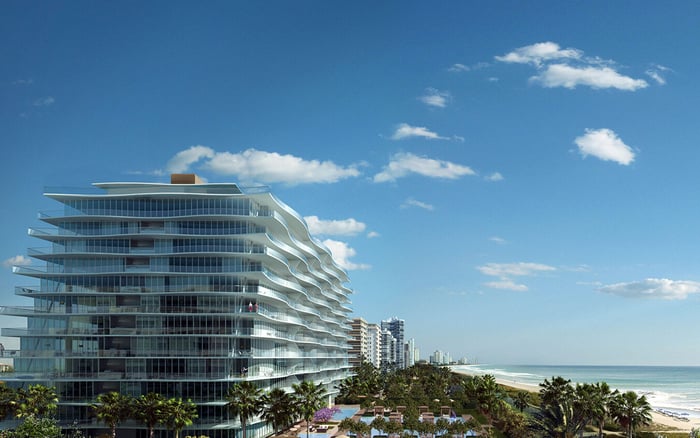
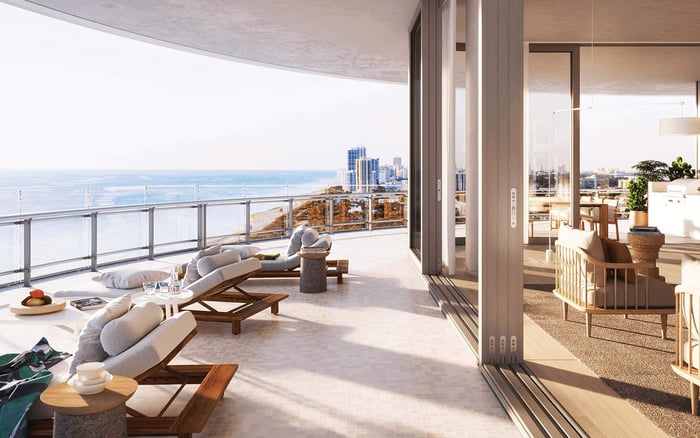
Surfside’s most compelling luxury proposition is increasingly defined by privacy, limited residential scale and a carefully calibrated service experience. Arte provides the clearest transactional evidence, while The Surf Club demonstrates how hospitality can deepen the appeal of private oceanfront ownership. The Delmore adds another project for buyers to assess through the same low-density lens.
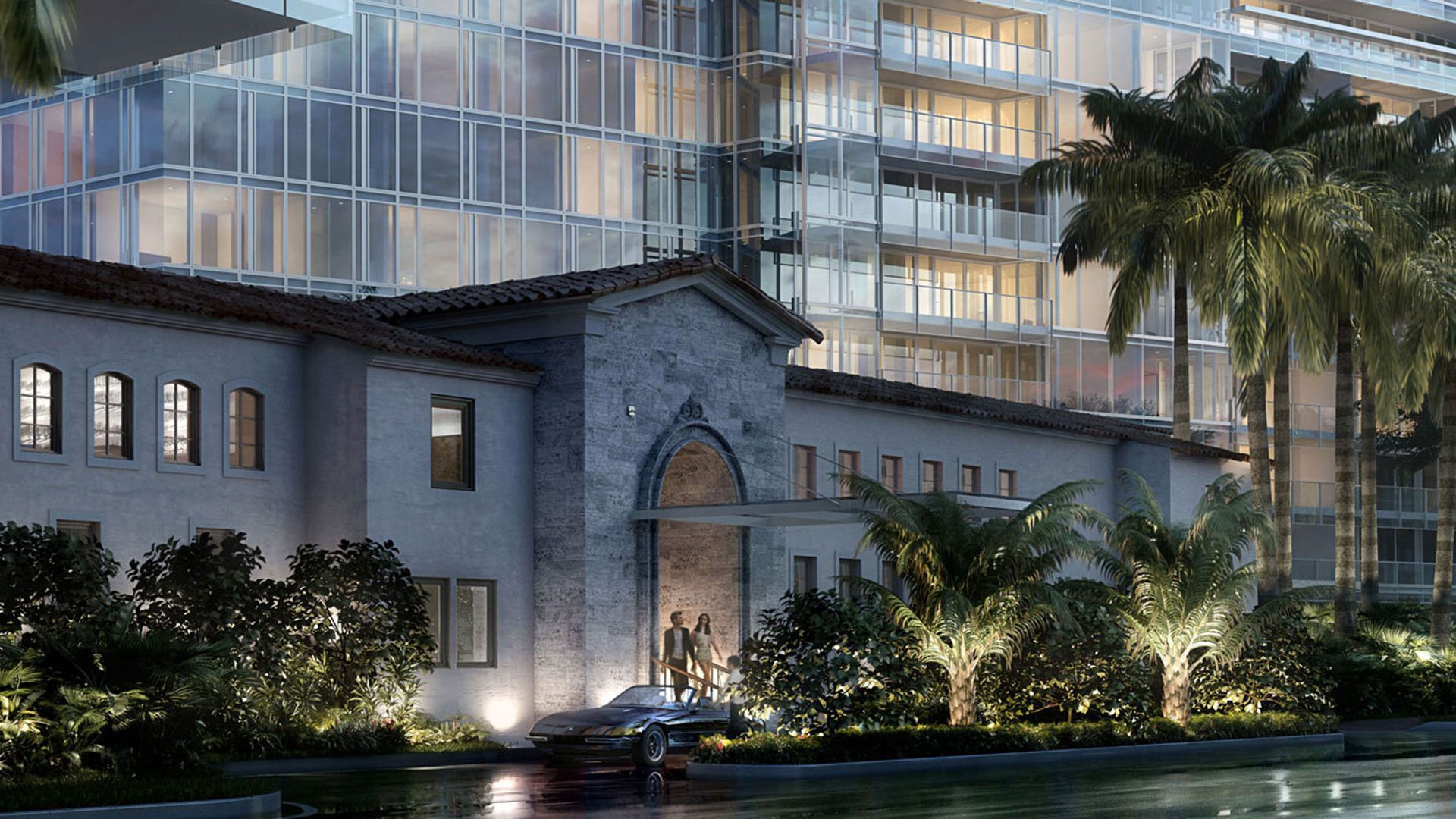
In Surfside, the definition of luxury is becoming more spatial and personal. Buyers are not simply comparing finishes, views and amenity menus. They are considering how many households share a building, how often common areas feel occupied, how service is delivered and whether privacy is structural rather than promised.
That preference gives low-density living unusual weight along this compact oceanfront corridor. It can take the form of a very limited residence count, hospitality-managed ownership or a project proposition centered on discretion. Arte Surfside, The Delmore Surfside and The Surf Club Four Seasons Surfside invite buyers to examine those distinctions closely.
Low density is not a standardized market statistic. Yet its practical effects are readily understood: fewer immediate neighbors, less competition for shared spaces and a stronger sense that the residence functions as a private home rather than a unit in a conventional tower.
Arte offers the clearest measurable case. The 12-story oceanfront condominium at 8955 Collins Avenue contains only 16 residences. That scale makes boutique living more than an aesthetic description; it is embedded in the building’s inventory and resident population.
The project sold out in January 2023, with total sales approaching $225 million. Its final available residence, Unit 201, closed for $17 million in as-is condition. Developer sales averaged approximately $3,000 per square foot, while the penthouse transaction reached approximately $4,440 per square foot.
Those figures suggest that buyers assigned a substantial premium to a small-format beachfront address. By February 2022, only one developer residence remained after Residences 802 and 701 closed above their asking prices. The pattern was not defined by one exceptional sale. It reflected broad absorption across an exceptionally limited collection.
Resale evidence reinforces the point. In July 2025, Unit 702 sold for $12.25 million, equivalent to $3,906 per square foot, after 80 days on the market. The closing led Miami-Dade County’s weekly condominium sales. Scarcity did not guarantee instant liquidity, but it supported market-leading pricing after the original sellout.
A separate market snapshot placed average asking prices at $20.998 million and $4,047 per square foot, with an average 111 days on market. Asking figures are not closed-sale averages, but they illuminate an important feature of the ultra-prime segment: a rare residence may preserve ambitious pricing while awaiting the right qualified buyer.
Arte demonstrates low density through a countable limit of 16 homes. The Surf Club expresses exclusivity differently. Its private oceanfront residences operate within the Four Seasons hospitality platform, connecting ownership to a managed resort environment.
For buyers, the distinction is consequential. A stand-alone condominium may appeal through residential intimacy and a quieter sense of autonomy. A hospitality-led residence can offer privacy supported by an established service structure. In this model, exclusivity is shaped not only by scarcity but also by the management of arrivals, daily requests and the broader residential experience.
Neither expression is universally superior. The preferred model depends on whether a buyer values minimal residential scale above all else or wants discretion paired with the continuity of hotel-caliber service. The common denominator is control: fewer points of friction, a more composed atmosphere and an ownership experience that feels deliberately insulated.
The Delmore belongs in the same buyer conversation as part of Surfside’s ultra-luxury residential landscape. Still, buyers should distinguish a project’s positioning from established market evidence. Specific claims about its residence count, pricing, development status or sales performance should be assessed through current project documentation and transaction materials.
That discipline does not diminish the project; it sharpens the comparison. A purchaser evaluating The Delmore Surfside can focus on the elements that make low-density living meaningful in practice: the number of residences sharing each circulation path, privacy upon arrival, the relationship between private and common spaces, service staffing and the long-term implications of limited inventory.
The broader lesson is that “low density” should never be accepted as a decorative phrase. It should be tested against plans, operating structures and legally documented details.
Residence count is the starting point, not the conclusion. Buyers should examine how many homes share an elevator bank or floor, whether amenity spaces are proportionate to the resident population and how visitors, deliveries and service personnel move through the property. These details determine whether privacy survives everyday use.
Service intensity is equally important. The Surf Club model may resonate with owners who want a managed environment and hospitality continuity. Arte may suit those drawn to the rarity and intimacy of a 16-home building. The choice is ultimately between different expressions of discretion, not between luxury and its absence.
Scarcity also shapes resale strategy. Arte’s performance indicates that a very limited supply can command exceptional values, but the 80-day resale and 111-day asking snapshot show that price and speed are distinct considerations. At the highest tier, a seller may need patience even when the asset is rare.
For a second-home buyer, the operational question may be paramount: which property makes occasional occupancy feel effortless? For a full-time resident, the priority may be quieter circulation and fewer neighbors. For an investor, the central issue is whether scarcity, service costs and the future buyer pool support the intended holding period.
Surfside’s appeal is not based on scale. It is based on restraint. The most persuasive properties translate oceanfront access into a residential experience with fewer interruptions and a stronger sense of personal territory.
Arte’s sellout, price-per-square-foot performance and later resale provide concrete evidence that buyers will pay heavily for scarce beachfront homes. The Surf Club shows that the same desire can be met through private ownership supported by Four Seasons hospitality. The Delmore gives purchasers another opportunity to apply these criteria, provided every project-specific detail is verified during due diligence.
Together, the three names illustrate a maturing buyer preference. The ultimate luxury is not simply more space. It is less exposure, fewer compromises and a building whose scale or service structure protects the quality of daily life.
What does low-density living mean in a luxury condominium? It generally refers to fewer residences and neighbors, although buyers should confirm how that translates into elevators, floors, amenities and circulation.
How many residences are at Arte Surfside? Arte contains 16 residences within a 12-story oceanfront building at 8955 Collins Avenue.
Did Arte Surfside sell out? Yes. The building sold out in January 2023, with total sales approaching $225 million.
What was Arte’s average developer sale price per square foot? Developer sales averaged approximately $3,000 per square foot, while the penthouse reached approximately $4,440 per square foot.
Has Arte maintained strong resale pricing? In July 2025, Unit 702 closed for $12.25 million, or $3,906 per square foot, after 80 days on the market.
How is The Surf Club’s model different from Arte’s? Arte emphasizes a 16-residence boutique format, while The Surf Club combines private oceanfront ownership with Four Seasons hospitality.
Is low density the same as having extensive amenities? No. Low density concerns residential scale and shared use, while amenity quality and breadth require separate evaluation.
What should buyers verify at The Delmore? Buyers should confirm residence count, pricing, development status, plans, service structure and sales information through current project documents.
Can a scarce condominium still take time to sell? Yes. Rare ultra-luxury inventory can sustain high pricing while requiring patience to reach the appropriate buyer.
Who is best suited to low-density ownership? It may suit full-time residents, second-home owners and investors who prioritize privacy, controlled circulation and limited competing inventory.
To compare the best-fit options with clarity, connect with MILLION.
If branded residences are on your mind — as a home or as an allocation — we would be glad to share what we are seeing, privately.
Begin a quiet conversation