A financed trophy purchase at Fendi Château requires more than headline pricing analysis. Buyers should separate closed comparables from active aspirations, quantify appraisal-gap liquidity and select a rate lock that can withstand the property, underwriting and association timetable.
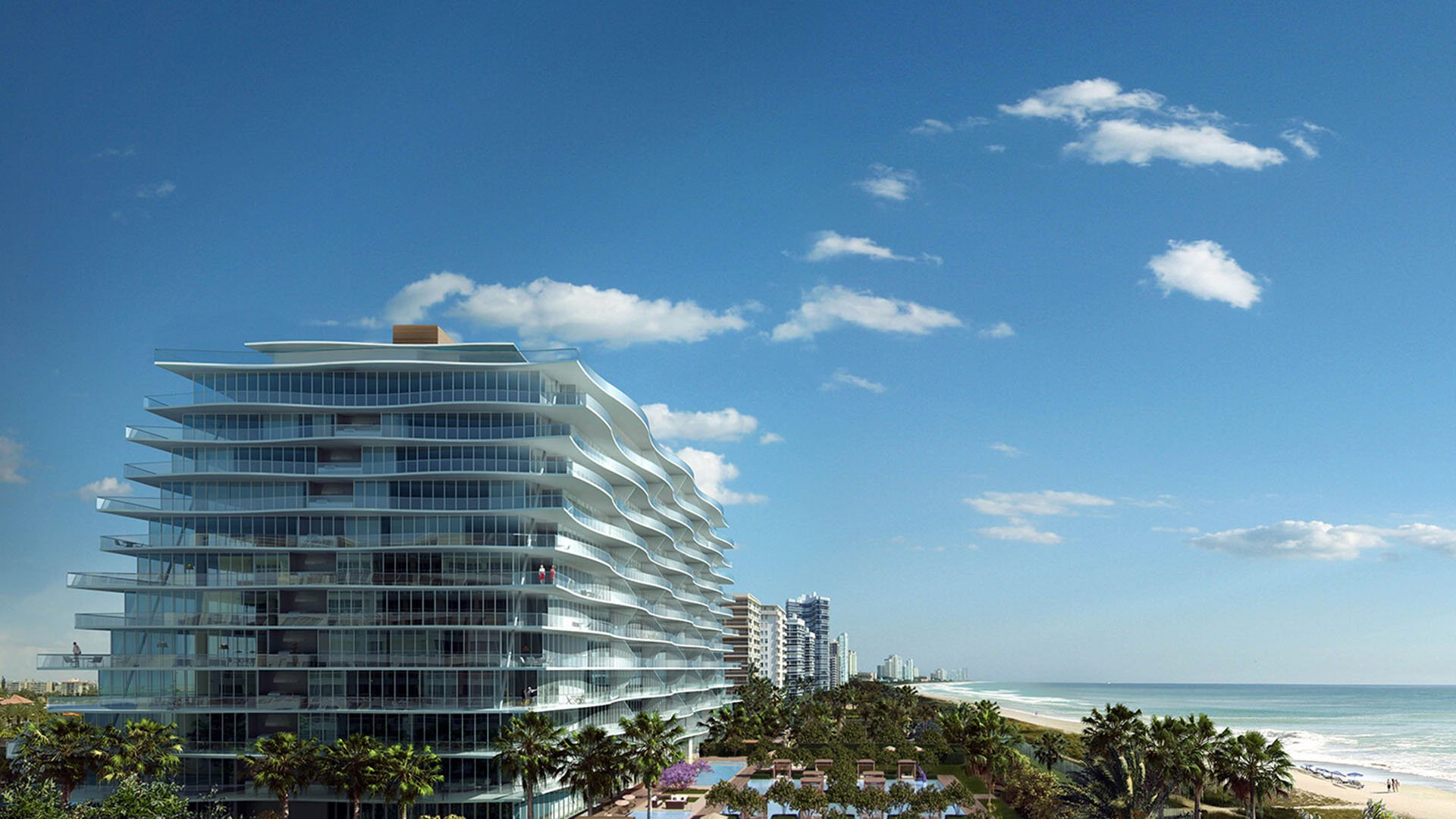
At Fendi Château Residences Surfside, financing a trophy residence is partly an exercise in valuation discipline. The 12-story oceanfront condominium at 9349 Collins Avenue contains just 58 residences. Developed by Château Group and completed in 2016, it offers the privacy that draws buyers to boutique branded residences, but its limited scale also narrows the pool of truly comparable internal sales.
That scarcity matters because a lender is not underwriting the buyer's appreciation of the architecture, scarcity or ocean exposure. It is underwriting collateral value through documented market evidence. When the contract price exceeds the appraised value, the difference can alter required cash, loan structure and closing certainty-even for a highly qualified borrower.
In a boutique trophy building, valuation certainty depends on the quality of each comparison, not the volume of nearby listings.
The building's history establishes a broad pricing arc, not a single valuation rule. Its first eight recorded closings in September 2016 totaled $58.7 million, with individual prices ranging from approximately $4.6 million to $12 million. Another 49 closings after September 2016 ranged from $4.6116 million to $21 million, with the upper figure attached to a penthouse.
More recent transfers provide a narrower lens. Eight qualifying arm's-length sales since 2024 carried a median price of $10.45 million. Two disclosed 2025 transactions included Unit 1004 at $9 million, or $2,699 per square foot, and Unit 1103 at $9.3 million, or $2,841 per square foot. By contrast, four active residences averaged about $20.04 million in asking price and $4,072 per square foot.
Those figures should not be blended indiscriminately. An asking price expresses a seller's objective; a closed arm's-length transaction documents an executed market decision. The appraisal file should begin with recent, relevant closings, then account for floor, line, size, view, condition and renovation quality. Unit 803's 2019 sale at $5.8 million, or about $1,736 per square foot, may provide historical context, but its age limits its direct relevance to a current trophy acquisition.
The eight qualifying arm's-length sales since 2024 had a median assessed value of approximately $6.97 million, compared with a median sale price of $10.45 million. That difference helps explain the tax roll, but it does not forecast a lender's appraisal.
County assessment, market value and lender collateral value serve different purposes. A buyer should therefore resist treating the assessment-to-sale spread as evidence that an appraisal will reach any particular number. The more practical question is whether the appraiser can support the contract price through adjusted closed sales within a small, heterogeneous building.
The transfer record also requires careful filtering. Of 95 transfers identified at the address, 15.8% were classified as non-arm's-length. Family transfers, entity changes and other non-market conveyances should not be treated as ordinary price discovery without closer review. The most recent recorded transfer was dated April 9, 2026, reinforcing the need to refresh title, sales and listing information immediately before contract execution.
An appraisal gap is the difference between the agreed purchase price and the value accepted by the lender. If financing is calculated against the lower appraised figure, that gap can become additional equity the buyer must contribute at closing. It may also require a revised loan amount or a renegotiated purchase structure.
Before submitting an offer, the buyer's adviser and lender should model several lower-value outcomes. For each scenario, calculate the revised maximum loan, incremental cash requirement, estimated cash to close and remaining liquidity after closing. The analysis should also preserve room for taxes, association charges, insurance, furnishings and planned work, rather than directing every available dollar toward the gap.
This exercise is especially important when a seller anchors to active asks. Active offerings included Unit 1101 at $32.5 million, or about $4,832 per square foot; Unit 406 at $21 million, or roughly $3,671 per square foot; and Unit 705 at $15.65 million, or approximately $4,477 per square foot. These are marketing positions, not closed evidence. A sophisticated offer can recognize a residence's singularity while defining how much unsupported premium the buyer is prepared to fund.
When internal evidence is thin, nearby properties can provide context, but they are not automatic substitutes. Surfside buyers may also evaluate Arte Surfside, Eighty Seven Park Surfside or The Surf Club Four Seasons Surfside. Each has its own location, architecture, service model, unit mix and market history.
Cross-building evidence should be adjusted, not copied. The objective is not to prove that every luxury oceanfront residence commands the same rate. It is to explain why a particular Fendi Château residence merits a premium or discount relative to the closest available alternatives. This distinction separates useful market context from weak appraisal support.
Rate locks commonly expire after 30 to 60 days, and extensions can add cost. South Florida resale contracts often target closings within 30 to 45 days, a timeframe that can align with a 45- to 60-day lock. The correct choice, however, depends on a realistic transaction calendar rather than the most optimistic date in the contract.
A prudent sequence is to wait until the property is under contract, the appraisal has been ordered and the inspection contingency has been resolved or removed. For a trophy condominium, the schedule should also accommodate appraisal review, underwriting conditions, document collection and possible association-related delays. A modest buffer can be more valuable than choosing the shortest available lock solely for price.
The rate itself also affects carrying-cost analysis. One payment illustration showed a $70,463 monthly payment at a 6.46% 30-year fixed rate, including $55,391 in principal and interest and $15,072 in property taxes. It was an illustration, not a financing commitment, but it demonstrates why even affluent purchasers should rerun payment and liquidity models using actual loan terms.
The strongest ownership plan coordinates valuation, financing and legal review from the outset. Buyers should confirm the lender's appraisal process, reconsideration procedure, lock-extension terms and treatment of a low valuation. Counsel should align financing and appraisal protections with the negotiated contract, while the property team assembles unit-specific evidence for the appraiser.
For readers using MILLION's Buyer's Guides and Pricing & Trends coverage, the essential principle is simple: rarity may justify a premium, but liquidity must be prepared for the portion a lender may not recognize. In a 58-residence building, careful comp selection and a buffered rate lock are not administrative details. They are central to closing control.
For discreet guidance on evaluating South Florida trophy residences, connect with MILLION.
If branded residences are on your mind — as a home or as an allocation — we would be glad to share what we are seeing, privately.
Begin a quiet conversationThe building has only 58 residences, limiting the number of internal sales before differences in floor, line, size, view and condition are considered.
Active asks show seller expectations, but closed arm's-length sales generally provide stronger evidence of executed market value.
It is the difference between the contract price and the value accepted by the lender. The buyer may need to cover that difference with additional equity.
No. Tax assessment and lender collateral valuation serve different purposes, so the assessment-to-sale gap should not be treated as an appraisal forecast.
They may reflect entity changes, family transfers or other circumstances that do not represent ordinary market price discovery.
Eight qualifying arm's-length sales since 2024 had a median price of $10.45 million, while two 2025 sales closed at $9 million and $9.3 million.
They should model multiple lower-value scenarios, including revised loan proceeds, added cash to close and remaining post-closing liquidity.
Guidance favors waiting until the property is under contract, the appraisal is ordered and the inspection contingency has been resolved or removed.
Locks commonly run 30 to 60 days. A 45- to 60-day lock can align with many South Florida resale closings targeted for 30 to 45 days.
A buffer can absorb appraisal review, underwriting, document collection and association-related delays, reducing the risk and cost of an extension.