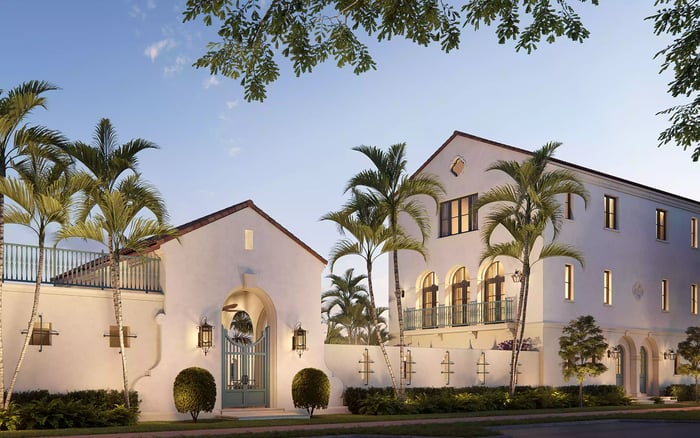
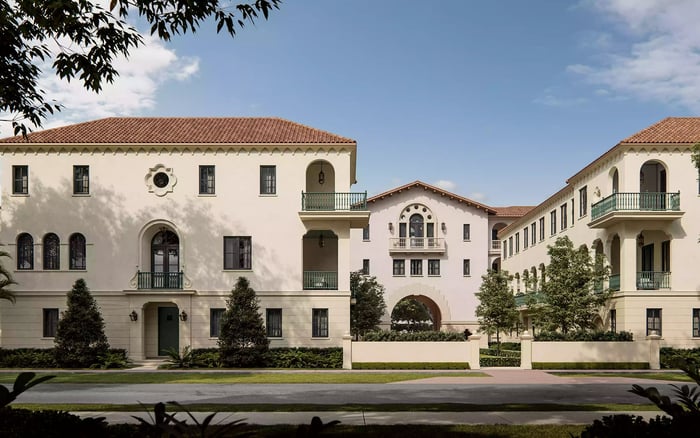
A buyer-focused editorial on how preservation value, architectural restraint, privacy, and neighborhood continuity influence luxury villa appreciation in Gables Estates and the Coral Gables House District.
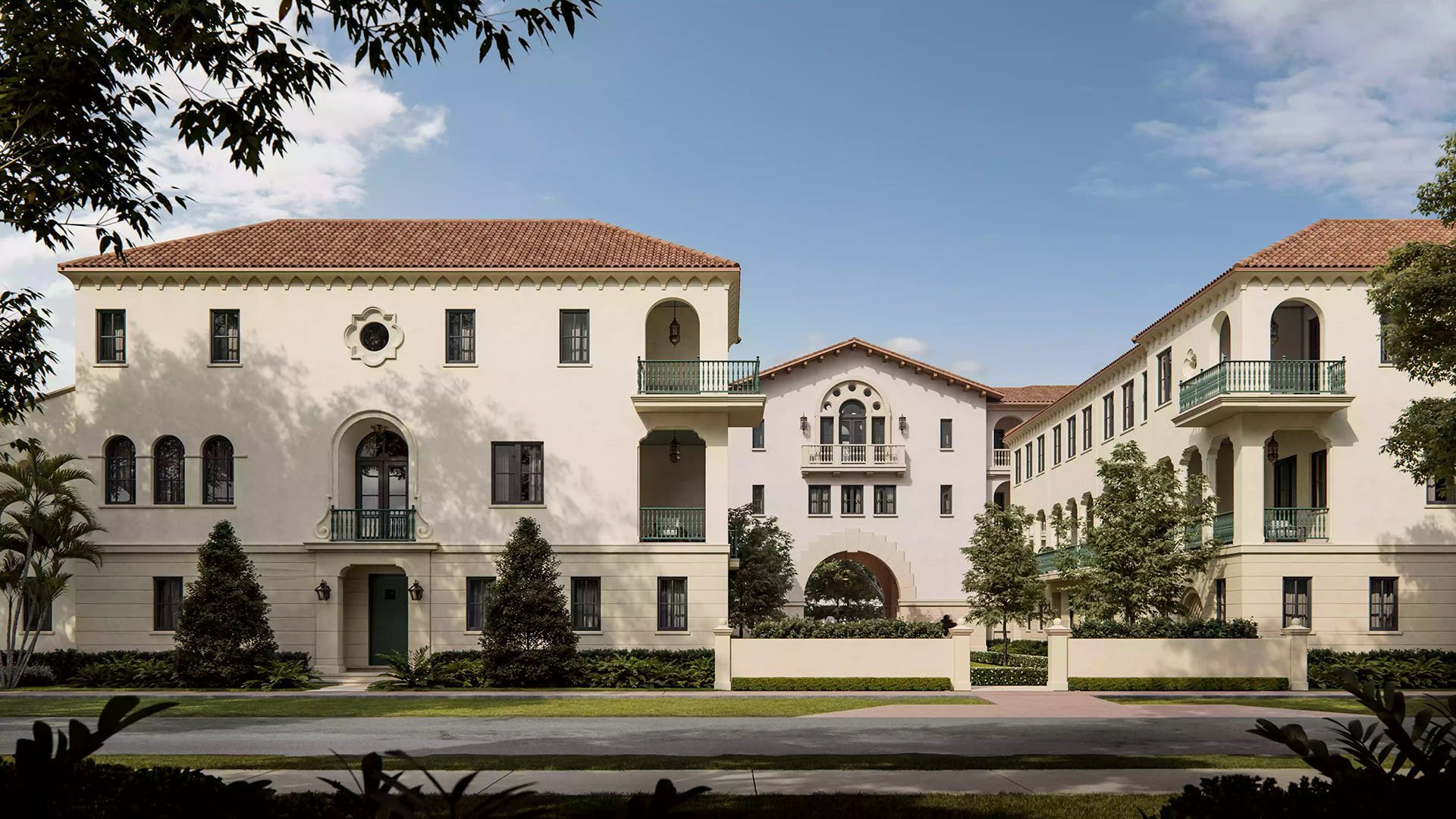
In South Florida’s highest tier of residential real estate, preservation is not nostalgia. It is a value discipline. Buyers evaluating Gables Estates and the Coral Gables House District are not simply comparing square footage, finish packages, or water frontage. They are assessing permanence, architectural coherence, and the quiet authority of a home that belongs to its setting.
That distinction matters in a market where newness often competes loudly for attention. A preserved villa, sensitively restored or carefully expanded, can offer something harder to replicate than a branded amenity or a recently completed interior: a sense of origin. In Coral Gables, where mature landscaping, proportion, and civic identity carry weight, that sense of origin can influence both buyer conviction and long-term resilience.
For the ultra-premium buyer, preservation value is not about freezing a property in time. It is about understanding which details deserve protection, which systems require modernization, and which interventions would dilute the very qualities that made the home desirable in the first place.
Gables Estates occupies the luxury buyer’s imagination as a private villa market, not a standard subdivision. The most compelling residences are judged by more than lot size or interior polish. They are read as complete compositions: arrival sequence, gardens, privacy, waterside orientation, façade rhythm, and the way interior rooms open to outdoor living.
A villa that feels grounded in its surroundings can hold deeper appeal than one designed only to announce scale. Buyers at this level often seek emotional assurance, not just visual impact. They want a residence that is discreet from the street, generous in daily life, and gracious when entertaining. Preservation-minded ownership can reinforce that appeal by maintaining the architectural language, massing, and landscape character that give the property its identity.
This is where restraint becomes financial intelligence. Over-improvement can flatten distinction. A home stripped of its original character may be easier to photograph, but it can be harder to remember. In a market of remarkable properties, memory matters.
The Coral Gables House District offers a complementary but distinct preservation argument. Rather than relying solely on private enclave scarcity, it draws value from continuity. Streetscapes, architectural texture, mature trees, and human-scaled residential patterns create a setting where individual homes benefit from the collective character around them.
For buyers, appreciation is not only a property-level question. It is also a district-level question. A well-kept historic home can gain strength from neighboring homes that share a compatible sense of scale and design intent. That collective discipline can make the area feel established, legible, and difficult to reproduce.
In practical buyer language, this is a Coral Gables story shaped by gated-community privacy, single-family-homes scarcity, exclusive-area signaling, investment discipline, and nearby planning references such as The Village at Coral Gables. Each phrase points to a different layer of demand: location recognition, privacy preference, ownership format, social signaling, capital preservation, and neighborhood coherence.
Appreciation in this context is often less about chasing the newest trend and more about owning the irreplaceable. The right house, on the right street, with the right preservation posture, can speak to buyers who want a home with soul and a balance sheet with logic.
A preservation premium should be earned. Sophisticated buyers should study the house as both an architectural object and a living asset. The first question is authenticity. Does the home retain meaningful exterior character, interior proportions, original spatial logic, or craftsmanship worth protecting? If so, the next question is condition. Authenticity without stewardship can become expensive quickly.
Systems matter. Roof, windows, drainage, mechanical infrastructure, electrical capacity, climate control, and hurricane resilience all shape the ownership experience. A villa may be beautiful, but a buyer should understand how comfortably it can support contemporary life. Preservation value is strongest when historic character and modern performance coexist without visible conflict.
Renovation path is equally important. Some homes can accept careful additions, reconfigured service areas, or updated kitchens and baths without losing identity. Others are more fragile. The difference should be understood before contract, not after closing. A buyer planning a major renovation should determine whether the desired lifestyle can be achieved while preserving the architectural qualities that justify the purchase.
Landscape should not be treated as decoration. In Coral Gables, mature planting, courtyards, shaded approaches, and garden walls can be essential to the experience of a home. Removing these elements can weaken privacy and diminish the property’s sense of place. In the luxury segment, the garden is often part of the architecture.
For sellers, preservation value should be presented with confidence, not melodrama. The strongest positioning is precise: what has been maintained, what has been restored, what has been modernized, and what remains possible for a future owner. Luxury buyers respond to clarity.
Photography should respect the home’s proportions and atmosphere. Over-staging can make a historic residence feel generic. Under-staging can make it feel neglected. The ideal presentation reveals scale, light, craftsmanship, and the relationship between rooms and gardens. A buyer should be able to imagine both quiet daily living and elegant entertaining.
Language matters as well. Words such as rare, timeless, and iconic should be used sparingly unless the home genuinely earns them. The stronger approach is to describe the experience: the privacy of arrival, the cadence of rooms, the texture of materials, the calm of shaded terraces, and the continuity of the surrounding district.
Pricing should recognize that preservation-minded buyers are discerning. They may pay for character, but they also discount uncertainty. Clean documentation, thoughtful maintenance records, and a clear renovation narrative can reduce friction. In this niche, trust is a premium feature.
The most resilient luxury assets are often those that cannot be easily recreated. In Gables Estates, that may mean a villa with privacy, water orientation, and an architectural presence that feels settled rather than staged. In the Coral Gables House District, it may mean a residence whose beauty is amplified by the continuity of its surroundings.
Historic preservation value works best when treated as a living strategy. Owners should preserve what gives the home identity, upgrade what improves comfort, and avoid changes that chase short-lived fashion at the expense of permanence. The goal is not to make an old house look new. The goal is to make a significant house live beautifully now.
For South Florida’s luxury buyer, that distinction is increasingly important. The market offers abundant spectacle. It offers far fewer homes with genuine architectural memory, mature setting, and the confidence to be quiet.
Why does historic preservation matter in luxury real estate? It can protect architectural identity, neighborhood continuity, and buyer confidence, all of which can support long-term desirability.
Is a preserved villa less practical than a new home? Not necessarily. The best examples combine historic character with carefully modernized systems, layouts, and lifestyle features.
What makes Gables Estates different for preservation-minded buyers? Its appeal centers on privacy, villa-scale living, and properties that can feel composed, discreet, and difficult to replicate.
How should buyers assess a Coral Gables historic house? They should evaluate authenticity, condition, renovation flexibility, landscape quality, and how the home relates to its street.
Can modernization reduce preservation value? Yes, if it removes defining character or disrupts the home’s proportions. Sensitive upgrades usually create stronger results.
Are gardens important to preservation value? Yes. Mature landscaping, shaded entries, courtyards, and privacy planting often contribute directly to the luxury experience.
Should sellers restore before listing? Selective restoration can help, but broad cosmetic changes should be handled carefully to avoid erasing the home’s character.
Is preservation value only about architecture? No. It also includes setting, streetscape, privacy, materials, maintenance history, and the emotional response a property creates.
Do buyers pay more for historic character? They may when the character is authentic, well maintained, and compatible with modern living expectations.
What is the safest strategy for an owner planning renovations? Preserve the elements that define the home, modernize the systems that support comfort, and avoid trend-driven alterations.
When you're ready to tour or underwrite the options, connect with MILLION.
If branded residences are on your mind — as a home or as an allocation — we would be glad to share what we are seeing, privately.
Begin a quiet conversation