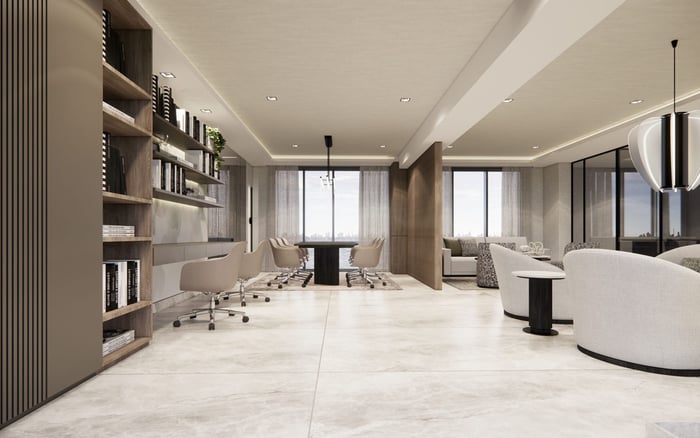
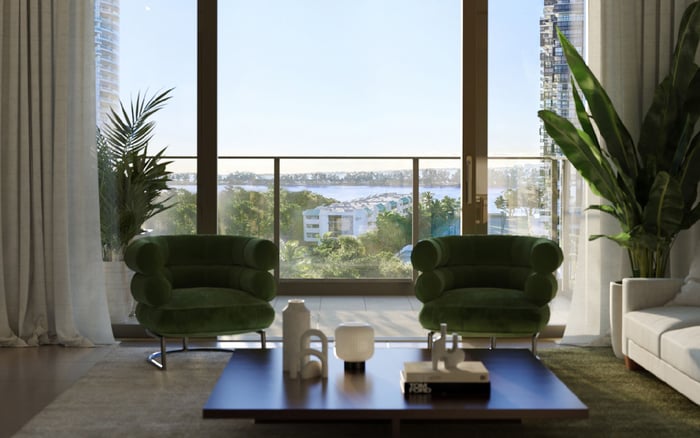
For financed buyers, the best floor is not always the highest one. In South Florida’s luxury condo market, the decision should balance views, daily convenience, carrying costs, appraisal logic, insurance sensitivity, and future resale depth.
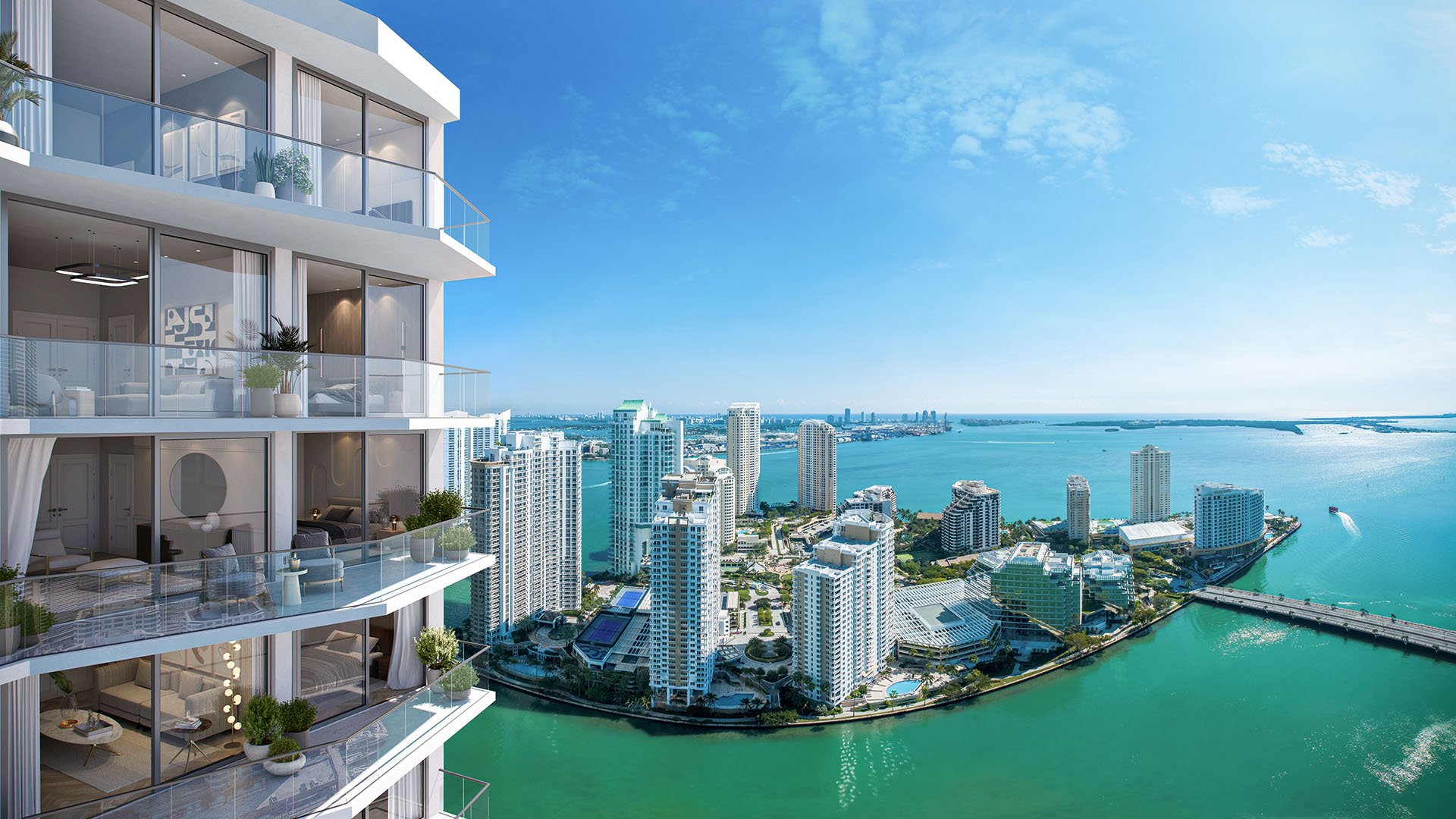
In South Florida luxury real estate, floor height carries real emotional force. A high residence can feel cinematic, removed from the street, and filled with water, skyline, sunrise, or sunset. A lower residence can feel composed, practical, and closely connected to the building’s services, parking, lobby, pool deck, marina, gardens, or neighborhood rhythm. Both can be beautiful. For a financed buyer, however, the stronger choice is rarely decided by romance alone.
The relevant question is not simply whether high floors are more impressive than low floors. It is whether the floor premium is supported by the buyer’s financing structure, intended hold period, insurance and association costs, appraisal sensitivity, and eventual resale audience. Cash buyers can sometimes treat floor height as a pure preference. Financed buyers need to treat it as a preference with underwriting attached.
That distinction matters across Brickell, Edgewater, Surfside, Sunny Isles, Fort Lauderdale, Boca Raton, West Palm Beach, and the islands between them. The higher residence may be the dream. The lower residence may be the more disciplined way to own the same address with greater financial flexibility.
High-floor residences tend to deliver the qualities South Florida buyers imagine first: broader horizons, greater privacy, stronger separation from street activity, and a sense of arrival that feels inherently rare. In a vertical market, height can create identity. The residence is not just in the building; it occupies a more elevated emotional register within it.
For some buyers, that distinction is worth the premium. A waterfront or skyline view can become the defining experience of the home, especially in buildings where glass, terraces, and open living areas are central to the architecture. A buyer studying Brickell might naturally gravitate toward the vertical statement of The Residences at 1428 Brickell, where the conversation around floor height is inseparable from the desire for an urban outlook.
Still, financed buyers should separate the view premium from the ownership premium. A higher purchase price can mean a larger loan balance, more interest exposure, higher cash needed to close, and a narrower margin if future appraised value does not fully mirror the buyer’s emotional valuation. If the view is the reason to stretch, the buyer should understand that the view is also the asset that must support the stretch later.
Low-floor residences are sometimes unfairly framed as compromises. In practice, they can be the most rational choice in a luxury building when the buyer values access, speed, predictability, and ease. A lower floor can make the home feel less ceremonial and more usable. That matters for families, pet owners, frequent travelers, seasonal residents, and buyers who expect to move between the residence and amenities many times a day.
Convenience also has a financial dimension. A lower acquisition price within the same building may preserve liquidity, reduce monthly debt service, and create room for furnishings, reserves, or future assessments. For buyers who care about the address and service culture more than the highest possible elevation, the lower floor can be an elegant allocation of capital.
In waterfront and boutique settings, the lower-floor experience can be especially compelling. A buyer looking at Surfside may find that intimacy, scale, and neighborhood quiet matter as much as altitude, which is why a project such as The Delmore Surfside can enter the conversation through a different lens than a purely sky-high tower purchase. The question becomes: how close does the buyer want to feel to the daily life of the building and place?
A financed buyer should analyze floor height through three practical filters.
First is appraisal confidence. If two residences in the same building are otherwise similar, a buyer may assume the higher floor will always validate the premium. That assumption deserves caution. Appraisals consider comparable sales, building history, view differentials, condition, size, and market behavior. A lender is not underwriting the buyer’s sunset ritual; it is underwriting collateral.
Second is carrying cost. The loan payment is only one part of ownership. Association dues, insurance-related costs, taxes, reserves, utilities, parking, storage, and lifestyle expenses all influence the real monthly figure. A buyer who stretches for height but becomes constrained after closing may have purchased the more dramatic residence and the less comfortable life.
Third is exit strategy. The eventual buyer pool for a very high-floor premium residence may be affluent, but it can also be more selective. A lower-floor residence at a more approachable basis may appeal to a wider set of future buyers who want the building, the services, and the location without paying the highest premium for elevation. Investment discipline is not the opposite of luxury; it is what keeps luxury from becoming brittle.
There is no universal rule because South Florida is not one market. Brickell buyers may place a premium on skyline energy, office proximity, dining, and the feeling of living above the city. In that setting, height can be part of the core appeal. At the same time, a buyer considering 2200 Brickell may also value neighborhood connection, walkability, and a residence that fits a daily routine rather than only a dramatic evening view.
In Edgewater, bay orientation, building position, and the relationship between residence and water can change the floor calculation. A buyer considering Aria Reserve Miami may weigh vertical perspective against the practical value of securing a preferred layout at a comfortable financing level.
In Sunny Isles, height often reads as glamour because the coastline supports a strong vertical identity. A residence at St. Regis® Residences Sunny Isles may attract buyers who want that polished tower experience. Still, financed buyers should ask whether the chosen floor improves daily life enough to justify the total basis.
Miami Beach buyers may think differently again. There, lifestyle can be less about height alone and more about beach access, privacy, architecture, and the texture of the immediate neighborhood. The best residence may be the one that feels effortless, not necessarily the one farthest from the ground.
Start with the monthly number you can own with composure. Then compare floors only within that range. This reverses the typical emotional process, where a buyer falls in love first and solves the financing second.
Next, isolate what the floor premium is actually buying. Is it an unobstructed view, reduced noise, added privacy, better light, prestige, or simply the idea of being higher? Some premiums are durable. Others are personal. Both can be valid, but only one is more likely to travel cleanly into resale.
Then consider your use pattern. A primary resident who works from home may value light and view every day. A seasonal owner may prioritize arrival, building services, and ease. A family may prefer elevator efficiency and amenity proximity. A collector of trophy properties may accept a narrower resale pool in exchange for a more singular residence.
Finally, protect optionality. In financed purchases, the winning residence is often the one that lets the buyer live well after closing. The most refined ownership experience is not created by maximizing the purchase price. It is created by aligning beauty, debt, cash reserves, and time.
Do high floors always resell better in South Florida? Not always. A high floor can command attention, but resale depends on price basis, view quality, building appeal, condition, and buyer demand at the time of sale.
Are low floors a bad choice for luxury condo buyers? No. Low floors can offer convenience, easier daily circulation, and a lower cost basis within the same building.
Should financed buyers stretch for the best view? Only if the total monthly cost remains comfortable and the view premium is supported by a clear ownership and exit plan.
Can a lender value a view differently than a buyer does? Yes. A buyer may place emotional value on a view, while lending decisions focus on collateral, comparable sales, and risk.
Is floor height more important in Brickell than in beach markets? It can be, because vertical skyline living is central to many Brickell purchases. Beach markets may place equal or greater weight on access, privacy, and setting.
What is the safest floor choice for a financed buyer? The safest choice is the floor that balances lifestyle satisfaction with a sustainable payment, strong liquidity, and broad future appeal.
Do lower floors mean more noise? Sometimes, but not always. Building design, glazing, setbacks, landscaping, and orientation can be as important as elevation.
Should investors prefer lower floors? Investment buyers often focus on basis, liquidity, and rental or resale depth. A lower floor can be compelling if it improves yield or reduces exposure.
Are penthouse-style floors worth financing? They can be, but only for buyers with the balance sheet and time horizon to support a more specialized asset.
What should I compare before choosing a floor? Compare total cost, view durability, layout, light, elevator access, amenity convenience, and likely resale audience.
To compare the best-fit options with clarity, connect with MILLION.
If branded residences are on your mind — as a home or as an allocation — we would be glad to share what we are seeing, privately.
Begin a quiet conversation