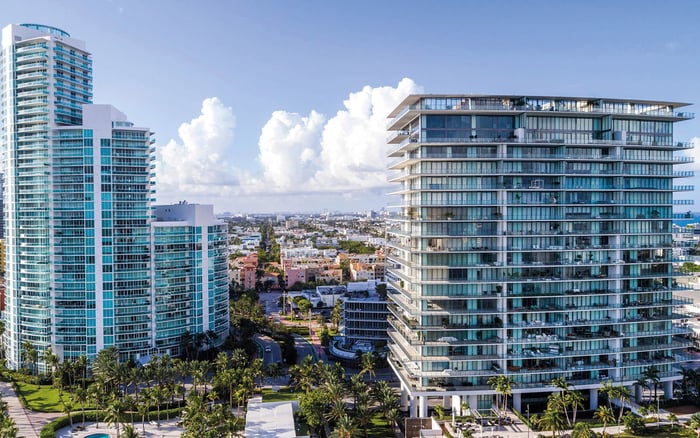
At a hospitality-oriented beachfront residence, guest parking is more than a logistical footnote. Buyers should examine entitlements, valet procedures, overnight access, peak-period priorities, fees, and the documents that govern them.

At an ultra-premium residence, the ownership experience is often defined by small, repeated moments. How smoothly a guest arrives, whether a family member can leave a car overnight, and how quickly a vehicle is retrieved can matter as much in daily life as a dramatic lobby or carefully composed amenity deck.
That makes guest parking a meaningful due-diligence consideration for buyers evaluating Shore Club Private Collections Miami Beach. Where private residences and hospitality uses share an arrival environment, operating policies help determine how the different uses coexist.
The issue is not simply whether a valet desk exists. The more consequential question is what level of access an owner can reliably expect for visitors, household personnel, deliveries, and service providers under both ordinary and peak conditions.
A buyer should first establish whether guest parking is an ownership entitlement, a paid service, or merely subject to availability. These are materially different arrangements. An entitlement may still carry procedural restrictions, while an availability-based system can become less predictable as demand rises.
The central question is how many guest vehicles may be associated with a single residence at one time. Owners who regularly host extended family, dinners, or weekend visitors should test the policy against realistic use-not an occasional single-car arrival. A second-home owner may also entertain in concentrated periods, making capacity particularly important during holidays and seasonal visits.
Overnight parking warrants a separate inquiry. Short-term visitor access, restaurant validation, and overnight residential guest parking may follow different rules. Buyers should seek clear answers on duration limits, registration requirements, advance notice, and whether repeated overnight use triggers additional approval or charges.
In a hospitality-oriented property, parking performance depends on operations. Staffing levels, retrieval procedures, gratuity expectations, vehicle-size restrictions, and advance-notice requirements can all affect convenience. A policy that appears generous on paper may feel far less accommodating if retrieval is slow or larger vehicles require special handling.
Buyers should ask how residents, residential guests, hotel guests, and restaurant patrons are prioritized. This becomes particularly important during holidays, special events, and other peak-demand periods. The objective is not to eliminate every possible delay, but to understand whether residential use receives a defined level of priority when several constituencies arrive at once.
For buyers evaluating branded residences or a hospitality-inflected oceanfront condominium, this distinction is fundamental. The quality of the service model is expressed not only through a ceremonial arrival, but through consistent access on an ordinary Tuesday and a high-demand Saturday alike.
Guest-parking policies extend beyond social visitors. Household staff, private chefs, caregivers, contractors, designers, and delivery teams may require recurring or time-sensitive access. An owner planning renovations or maintaining a fully serviced residence should ask whether these vehicles enter the same valet queue and whether commercial vehicles face separate restrictions.
The practical questions are specific: Can recurring personnel be preregistered? Are service arrivals limited to particular hours? Is there a distinct procedure for loading, unloading, or contractor access? Buyers should confirm these operating details directly in the applicable documents rather than infer them from a broader hospitality concept.
Valet tariffs, validation policies, gratuities, and recurring guest charges can materially shape the experience of frequent hosting. Even when individual fees seem modest relative to the purchase, repetition changes the equation. A buyer who entertains several times a week may experience the policy differently from an owner who receives occasional visitors.
Request the current fee schedule and model several scenarios: a dinner with multiple arriving cars, a weekend visit involving overnight parking, and recurring access for household personnel. Clarify whether charges are posted to the residence, paid by the guest, or varied by duration. Also determine whether complimentary or validated access carries limits and whether rates can change after closing.
Sales conversations may describe the intended service, but governing materials control the durable ownership framework. Prospective purchasers should obtain the condominium documents, parking exhibits, valet agreement, fee schedule, and current house rules. Each may address a different layer of access, cost, enforcement, and management discretion.
The review should identify who controls the policy and how it may be amended. Parking rules and fees may be governed by condominium documents, management arrangements, or subsequent board decisions. Buyers should therefore distinguish among a recorded right, a contractual service, a current operating practice, and a courtesy that remains subject to availability.
Legal counsel can examine allocation language and amendment provisions, while a buyer's representative can press management for practical examples. Written confirmation is especially valuable when a parking feature is central to the residence's intended lifestyle.
Parking diligence is valuable across the local luxury market, although each property's documents and operations are distinct. Buyers comparing The Perigon Miami Beach, Setai Residences Miami Beach, or The Ritz-Carlton Residences® South Beach should apply the same disciplined questions rather than assume a common standard.
The relevant comparison is not simply the number of parking spaces. It is the complete arrival protocol: who may use the system, what it costs, when access can tighten, how competing users are prioritized, and which protections are documented. This framework turns an easily overlooked operating detail into a meaningful measure of residential quality.
Before signing, narrate a demanding but plausible day at the property. Family arrives for an overnight stay, a contractor requires access, a delivery is scheduled, and restaurant demand is elevated. Then ask management to explain how each vehicle would be handled, what notice would be required, and which charges would apply.
For Shore Club Private Collections Miami Beach, this exercise helps distinguish the elegance of arrival from the reliability of ownership. The best answer is not necessarily unlimited access. It is a policy that is clearly documented, operationally credible, and aligned with the owner's actual pattern of use.
Is guest parking at Shore Club Private Collections confirmed as an ownership right? Buyers should verify in the governing materials whether it is an entitlement, a paid service, or subject to availability.
How many guest vehicles can be linked to one residence? The permitted number should be confirmed before purchase, particularly for owners who entertain frequently.
Is overnight guest parking the same as short-term visitor parking? Not necessarily. Overnight access should be reviewed separately from brief visits and restaurant parking.
What parking costs should a buyer examine? Review valet tariffs, validation terms, gratuity expectations, overnight charges, and recurring guest fees.
Can parking access change during busy periods? Buyers should ask whether holidays, special events, or other peak periods affect availability or priority.
Who receives priority in a hospitality-oriented parking system? Confirm the order applied to residents, residential guests, hotel guests, and restaurant patrons.
Do vehicle restrictions matter? Yes. Size limits, special-handling procedures, and advance-notice requirements can affect practical access.
How should household staff and contractors be addressed? Ask about preregistration, service hours, commercial vehicles, loading procedures, and recurring access.
Which documents should a purchaser request? Obtain the condominium documents, parking exhibits, valet agreement, fee schedule, and current house rules.
Can guest-parking rules change after closing? They may change depending on the governing documents, management arrangements, and board authority.
If you'd like a private walkthrough and a curated shortlist, connect with MILLION.
If branded residences are on your mind — as a home or as an allocation — we would be glad to share what we are seeing, privately.
Begin a quiet conversation