A buyer-focused editorial guide to evaluating gourmet kitchen integration, entertaining flow, storage, service zones, and long-term value when comparing MOD West Palm Beach with The Grand at Trump International.
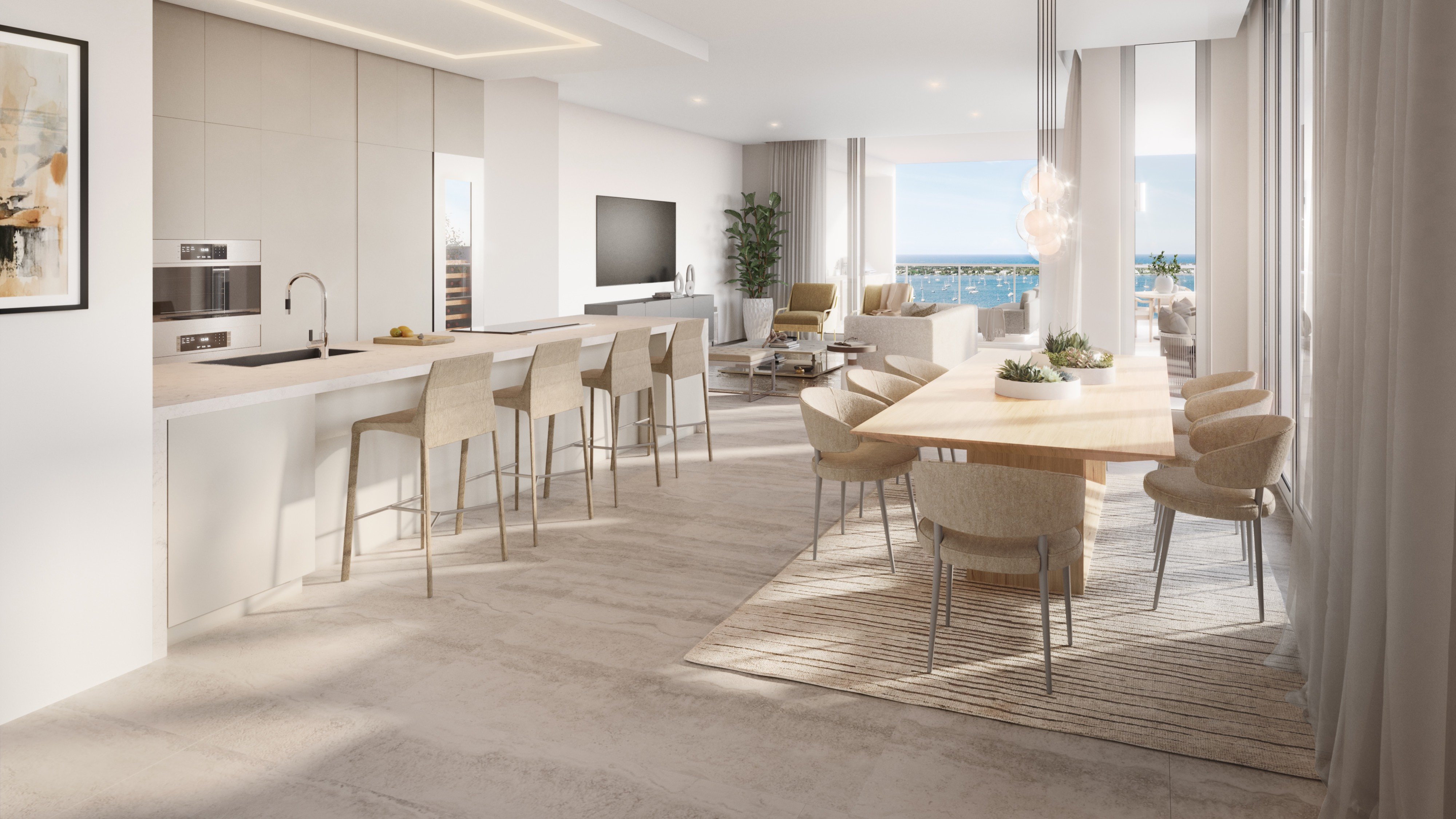
For South Florida’s most discerning buyers, a gourmet kitchen is no longer assessed as a room with premium appliances. It is judged as an integrated living environment-one that shapes morning rituals, cocktail service, family privacy, catered dinners, and the visual rhythm of the residence. That is why any comparison between MOD West Palm Beach and The Grand at Trump International should begin less with finishes and more with how each layout supports movement, hosting, and daily discretion.
The strongest luxury kitchen plans do three things at once. They allow an owner to cook comfortably, permit staff or caterers to work without disrupting guests, and maintain a composed architectural presence from the main living areas. In South Florida, where residences often open toward terraces, water, gardens, or skyline views, the kitchen’s relationship to light and circulation can influence the entire perception of value.
This is especially relevant for West Palm Beach buyers who want an urban residence that still feels calm, tailored, and highly functional. The kitchen is where that balance is either achieved or exposed.
Kitchen integration is not simply an open-concept plan. In the luxury tier, it is the alignment of five distinct elements: sightline, service, storage, seating, and sequence. A beautiful island may photograph well, but if it blocks circulation between dining and terrace doors, it becomes a design liability. A wall of cabinetry may look minimal, but if it cannot accommodate pantry depth, specialty cookware, glassware, and concealed small appliances, the elegance is short-lived.
When evaluating MOD West Palm Beach and The Grand at Trump International, buyers should read the kitchen as choreography rather than a checklist. Where does a guest stand with a glass of wine while the host finishes dinner? Can a caterer enter, stage, plate, and exit without crossing the main conversation zone? Is there a natural path from kitchen to dining, and from dining to outdoor living? Does the plan protect views from the living room, or does it place too much visual weight on the working side of the kitchen?
The best integrated kitchens feel open without feeling exposed. They allow the home to entertain beautifully while giving the owner practical control over mess, sound, and preparation.
MOD West Palm Beach should be approached through the expectations that define contemporary city living in Palm Beach. Buyers in this segment tend to seek layouts that are efficient, visually clean, and adaptable to both private routines and polished entertaining. In that context, the gourmet kitchen becomes a test of how well a residence converts square footage into lifestyle.
A successful plan gives the kitchen enough prominence to feel central, but not so much dominance that the entire residence reads as culinary theater. Study the relationship between the island and the living area. If the island is positioned as a social threshold, it can act as a sophisticated bridge between cooking and conversation. If it interrupts the room’s natural axis, it may reduce the sense of ease that luxury buyers expect.
Storage is equally important. New-construction purchasers often assume that modern cabinetry automatically means adequate capacity, but the more relevant question is how that storage is organized. Deep pantry zones, concealed appliance garages, integrated waste and recycling, and properly scaled drawers can matter as much as visible stone or millwork. In a residence intended for extended seasonal living, the kitchen must support more than occasional use.
The Grand at Trump International invites a slightly different question: how does the kitchen perform within a residence likely to be judged by its sense of ceremony? The name alone suggests that buyers may expect a more formal entertaining standard, so the kitchen should be reviewed for its ability to support arrival, hosting, and presentation.
In this setting, the kitchen’s adjacency to dining space becomes critical. A gourmet plan works best when dining feels intentional rather than leftover. If the dining area sits naturally between the kitchen and the principal living room, service can feel graceful. If the dining zone is compressed or visually secondary, even an expensive kitchen may lose impact.
For buyers who entertain at scale, a secondary prep area, discreet pantry capacity, or a service-friendly path can be more meaningful than an oversized show island. Even when a residence is used primarily as a second home, the ability to host a private chef, family gathering, or holiday dinner without operational friction can become a defining advantage.
South Florida kitchens must respond to light and landscape. A waterview residence changes the design equation because the kitchen should frame the outlook, not compete with it. If cabinetry, appliance walls, or tall storage blocks the view corridor, the plan may feel less luxurious than its finish package suggests.
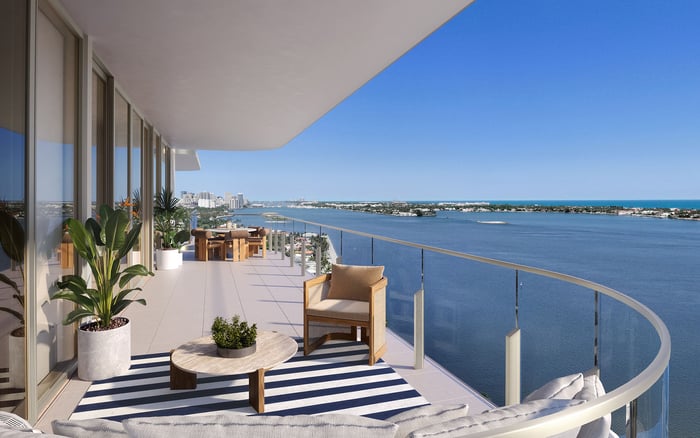
The connection to outdoor space is another decisive point. A balcony can be more than an amenity when it works in sequence with the kitchen and dining area. The ideal path allows drinks, breakfast, or evening service to move naturally outside. If the route from kitchen to terrace requires crossing a seating group or navigating around furniture, the plan may underperform in real use.
Ultra-modern kitchen design often favors clean planes, flush panels, and sculptural islands. Those elements can be superb when they are supported by practical depth. The risk is a kitchen that looks serene but lacks sufficient working surface, landing space near refrigeration, or hidden storage for the tools that serious owners actually use.
Before comparing finish palettes, ask how each kitchen lives over a full day. Where does coffee happen in the morning? Where are groceries placed when entering the residence? Can two people cook without collision? Is there a place for informal dining that does not compromise the formal dining area? Can guests gather near the island without occupying the primary work zone?
Appliance positioning deserves the same scrutiny. Refrigeration, cooking, sink, and cleanup areas should form a logical working relationship. In a luxury residence, the goal is not merely efficiency, but quiet confidence. A well-planned kitchen lets activity happen without visual or acoustic clutter taking over the main room.
Finally, consider resale psychology. Future buyers may not remember every appliance specification, but they will remember how the kitchen felt when they entered the residence. Did it pull the eye toward light and space? Did it make entertaining feel natural? Did it feel substantial without being heavy? Those impressions often shape perceived value.
MOD West Palm Beach and The Grand at Trump International should not be compared only through brand language or surface finish. The more revealing comparison is how each layout integrates the kitchen into the life of the residence. One buyer may prioritize urban efficiency and streamlined daily use. Another may place greater value on ceremonial entertaining and formal service.
The superior choice is the one where the kitchen supports the owner’s actual rhythm. In the luxury market, beauty is expected. What distinguishes the best residences is the quiet intelligence behind the plan.
Why is kitchen integration so important in luxury residences? It determines how well cooking, entertaining, storage, and everyday living work together without friction.
Should buyers prioritize an open kitchen or a more discreet kitchen? The better choice depends on lifestyle. Open plans suit social cooking, while discreet layouts may better support formal service.
What is the first thing to study in a kitchen floor plan? Begin with circulation. The island, dining area, and living room should connect naturally without crowding the work zone.
How does a gourmet kitchen affect resale appeal? A well-integrated kitchen can make the entire residence feel more valuable because it improves flow, function, and presentation.
Is a large island always better? Not necessarily. Scale matters more than size, and an oversized island can interrupt movement if the surrounding clearances are weak.
What should seasonal buyers look for? They should look for storage, easy entertaining flow, and durable finishes that support both short visits and longer stays.
How should outdoor space influence kitchen evaluation? The kitchen should connect gracefully to dining and terrace areas so service to outdoor living feels natural.
What makes a kitchen feel truly custom? Thoughtful proportions, concealed storage, logical appliance placement, and refined material transitions create that impression.
Can a beautiful kitchen still be poorly planned? Yes. Premium finishes cannot compensate for weak circulation, inadequate storage, or an awkward relationship to dining space.
What is the best way to shortlist comparable options for touring? Start with location fit, delivery status, and daily lifestyle priorities, then compare stacks and elevations to validate views and privacy.
When you're ready to tour or underwrite the options, connect with MILLION.
If branded residences are on your mind — as a home or as an allocation — we would be glad to share what we are seeing, privately.
Begin a quiet conversation