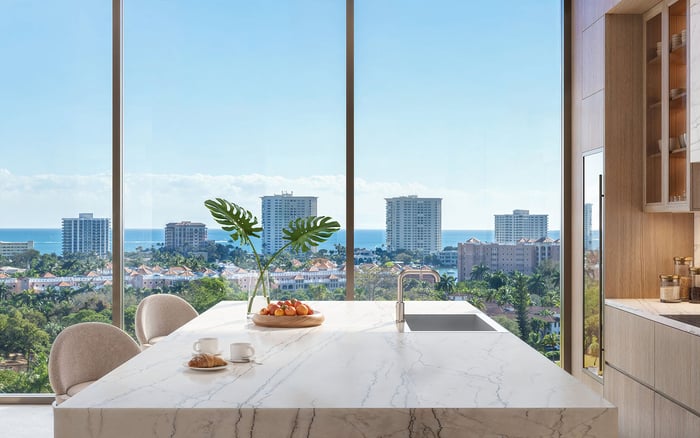
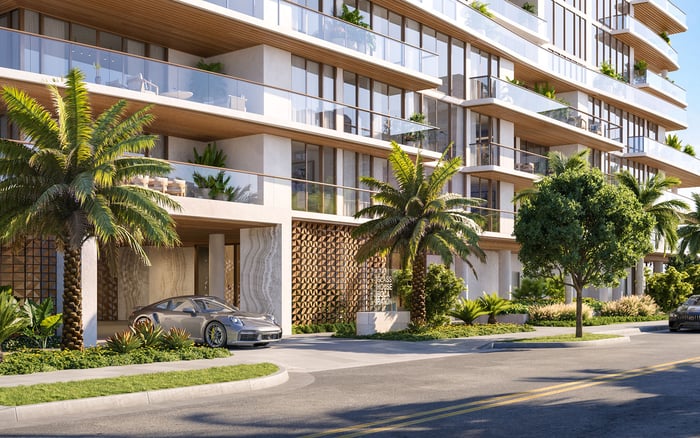
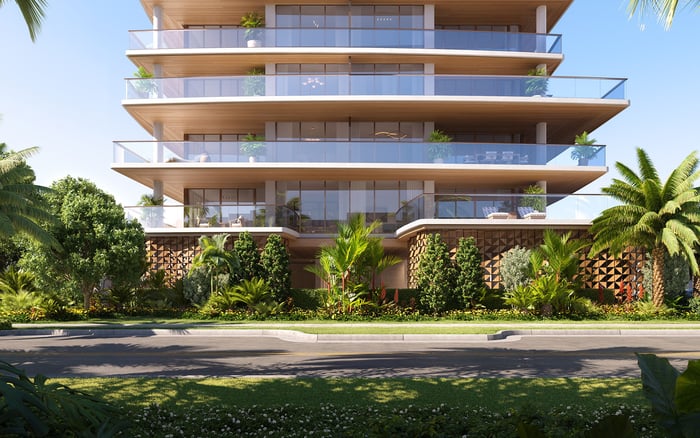
A buyer-focused look at Glass House Boca Raton and the due diligence behind glass-forward, lock-and-leave condominium living during hurricane season.
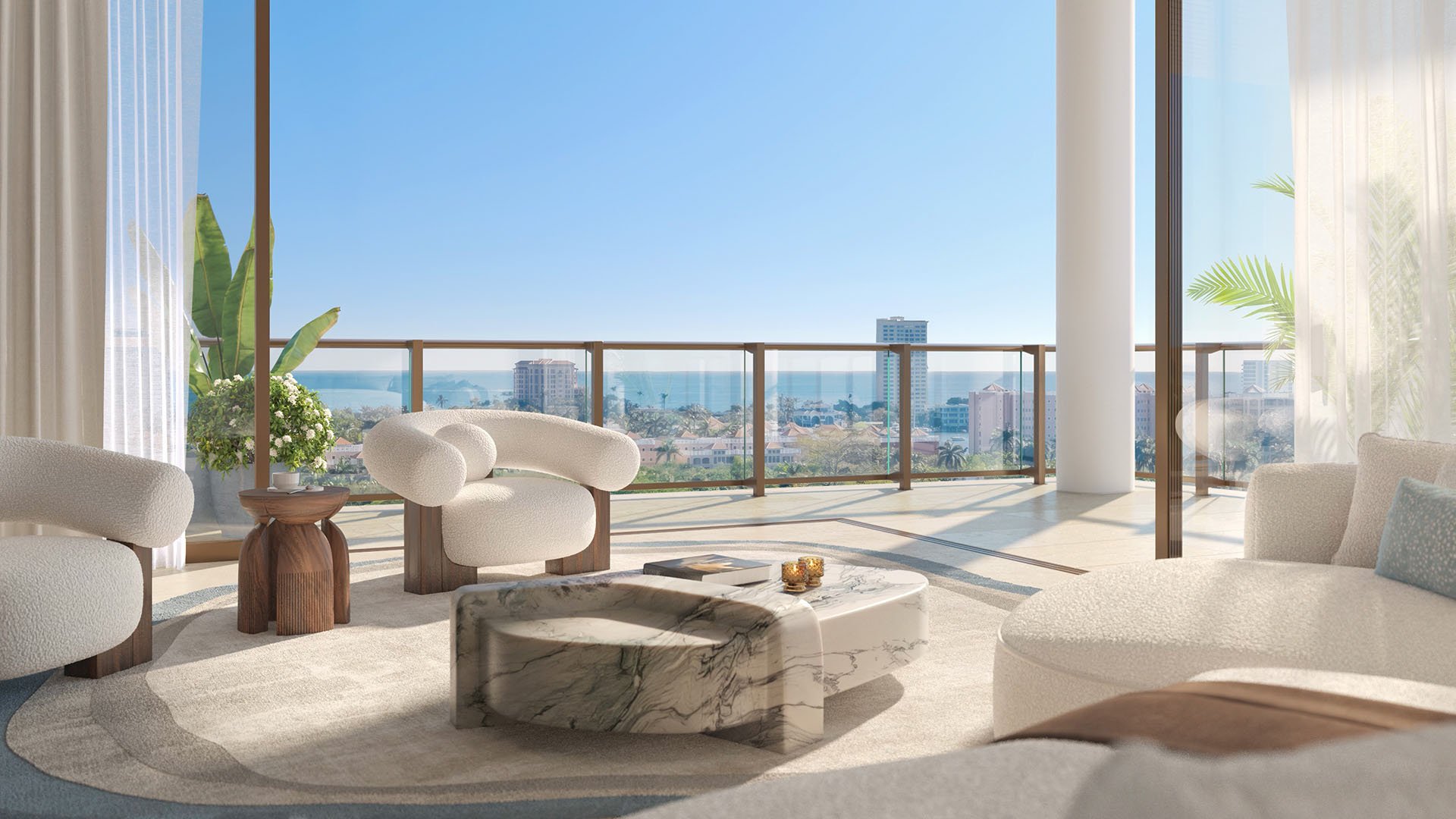
Glass House Boca Raton brings a familiar South Florida question into sharper focus: can a residence defined by transparency also perform as a credible lock-and-leave home during hurricane season? For seasonal owners, the issue is not only whether the view is dramatic or whether the windows are described as impact-rated. The deeper question is whether the full enclosure can manage wind, debris, wind-driven rain, salt air, humidity, ultraviolet exposure and repeated storm-season stress while the owner is away.
That distinction matters. A glass-forward condominium can feel effortless in daily life, especially for second-home buyers who want a Boca Raton address without the maintenance burden of a single-family estate. Yet effortless ownership depends on concealed performance: glazing assemblies, frames, anchors, sealants, drainage, inspection cycles and association operations. In a boutique building, these details can be as important to the ownership experience as finishes, amenities and views.
Within the Boca Raton luxury conversation, Glass House Boca Raton is best understood as a due-diligence case study rather than a simple yes-or-no proposition. Hurricane-glass performance is not a slogan. It is a system.
Buyers often hear “impact windows” and assume the question is settled. In reality, glass is only one component in a larger façade assembly. A high-performing system also depends on the framing that holds the glass, the anchors that connect the frame to the structure, the sealants that resist water intrusion and the installation quality that ties the assembly together.
For an unattended residence, water intrusion can be as consequential as breakage. A small leak during a storm may not become visible until weeks or months later, particularly in a home that remains closed for long periods. Moisture can move behind finishes, affect flooring, compromise millwork and create an ownership headache that has little to do with whether the glass itself shattered.
This is why new-construction buyers should ask more precise questions. What product approvals support the glazing system? Are there documented design-pressure ratings? Were the products tested for the specific conditions of the building, elevation and orientation? Are maintenance obligations clearly assigned between the owner and association? The strongest lock-and-leave argument is never one material in isolation. It is the alignment of design, installation, inspection and long-term stewardship.
Wind does not treat every residence equally. Pressure varies by elevation, façade orientation and building geometry. A corner exposure may experience different forces from an interior bay. Upper levels may face different loads from lower levels. For a glass-heavy condominium, buyers should ask for design-pressure information rather than rely on broad statements about hurricane resistance.
The stakes are practical. If glazing or framing is breached during a major storm, internal pressurization can increase the risk of interior and envelope damage. That is why the conversation should move beyond general language and toward documentation. Sophisticated buyers may ask whether the system has Miami-Dade approval, a Notice of Acceptance, documented product approvals or other technical substantiation that clarifies how the assembly was specified.
Boca Raton sits outside the formal Miami-Dade and Broward High-Velocity Hurricane Zone, but ultra-luxury expectations are often more demanding than minimum geography. A water-view residence in coastal South Florida may be judged by buyers against the highest regional standards, even when a jurisdiction does not require the same classification. The point is not to demand a label for its own sake. The point is to understand whether the building’s glass, frame and anchorage strategy matches the risk profile of the site.
A single dramatic hurricane is not the only concern. Repeated lower-intensity storms can also stress gaskets, sealants and anchorage hardware through cyclic loading and wind-driven rain. Over time, salt air, ultraviolet exposure and humidity can accelerate wear in coastal glazing assemblies. That makes maintenance culture central to the lock-and-leave promise.
For buyers evaluating Glass House Boca Raton, the right questions include how the association plans to inspect façade conditions, how often sealants are reviewed, what procedures exist after major storms and how repair responsibilities are documented. A building can begin with code-compliant construction and still require disciplined upkeep to maintain its performance over years of exposure.
This is where luxury condominium living has an advantage, if managed properly. Owners are not individually responsible for every exterior condition in the way they might be with a private house. But that advantage depends on the association’s standards, reserves, vendor relationships and willingness to treat the façade as a long-term asset rather than a static design feature.
Hurricane glass addresses wind, debris and envelope performance. It does not, by itself, resolve flood or storm-surge exposure. Buyers should separate the two conversations. Flood resilience depends more on site elevation, drainage strategy, garage design, access points and the placement of mechanical systems.
This distinction is particularly important for lock-and-leave owners. A residence may have strong glazing and still face operational disruption if parking levels, access drives, elevators or mechanical areas are affected by water. The more absent the owner expects to be, the more important building-level continuity becomes.
The most rigorous due diligence therefore looks at the whole property. How does water move across the site? Where are critical systems located? What post-storm procedures exist? How is access handled after a weather event? A secure residence is valuable, but a secure residence within a compromised building can still create inconvenience, expense and uncertainty.
The most useful way to evaluate Glass House Boca Raton is not to ask whether glass architecture is inherently safe or unsafe. The more precise question is whether the building envelope, documentation and operating culture support the way a buyer intends to live.
A year-round resident may discover issues quickly and respond in real time. A seasonal owner may rely heavily on management, remote monitoring, association communication and preventive inspections. That changes the due-diligence threshold. The more a home is expected to sit unattended, the more valuable it becomes to verify specifications before purchase and maintenance protocols after closing.
Marketing language should be treated as a starting point, not a conclusion. Phrases such as “Category 5 construction” or “impact windows” are not substitutes for specifications, test standards, installation records and maintenance obligations. In the upper tier of Boca Raton real estate, discretion and beauty matter, but documented performance is what makes elegance livable through storm season.
Is Glass House Boca Raton automatically a lock-and-leave residence because it uses expansive glass? No. Lock-and-leave confidence depends on the full envelope, installation quality, maintenance protocols and building operations.
Is impact glass the same as hurricane performance? Not exactly. The glass, frame, anchors, sealants and surrounding structure all need to work together.
What should buyers ask about first? Ask for design-pressure ratings, product approvals, installation documentation and the association’s façade maintenance plan.
Why do design-pressure ratings matter? Wind pressure varies by height, orientation and façade condition, so generic impact-glass claims may not answer the real risk question.
Does hurricane glass prevent flooding? No. Flood and storm-surge exposure depend more on elevation, drainage, garage design and mechanical-system placement.
Why is water intrusion such a concern for seasonal owners? Small leaks can go unnoticed for long periods when a residence is vacant, increasing the risk of hidden damage.
Should Boca Raton buyers care about Miami-Dade approvals? Many luxury buyers still ask about Miami-Dade approval, Notices of Acceptance or comparable documentation, even outside the formal HVHZ area.
Can repeated minor storms affect glass systems? Yes. Wind-driven rain, cyclic loading, salt air, humidity and ultraviolet exposure can stress seals and hardware over time.
What role does the condominium association play? The association’s inspection schedule, reserves, repair standards and post-storm procedures are central to long-term performance.
Is this a reason to avoid glass-forward condominiums? No. It is a reason to evaluate them with precision, focusing on documented systems rather than broad marketing language.
For a tailored shortlist and next-step guidance, connect with MILLION.
If branded residences are on your mind — as a home or as an allocation — we would be glad to share what we are seeing, privately.
Begin a quiet conversation