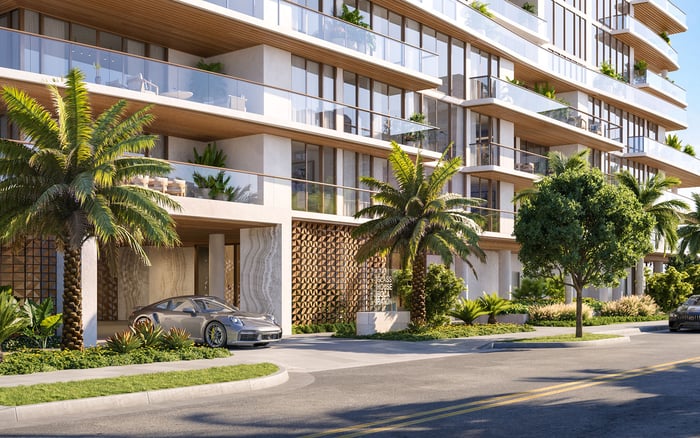
Glass House Boca Raton is framed as a luxury downtown residential development defined by glass-forward architecture, pedestrian-minded planning, and a full-service urban lifestyle within Boca Raton’s evolving walkable core.
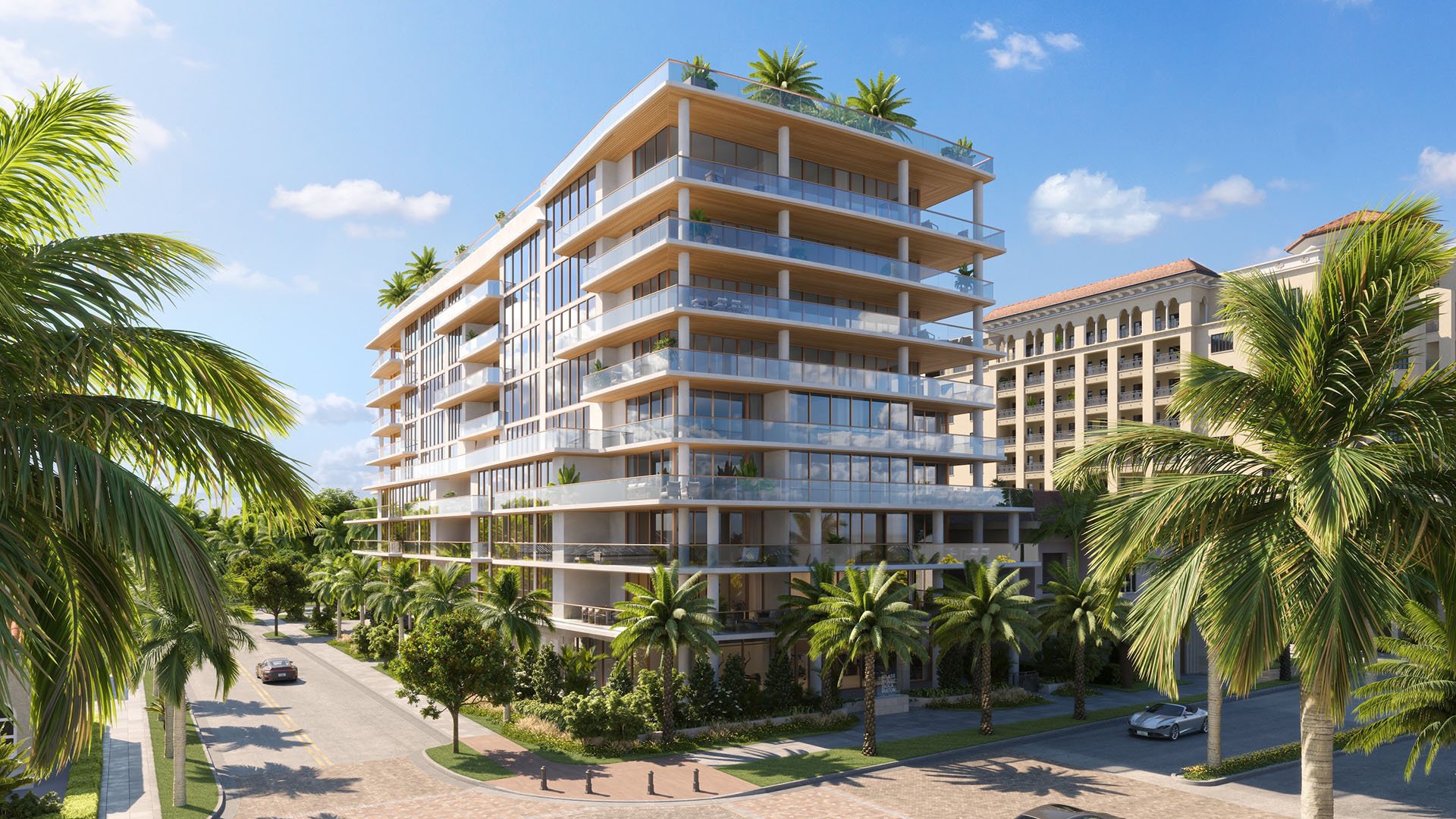
Glass House Boca Raton is presented as a luxury downtown residential development shaped by walkability, service, and architecture that feels open to its surroundings. In Boca-ratón, that combination carries particular weight. The city has long offered polished residential enclaves and established prestige, yet the downtown district increasingly appeals to buyers who want a more connected daily rhythm, where dining, shopping, and cultural destinations are woven into neighborhood life rather than requiring a separate drive.
Glass House Boca Raton is positioned within that downtown context with a design language centered on modern transparency. That phrase is more than aesthetic shorthand. It points to glass-forward architecture, open interiors, stronger indoor-outdoor continuity, and a visual lightness well suited to South Florida’s climate and lifestyle. For the affluent purchaser seeking a home that feels current rather than merely expensive, that distinction matters.
The project also aligns with a broader regional shift. South Florida’s upper-tier market has shown sustained interest in residences that pair walkable urbanism with private comfort and hospitality-minded amenities. In that sense, Glass House Boca Raton sits in dialogue with other elevated lifestyle offerings in Boca-ratón, including Alina Residences Boca Raton and The Residences at Mandarin Oriental Boca Raton.
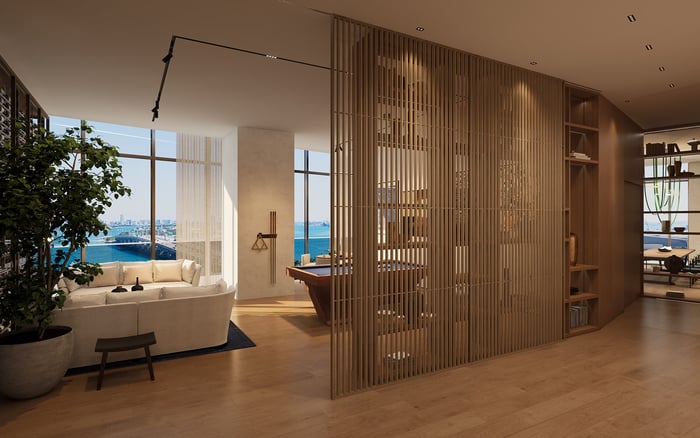
In residential design, transparency is not simply about expansive glazing. At its best, it is about the choreography of light, privacy, and spatial openness. Glass House Boca Raton is described through that lens, with architecture intended to emphasize visibility, material expression, and occupant wellness. The appeal is immediate for buyers who value interiors that feel calm, luminous, and connected to the outdoors.
This approach has a practical dimension as well. In South Florida, glass-led design can heighten a sense of resort-style living even in an urban setting, particularly when paired with terraces, rooftop landscapes, and amenity spaces that extend daily life beyond the residence itself. The concept of energy-efficient glass systems and green-roof elements further suggests an effort to unite contemporary aesthetics with a more considered environmental posture.
For discerning owners, this is often the difference between a building that photographs well and one that genuinely enhances daily life. A residence designed around openness can make a smaller layout feel more expansive, while a larger home gains clarity and composure rather than excess. Publicly described plans indicate an offering calibrated to a range of buyers, from second-home seekers to full-time residents seeking a service-oriented primary home.
Downtown has become one of the most significant ideas in South Florida luxury real estate. In prior cycles, prestige was often tied almost exclusively to waterfront exposure or gated privacy. Today, a meaningful share of affluent demand is directed toward neighborhoods where one can step outside and move through the city on foot without sacrificing comfort or status.
Glass House Boca Raton is positioned directly within that trend. Its concept emphasizes integration into a walkable district near shopping, dining, and cultural anchors, while ground-floor retail and hospitality uses are intended to animate the street. That street-level activation is not incidental. It shapes the resident experience, making arrival more elegant, daily errands more seamless, and the surrounding blocks more socially alive.
Within Boca-ratón, this walkable luxury pattern complements a broader evolution toward refined, amenity-rich living in established neighborhoods. The city’s distinction is that it translates urban convenience into a setting known for polish, club culture, and a more measured tempo.
Luxury today is increasingly defined by what a building removes from a resident’s day: friction, inconvenience, and wasted time. Glass House Boca Raton is described as a full-service community with an amenity vision rooted in wellness and lifestyle programming. That framework places it firmly within the newer generation of residential thinking, where service, flexibility, and health-conscious design are central rather than supplementary.
Reported amenities include rooftop gardens, co-working areas, and integrated retail at ground level. Taken together, those elements point to a residential environment that accommodates the way affluent owners live now. Work may be hybrid. Social life may unfold in a neighborhood restaurant one evening and on a private terrace the next. Wellness is not confined to a gym, but extends to daylight, circulation, landscaping, and spaces that encourage restoration.
The design approach also prioritizes pedestrian circulation and seeks to reduce the visual dominance of parking through structured parking solutions. For buyers, that matters more than it might seem. A building that conceals parking gracefully and gives primacy to people rather than vehicles feels more sophisticated from the first impression onward. It also reinforces a boutique urban atmosphere, especially important in a downtown setting where curb appeal and street character shape long-term desirability.
One of the most compelling aspects of Glass House Boca Raton is its mixed-use-style identity, combining residential space with retail and experiential components. That hybrid is increasingly attractive to high-net-worth buyers who want a home that functions as both refuge and portal. Privacy remains essential, but the surrounding experience is expected to be curated, convenient, and culturally engaged.
In Boca-ratón, this idea resonates because the market attracts several overlapping buyer profiles. There is the local purchaser seeking a refined shift from a larger single-family-home environment into a more effortless residence. There is the second-home buyer who values lock-and-leave ease without stepping down in service. And there is the investor-minded owner who recognizes that walkable, new-construction product in established luxury districts often commands durable attention.
That does not mean every buyer wants the same thing. Some prioritize wellness programming. Others want entertaining spaces and rooftop environments. Some are drawn to the sheer clarity of ultra-modern design. Glass House Boca Raton appears designed to meet those varied expectations without sacrificing coherence, which is precisely what distinguishes sophisticated development from trend-driven development.
Glass House Boca Raton is also notable for how it fits into the city’s broader downtown narrative. Rather than existing in isolation, the project is framed as complementary to established civic, retail, and cultural destinations. In luxury real estate, context often proves as important as architecture itself. Buyers are not simply purchasing a residence. They are buying into the quality, trajectory, and identity of the district around it.
For Boca-ratón, that trajectory looks increasingly urban in the best sense of the word: polished, walkable, activated, and service-rich, yet still restrained. This is a more composed version of city living, one that suits buyers who want sophistication without overstimulation.
That is why Glass House Boca Raton feels consequential. It reflects where the local market is heading, emphasizing openness, ease, wellness, and connection to place. In a market where many projects promise luxury, the true differentiator is whether a development can make daily life feel more graceful.
What is Glass House Boca Raton? It is a luxury residential development presented as part of downtown Boca-ratón’s walkable, design-forward evolution.
Where is Glass House Boca Raton located? It is positioned in Boca-ratón’s downtown core near shopping, dining, and cultural destinations.
What design idea defines the project? The project is centered on modern transparency, with glass-forward architecture and strong indoor-outdoor connections.
Is Glass House Boca Raton purely residential? It is described with a mixed-use-style character that pairs residences with retail and experiential elements.
What kinds of buyers may be interested in it? The concept may appeal to local downsizers, second-home buyers, and purchasers seeking walkable luxury living.
What amenities are associated with the project? Reported amenities include rooftop gardens, co-working areas, wellness-oriented spaces, and ground-level retail.
Why does walkability matter here? Walkability supports a more connected daily routine, with access to neighborhood destinations without relying on a separate drive.
How does the project approach parking and circulation? The design emphasizes pedestrian movement and uses structured parking to reduce the visual impact of vehicles.
Is wellness part of the overall concept? Yes. The design language highlights light, openness, and amenity spaces that support a restorative lifestyle.
Why is Glass House Boca Raton notable in the local market? It reflects Boca-ratón’s shift toward more urban, amenity-rich, new-construction luxury in a walkable downtown setting.
For a confidential assessment and a building-by-building shortlist, connect with MILLION Luxury.
If branded residences are on your mind — as a home or as an allocation — we would be glad to share what we are seeing, privately.
Begin a quiet conversation