A buyer-focused framework for evaluating Palazzo della Luna’s domestic-water resilience, from upper-floor pressure testing to pump-maintenance records and emergency-power verification.
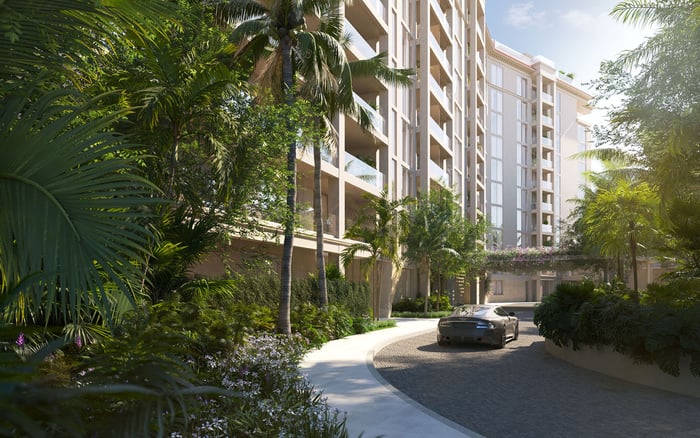
For a family office evaluating Palazzo della Luna, the acquisition file should extend beyond architecture, views and service. The property is described as a 10-story, 50-residence condominium on Fisher Island, with private elevators and expansive floor plans. Those attributes frame the residential experience. Domestic-water continuity warrants a separate assessment.
The central questions are precise: what maintains water delivery when equipment is unavailable, what pressure reaches the highest residences during simultaneous demand, and what records demonstrate consistent maintenance? Dual incoming services, redundant storage, duty/standby pumps and generator-backed domestic-water operation remain unverified. That is a disclosure gap, not evidence that these features are absent.
A disciplined buyer treats resilience as something to document and test-not infer from the address or amenity program.
Palazzo della Luna’s Sunset Pool measures 34 meters and more than 4,000 square feet, with two lap lanes and underwater banquette seating. The Sunrise Pool measures 21 meters and more than 1,750 square feet. Wellness offerings include a fitness center, beauty salon, treatment rooms and spa cabana.
These amenities establish the scope of the leisure offering, not the domestic-water system’s redundancy. Pool circulation, irrigation and fire-protection equipment must remain distinct from the system serving residential fixtures. A substantial pool installation is no substitute for a domestic-water schematic.
The same distinction applies within a residence. Whole-unit filtration and kitchen-sink reverse osmosis are described for 6800 Fisher Island Drive, Unit 6842. These are unit-level features, not confirmation of building-wide continuity. Keep water treatment and water availability in separate sections of the diligence file.
Request domestic-water riser diagrams, as-built drawings, pump schedules, pressure-zone information and storage details. Add commissioning records, control sequences and emergency-power connections. The purpose is to establish the actual installation, without presuming a particular tank arrangement, pump type or backup configuration.
Domestic-water tank configuration, booster-pump specifications and automatic alternation controls remain unconfirmed. Ask an independent mechanical/plumbing specialist to reconcile the documents with equipment observed on site and identify anything still unverified.
Organize the file around three questions: where water enters, how it reaches the residences, and which components remain available during a failure. For each proposed resilience feature, seek both documentation and an appropriate operational demonstration.
If the acquisition shortlist also includes Palazzo del Sol, use the same document-request structure without assuming the properties share infrastructure. Consistent questions support a useful comparison; presumed similarities do not.
“Redundant” should begin a technical discussion, not conclude it. Ask whether there are multiple incoming domestic-water services, whether storage is provided, and whether pump arrangements include duty/standby capacity. Then establish what each arrangement is intended to cover.
A specialist should confirm whether the remaining equipment can meet design demand with the largest pump unavailable. Request supporting design information and an explanation of the control sequence under that condition. The objective is to distinguish installed equipment from demonstrated continuity.
Emergency power requires separate verification. Confirm whether domestic-water equipment and its controls are connected to generator-backed power, and whether transfer has been tested under domestic-water load. Neither a general assurance about backup power nor the presence of unrelated emergency equipment answers that question.
Where evidence remains incomplete, record the feature as unverified. An unanswered question is neither a deficiency allegation nor a positive resilience claim.
Highest-floor domestic-water pressure, pressure-reducing-valve settings, design flow and minimum residual fixture pressure remain undisclosed. A family office should not fill that gap with an assumed pressure target.
Instead, commission an independent mechanical/plumbing specialist to measure highest-floor static and flowing pressure under simultaneous demand and observe pump staging. Ask the specialist to document test conditions, measurement locations, operating equipment and results. The evaluation should relate those findings to the applicable design and fixture requirements.
A quiet walkthrough is not a simultaneous-demand test. The objective is to understand performance while water is being drawn, not merely confirm that a fixture operates during a visit.
Pressure-zone drawings and valve settings should accompany the test findings so the specialist can interpret them in context. The deliverable should distinguish measured performance from conditions not tested, including equipment-outage scenarios. One successful observation does not establish performance under every operating condition.
Request 24-36 months of work orders and invoices, together with preventive-maintenance schedules, pump run-hour logs, controller alarms, component-replacement records and documented low-pressure or water-outage incidents. These records, along with repair and commissioning documentation, remain to be obtained.
Read the material as a chronology. Ask the specialist to connect each alarm or service complaint with the response, repair and any subsequent verification. Recurring events warrant explanation; a replacement invoice alone does not establish that an underlying issue was resolved.
Clarify the maintenance scope and responsibility for responding to alarms. Where available, compare documented service work with the relevant equipment instructions and maintenance schedule. Keep confirmed findings separate from management explanations that still require supporting records.
For buyers also considering The Residences at Six Fisher Island, the same evidence-led framework can structure questions. It is not a statement about that project’s water systems.
In Miami Beach, plumbing installation, alteration, repair, removal, conversion and replacement are among the activities subject to permitting requirements. Commercial plumbing checklists include pool piping and site work for condominiums and apartments.
Those provisions provide context, not proof of the permitting authority for Palazzo della Luna. Confirm the property’s jurisdiction before applying them, then request relevant property-specific permits and completion records for any documented work. Pool-piping paperwork should not be presented as verification of domestic-water resilience.
The finished diligence file should distinguish confirmed system configuration, observed performance and unresolved questions. Pair drawings with test findings and maintenance history, then identify which conclusions the independent specialist supports.
This approach preserves the distinction between an exceptional residential setting and verified operational capability. For ownership planning, the useful conclusion is not a blanket assurance but a clear account of what has been demonstrated and what still requires confirmation.
Explore South Florida residences with a more exacting acquisition perspective at MILLION.
If branded residences are on your mind — as a home or as an allocation — we would be glad to share what we are seeing, privately.
Begin a quiet conversationPalazzo della Luna is described as a 10-story, 50-residence condominium on Fisher Island. Published residence features include private elevators and expansive floor plans.
The reviewed marketing materials do not verify dual incoming services, redundant storage, duty/standby pumps or generator-backed domestic-water operation. This does not establish that those features are absent.
Request riser diagrams, as-built drawings, pump schedules, pressure zones, storage details and commissioning records. Control sequences and emergency-power connections should also be included.
The reviewed brochure does not disclose highest-floor pressure, pressure-reducing-valve settings, design flow or minimum residual fixture pressure.
An independent mechanical/plumbing specialist should measure highest-floor static and flowing pressure under simultaneous demand and observe pump staging. Findings should be assessed against applicable design and fixture requirements.
Seek 24–36 months of work orders and invoices, controller alarms, component replacements and documented low-pressure or water-outage incidents. Also request maintenance schedules and pump run-hour logs.
The specialist should confirm whether remaining equipment meets design demand with the largest pump unavailable. Supporting design information and control sequences should substantiate the conclusion.
No. The filtration and kitchen-sink reverse osmosis described for Unit 6842 are unit-level features, not verification of building-wide water redundancy.
Confirm whether domestic-water equipment and controls have emergency-power connections. Seek evidence that generator transfer has been tested under domestic-water load.
No. The supplied information does not establish the property’s permitting authority, so jurisdiction must be confirmed before applying Miami Beach’s requirements.