For Hamptons owners making North Bay Village their permanent Florida residence, the first January 1 after closing deserves careful planning. Understand the distinction between homestead exemption, Save Our Homes and portability, then align ownership, residency documentation and filing deadlines.

For a Hamptons household considering North Bay Village, the purchase decision begins with lifestyle: where to spend the winter, entertain family and establish a more permanent South Florida base. The property-tax decision begins with a narrower question: will this be your permanent Florida residence or remain a seasonal retreat?
Florida homestead exemption is for a qualifying permanent residence, not a vacation home or investment property. A substantial purchase price, an extended winter stay or an intention to relocate eventually does not change that distinction. The practical objective is to align ownership, permanent-residence status and documentation before the relevant January 1.
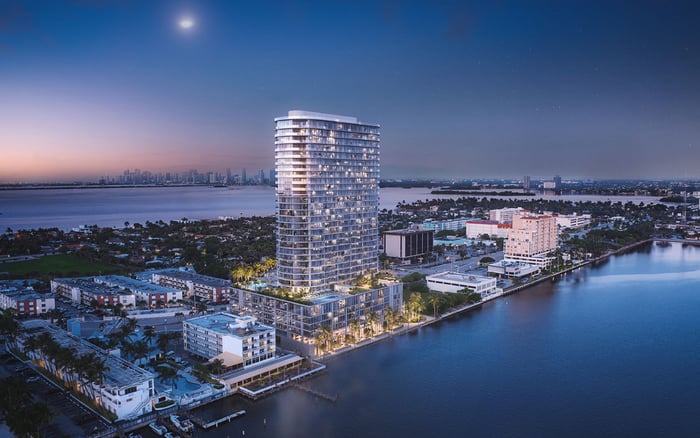
For buyers considering Continuum Club & Residences North Bay Village, the question is not simply whether the residence suits the household. It is whether the planned closing and actual permanent-residence timeline support the intended tax year. Selecting a project alone establishes neither eligibility nor a filing date.
Homestead exemption, Save Our Homes and portability serve different purposes. Treating them as a single benefit can distort both the acquisition budget and expectations for subsequent years.
Homestead exemption reduces taxable property value.
It does not reduce the tax bill by an equivalent dollar amount. The first $25,000 applies to school and other property taxes; the additional exemption does not apply to school taxes. The exemption therefore does not affect every levy identically.
The exemption amount is also year-specific. For 2025, the maximum combined exemption in Miami-Dade was $50,722 following the CPI-linked adjustment. That historical figure is not a forecast for 2027 or 2028, nor should a flat $50,000 be treated as permanently current. Confirm the applicable amount when preparing the relevant year's budget.
Save Our Homes limits assessment growth.
For a qualifying home, annual increases in assessed value are limited to 3% or CPI, whichever is lower. This is not a cap on annual increases in the total property-tax bill.
Portability transfers an eligible assessment difference.
It can transfer up to $500,000 of the eligible gap between a previous Florida homestead's just or market value and its capped assessed value. It is neither a cash payment nor a $500,000 tax credit.
January 1 is the eligibility checkpoint. You must own the property and use it as your permanent residence on that date for the applicable tax year. Closing is necessary, but it is not sufficient.
If a particular homestead year matters to the acquisition plan, work backward: plan to close by December 31 and establish permanent residence by January 1. A year-end closing without permanent residency by that checkpoint does not satisfy both requirements.
Consider two illustrations:
December 20, 2026 purchase and move-in: The buyer could qualify for 2027 homestead if the property is the buyer's permanent residence on January 1, 2027. The standard application deadline would be March 1, 2027.
January 3, 2027 purchase: The buyer would generally first become eligible for 2028 homestead, assuming ownership and permanent residency on January 1, 2028. The standard application deadline would then be March 1, 2028.
These examples illustrate timing, not guaranteed approval. A small difference in closing dates can shift the buyer's first eligible homestead year, making the calendar an important part of acquisition planning.
When evaluating Shoma Bay North Bay Village, keep your anticipated tax year separate from your preferred purchase schedule until the ownership and residency dates are clear. Do not build the budget around an exemption that depends on an unconfirmed move.
For someone arriving directly from the Hamptons, the portability distinction is straightforward: New York property-tax benefits cannot be transferred into Florida's Save Our Homes system. An eligible prior Florida homestead is required. Purchasing a Florida permanent residence may support homestead eligibility, but it does not, by itself, create a prior assessment difference to transfer.
The analysis changes for a household that already has an eligible Florida homestead. Portability can operate across county lines, including moves among Miami-Dade, Broward and Palm Beach, subject to eligibility and timing requirements.
A buyer weighing North Bay Village against Sixth & Rio Fort Lauderdale should distinguish an interstate relocation from a move between Florida homesteads. Crossing a Florida county boundary does not, by itself, prevent portability.
Likewise, if the search includes Alba West Palm Beach, the relevant questions concern the prior Florida homestead, the old and new property values, and the applicable timing rules. The destination address alone does not establish the transferable amount.
Supply the prior Florida homestead information and have the property appraiser confirm both the available transfer and the current timing requirements. Do not assume that the maximum $500,000 applies to your circumstances or that a deadline recalled from a previous move still applies.
For North Bay Village, the Miami-Dade County Property Appraiser administers homestead and related property-tax benefits. Online applications are available for both homestead exemption and Homestead Assessment Difference, the portability benefit.
The standard homestead application deadline is March 1 of the tax year being claimed. Keep that date distinct from January 1: March 1 is the filing deadline; January 1 determines ownership and permanent-residence eligibility.
A practical preparation sequence is:
For households maintaining homes in more than one state, review the residency facts with qualified advisers before treating the Florida property as a permanent residence for homestead purposes.
Keep three items separate in the planning conversation: the exemption applicable to the tax year, the assessment-growth protection available to a qualifying home, and any confirmed portability amount. None should be mistaken for a guaranteed reduction in the total tax bill.
The most useful preparation happens before closing. Decide how the residence will actually be used, align that decision with January 1, and prepare the application file ahead of March 1. The property choice can then remain grounded in lifestyle, and the tax planning in eligibility.
Explore South Florida residences with MILLION as you plan your next permanent home.
If branded residences are on your mind — as a home or as an allocation — we would be glad to share what we are seeing, privately.
Begin a quiet conversationNot if it remains a vacation home. Florida homestead exemption requires a qualifying permanent Florida residence, rather than a seasonal retreat or investment property.
You must own the property and use it as your permanent residence on January 1 of the tax year being claimed. Closing alone does not satisfy both requirements.
Yes, if the buyer also establishes permanent residence by January 1, 2027 and otherwise qualifies. The standard application deadline would be March 1, 2027.
The buyer's first eligible homestead year would generally be 2028, assuming ownership and permanent residency on January 1, 2028.
They apply through the Miami-Dade County Property Appraiser, which offers online applications for homestead exemption and portability. The standard homestead application deadline is March 1 of the year claimed.
Florida driver's-license, voter-registration and address information help support permanent-residence status. Documentation must reflect the actual residency circumstances.
No, it reduces taxable property value rather than providing an equivalent dollar reduction in taxes. The first $25,000 applies to school and other property taxes, while the additional exemption excludes school taxes.
No. It limits annual increases in a qualifying home's assessed value to 3% or CPI, whichever is lower, rather than capping the total tax bill.
No. Save Our Homes portability requires an eligible prior Florida homestead and can transfer up to $500,000 of an eligible assessment difference, not New York tax benefits.
Yes, including moves among Miami-Dade, Broward and Palm Beach, subject to eligibility and timing requirements. Confirm the current timing rules and calculated transfer with the property appraiser.