A buyer-focused comparison of the advertised wellness programs at Banyan Tree and Mr. C in West Palm Beach, with practical guidance on capacity, filtration, resident access, and reservation rules.
The most persuasive wellness amenity is not necessarily the most photogenic. It is the one that fits quietly into an owner's day: a morning workout without a queue, a treatment appointment at a convenient hour, and indoor environments supported by clear technical specifications. For buyers comparing Banyan Tree and Mr. C in West Palm Beach, the distinction is between an advertised experience and the conditions that make it usable.
Both projects advertise wellness facilities, but their descriptions do not establish comparable capacity, filtration performance, or reservation rights. Treat the programs as planned or advertised, not as verified operating services. The purchase decision should turn on what is specified, who can use it, and what access will cost.
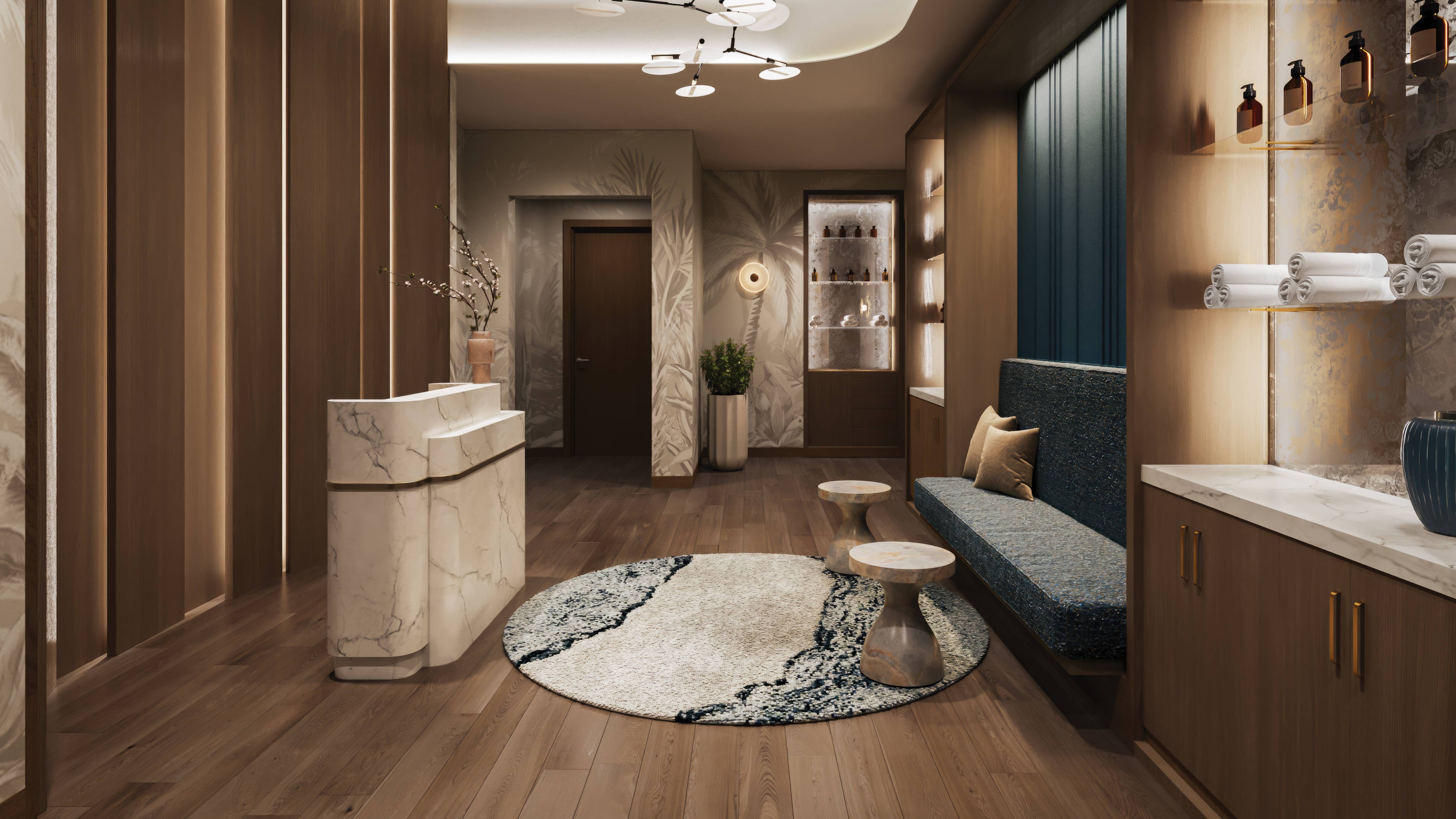
At Banyan Tree Residences West Palm Beach, the advertised program dedicates an entire floor to wellbeing, anchored by a full-service spa and an expansive reflection and meditation garden. Rainforest showers, a hammam, steam room, sauna, and soaking baths form a varied thermal and bathing program. A meditation dome and an indoor and outdoor Fitness Pavilion extend the offering beyond treatments.
Cryotherapy facilities and a cold plunge also appear in descriptions of the planned program; confirm their inclusion in the applicable project documents. The signature pool is advertised as fully serviced, with cabanas. None of these descriptions establishes treatment availability or staffing levels.
At Mr. C Residences West Palm Beach, the advertised wellness core includes a Signature Spa with sauna and steam rooms, a fully outfitted fitness center, and a fully outfitted yoga center. The brand's emphasis on Old World sophistication, modern comfort, and the Cipriani family's service tradition describes an intended atmosphere-not a quantified service commitment.
Banyan Tree's more varied advertised spa menu is not proof of greater capacity. Mr. C's fitness and yoga offering likewise requires an operating plan before buyers can judge everyday convenience.
Start with the week you intend to spend in residence. An owner seeking an early workout and occasional massage has different requirements from one expecting daily thermal sessions, private instruction, and appointments for visiting family.
Request floor plans identifying usable fitness space, treatment-room counts, thermal-room occupancy limits, and class sizes. Then ask for proposed staffing by time of day, treatment duration, turnover allowances, and hours of operation. A room on a plan is not necessarily an appointment that can be booked.
Neither comparable capacity figures nor peak-period wait times are established here, so there is no basis for declaring a winner. For planned facilities, ask management how it intends to accommodate peak demand. Do not treat projected availability as operating history.
Test a specific scenario: two household members wanting simultaneous treatments on a weekend morning. Ask whether the proposed rooms, staffing, and booking rules would accommodate them. That answer is more useful than another amenity rendering.
Privacy must be defined facility by facility. At Banyan Tree, confirm the scope of resident-only spa access and whether the proposed wellness concierge arranges services, delivers them, or simply coordinates reservations. Clarify eligibility for owners' guests and residential tenants.
At Mr. C, obtain written clarification on whether the eighth-floor wellness spa permits public access before assuming exclusivity. Do not extend a spa access description to the pool, sauna, cold plunge, or other facilities without separate confirmation.
For both properties, request an access schedule identifying whether owners, tenants, hotel guests, and outside visitors may use each space. Include elevators, changing rooms, and pool areas-not just treatment rooms. Distinguish shared circulation from shared amenity rights.
Where Sanctuary Club access or Banyan Tree resort privileges form part of the appeal, obtain the specific benefits, participating locations, fees, and reservation conditions. A membership reference alone does not establish a usable entitlement.
HEPA filtration is not confirmed here for either project. Nor should references to circadian lighting, smart climate systems, acoustic design, or wellness-oriented interiors be treated as contractual residential specifications without supporting documents.
Ask for the mechanical schedule covering filtration efficiency, ventilation, and humidity control. Require the response to distinguish the residence from corridors, fitness rooms, and spa areas. A specification for one space should not be assumed to cover another.
Have a qualified mechanical professional review the proposed equipment, filter compatibility, operating parameters, and maintenance responsibilities. Confirm who replaces filters, how frequently service is required, and how equipment access is arranged. Ask what commissioning documentation will be available at delivery. The objective is a defined system and service obligation, not an unsupported promise of health benefits.
In-residence water-filtration specifications are not established here for either project. Ask whether proposed treatment is point-of-entry, point-of-use, or both, then identify exactly which fixtures it serves.
A kitchen drinking-water system does not confirm filtration at showers, bathroom taps, or ice makers. Request the equipment model, contaminant-reduction certifications, replacement schedule, and expected ongoing costs. Confirm whether maintenance falls to the association or the individual owner.
If a system is optional, establish installation approval requirements and service access before relying on a future upgrade. Keep the distinction between delivered equipment and buyer-installed improvements explicit in the purchase review.
Request written reservation windows, resident priority, operating hours, guest and day-pass policies, cancellation charges, treatment prices, and limits on simultaneous bookings. Separate amenities included in ownership costs from services charged individually. Ask which proposed rules can change and who has authority to change them.
Spa bookings and residential leasing are separate questions. For Mr. C's Resort Residences on floors 2-8, confirm the precise rental rights and optional hospitality-program terms for the selected unit. A broad description of unrestricted rentals is no substitute for governing documents or applicable law.
Banyan Tree's lease restrictions and Mr. C's upper-floor rental rules are not established here. Have counsel verify minimum stays, annual rental limits, approvals, program fees, and owner-use restrictions. Do not assume a standard condominium policy applies.
If your West Palm Beach search also includes Alba West Palm Beach, carry the same questions into that review without assuming equivalent facilities or access rights. A consistent checklist keeps the comparison focused on your household rather than the vocabulary of each presentation.
Before committing, assemble three items: the promised amenity scope, the technical specifications for the residence, and the operating rules governing access and cost. Mark each provision as contractual, proposed, or discretionary. The strongest wellness proposition is the one whose documented terms support the life you intend to lead.
For a discreet conversation about your West Palm Beach property search, connect with MILLION.
If branded residences are on your mind — as a home or as an allocation — we would be glad to share what we are seeing, privately.
Begin a quiet conversationNo comparable capacity figures presented here establish a winner. Compare treatment-room counts, occupancy limits, staffing plans, class sizes, and reservation policies rather than amenity counts.
The advertised program includes a wellbeing floor with a full-service spa, meditation spaces, thermal and bathing facilities, and an indoor and outdoor Fitness Pavilion. These are planned or advertised amenities, not verified operating services.
Mr. C advertises a Signature Spa with sauna and steam rooms, a fully outfitted fitness center, and a fully outfitted yoga center. Staffing and appointment availability require separate confirmation.
Resident-only eligibility needs confirmation in project documents. Buyers should clarify access for tenants and owners' guests, along with the wellness concierge's service scope.
Public access to the eighth-floor wellness spa requires written clarification. Buyers should confirm each facility's access rights separately rather than assuming the entire wellness program is exclusive or shared.
HEPA filtration is not confirmed here for either project. Request mechanical specifications identifying filtration efficiency, ventilation, humidity control, and the spaces served.
No whole-residence filtration specification is established here for either project. Confirm treatment location, covered fixtures, contaminant-reduction certifications, maintenance schedules, and costs.
Request reservation windows, resident priority, operating hours, guest access, cancellation fees, treatment charges, and simultaneous-booking limits. Also establish which services are included in ownership costs.
Do not rely on a broad unrestricted-rental description for floors 2–8. Confirm unit-specific governing documents, applicable law, and any optional hospitality-program fees or owner-use restrictions.
Banyan Tree's lease restrictions and Mr. C's upper-floor rental rules are not established here. Counsel should verify minimum stays, annual rental limits, approvals, and other conditions for the exact unit.