For Rivage Bal Harbour buyers planning around medical equipment or in-home care, the essential diligence sits beyond the amenity list: residence-level power, caregiver access, and a documented route for emergency responders.
For a household that relies on medical equipment or in-home caregivers, a residence must offer more than an exceptional daily setting. It must accommodate the routines and contingencies that make daily life workable. At Rivage Bal Harbour, the buying decision should distinguish advertised hospitality from the technical capabilities and access rights a household may need.
The project at 10245 Collins Avenue, Bal Harbour, FL 33154 is marketed as a 25-story oceanfront condominium with 56 residences, approximately 2.67 acres, and 200 linear feet of beachfront. Advertised services include 24-hour security and valet, residential butler and estate-manager services, and medical concierge.
These offerings describe a service-oriented property. They do not, by themselves, establish continuous power for medical devices, parking for rotating caregivers, or guaranteed emergency support. Missing technical details are not evidence that a capability is absent. They are reasons to seek written confirmation before relying on it.
The advertised specifications do not confirm residence-level emergency power for medical equipment or medication refrigeration. Generator capacity, fuel type, runtime, transfer-switch configuration, and load-shedding priorities also remain unestablished. Buyers should not treat a general discussion of backup power as confirmation that particular outlets or appliances will remain available.
Begin with a household equipment schedule prepared with the relevant clinicians and equipment providers. Ask the project's authorized technical team to respond to that schedule, identifying which residence circuits would be backed up and whether they support the proposed loads. The response should distinguish equipment power from refrigeration, lighting, and other household needs-not group them under a broad assurance.
Request written answers covering:
The specific backed-up circuits and their supported loads.
Transfer arrangements and any interruption the household must plan around.
Generator runtime assumptions and load-shedding priorities.
Approvals required for equipment installation or electrical modifications.
Have the equipment provider assess whether the documented arrangement meets the household's requirements. Any independent contingency should also be reviewed for suitability and building approval. A sales assurance is no substitute for an equipment-specific assessment.
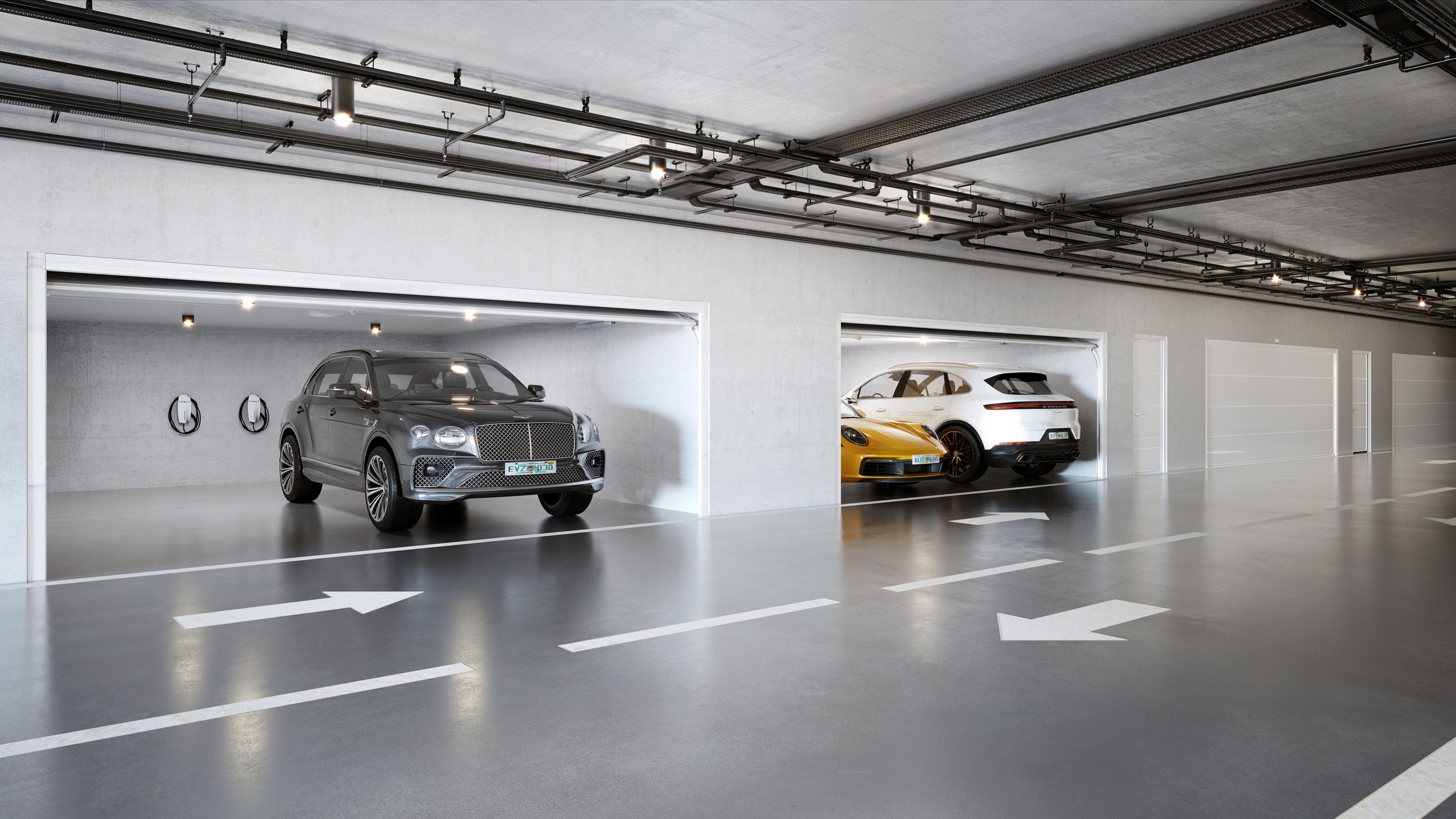
Rivage advertises an oversized, temperature-controlled, enclosed two-car garage with storage. Those features do not establish medical-specific storage permissions or conditions. Nor are the dimensions needed to accommodate an accessible van, wheelchair lift, or deployed ramp established.
For a household using accessible transportation, request measured clearances and a review of the actual arrival-to-residence route. Consider the vehicle with its access equipment deployed, not simply its parked footprint. Ask how the route accommodates unloading and whether any proposed storage use requires approval. Do not assume temperature-controlled space is suitable for medication or specialized supplies.
Caregiver parking is a separate inquiry. Advertised valet does not establish recurring-visit privileges, overnight access, fees, or guaranteed on-site parking. Request the applicable parking rules and ask how they address shift changes, overlapping visits, substitute caregivers, and overnight stays. Clarify what happens when a caregiver arrives without advance registration.
A buyer also considering Oceana Bal Harbour should use the same written checklist rather than assume that similarly positioned residences provide equivalent parking rights. The useful comparison is the household's permitted routine, not the presence of valet alone.
The advertised information does not establish an ambulance bay, dedicated responder entrance, fire-department access lane, or medical-elevator designation. Likewise, 24-hour security does not establish medical-response times, responder staging procedures, elevator priority controls, or unit-entry protocols.
Before closing, request the applicable emergency plan and ask the building's authorized team to explain the route responders would use. Cover arrival, entry authorization, elevator access, and entry to the residence. Ask who is responsible for each step and what arrangements apply after hours or during a power interruption.
Where transport equipment may be needed, request an assessment of the relevant route with qualified professionals. Do not infer suitability from a generous lobby or residence layout. Ask separately about evacuation assistance, including its scope and limitations. Access into a building and assisted departure from it are distinct planning questions.
The objective is a documented understanding of procedures, not a promise of a particular response time. Security presence and emergency medical capability should remain distinct in every conversation.
Medical-concierge service is advertised, but its scope does not establish nursing, home-health staffing, equipment installation, or emergency-transport coverage. Residential butler and estate-manager services likewise do not establish caregiver management or clinical responsibilities. Request service descriptions before assigning any part of the household's care routine to these offerings.
The advertised spa, sauna, hammam, plunge pools, private treatment rooms, and fitness center are wellness amenities, not evidence of licensed clinical care. In-residence dining and catering are also advertised, but buyers with specific dietary requirements should seek separate confirmation of what can be accommodated.
Delivery handling deserves its own discussion. A mailroom with secure package technology does not establish refrigerated medication storage or specialized medical-delivery procedures. Ask who may accept a delivery, how the resident or caregiver is notified, and whether the required handling can be expressly accommodated. Arrange an alternative where the necessary service is not confirmed.
Organize the diligence into three files: technical power confirmation, parking and caregiver-access rules, and emergency procedures. Have counsel review the governing documents and advise how material representations or approvals should be addressed in the transaction. An operational explanation is useful, but it is not the same as an enforceable right.
The caregiver file should address credential requirements, recurring authorization, after-hours entry, and the process for changing personnel. The technical file should identify any installation approvals still required. The emergency file should distinguish confirmed arrangements from household contingencies that need independent planning.
If The Delmore Surfside is also on the shortlist, apply these same questions independently. Do not transfer conclusions about one property's power, staffing, or access arrangements to another.
Before taking ownership, review the final arrangements with the household's care team and the building's authorized representatives. Resolve discrepancies between earlier discussions and the documents that will govern daily use. The most meaningful luxury here is confidence that the residence can support the household's actual needs, with responsibilities clearly understood.
For a discreet conversation about matching South Florida ownership to your household's priorities, connect with MILLION.
If branded residences are on your mind — as a home or as an allocation — we would be glad to share what we are seeing, privately.
Begin a quiet conversationThe project address is 10245 Collins Avenue, Bal Harbour, FL 33154.
Rivage is marketed as a 25-story oceanfront condominium with 56 residences, approximately 2.67 acres, and 200 linear feet of beachfront.
Residence-level emergency power for medical equipment and medication refrigeration is not confirmed in the advertised specifications. Buyers should request written, equipment-specific technical confirmation.
Request backed-up circuits, supported loads, generator capacity and runtime, transfer arrangements, and load-shedding priorities. Clarify any installation or electrical-modification approvals.
An oversized, temperature-controlled, enclosed two-car garage is advertised, with storage also included in the garage offering. Medical-specific storage conditions and permissions are not established.
Clearance and maneuvering space for accessible vans, wheelchair lifts, and deployed ramps are not established. Request measurements and an assessment using the household's actual vehicle requirements.
No caregiver parking guarantee is established by the advertised valet service. Recurring access, overnight privileges, fees, and space availability require separate written clarification.
The advertised medical-concierge scope does not establish nursing, home-health staffing, equipment installation, or emergency-transport coverage. Request a service description before relying on it for care coordination.
The advertised information does not establish dedicated responder facilities, elevator priority procedures, or unit-entry protocols. Buyers should request the applicable emergency plan and clarify the responder route.
Secure package technology is advertised, but refrigerated medication storage and specialized medical-delivery handling are not specified. Confirm any required handling before arranging deliveries.