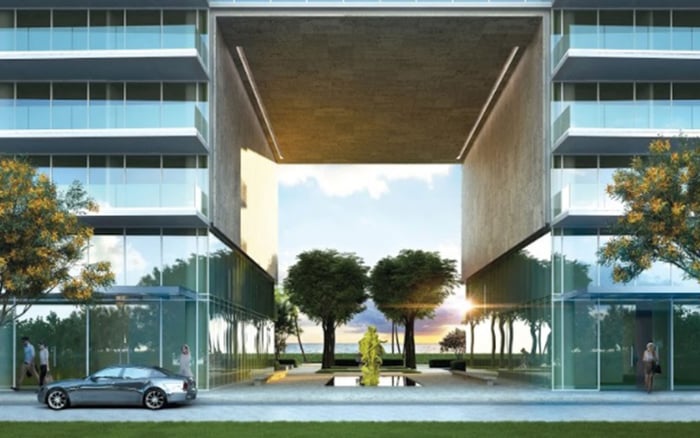
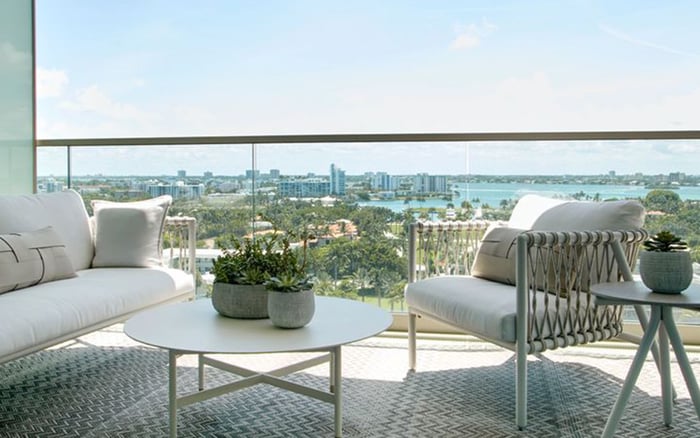
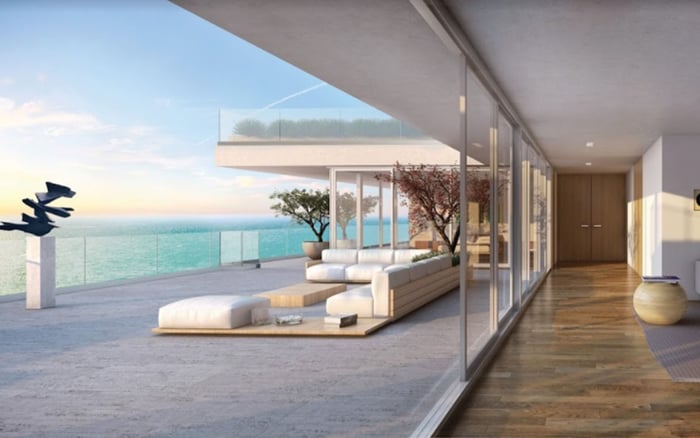
A buyer-focused comparison of Rivage Bal Harbour and Oceana Bal Harbour, examining what is established about terrace upkeep, what remains unverified, and which documents should guide wind-exposure and storm-securement decisions.
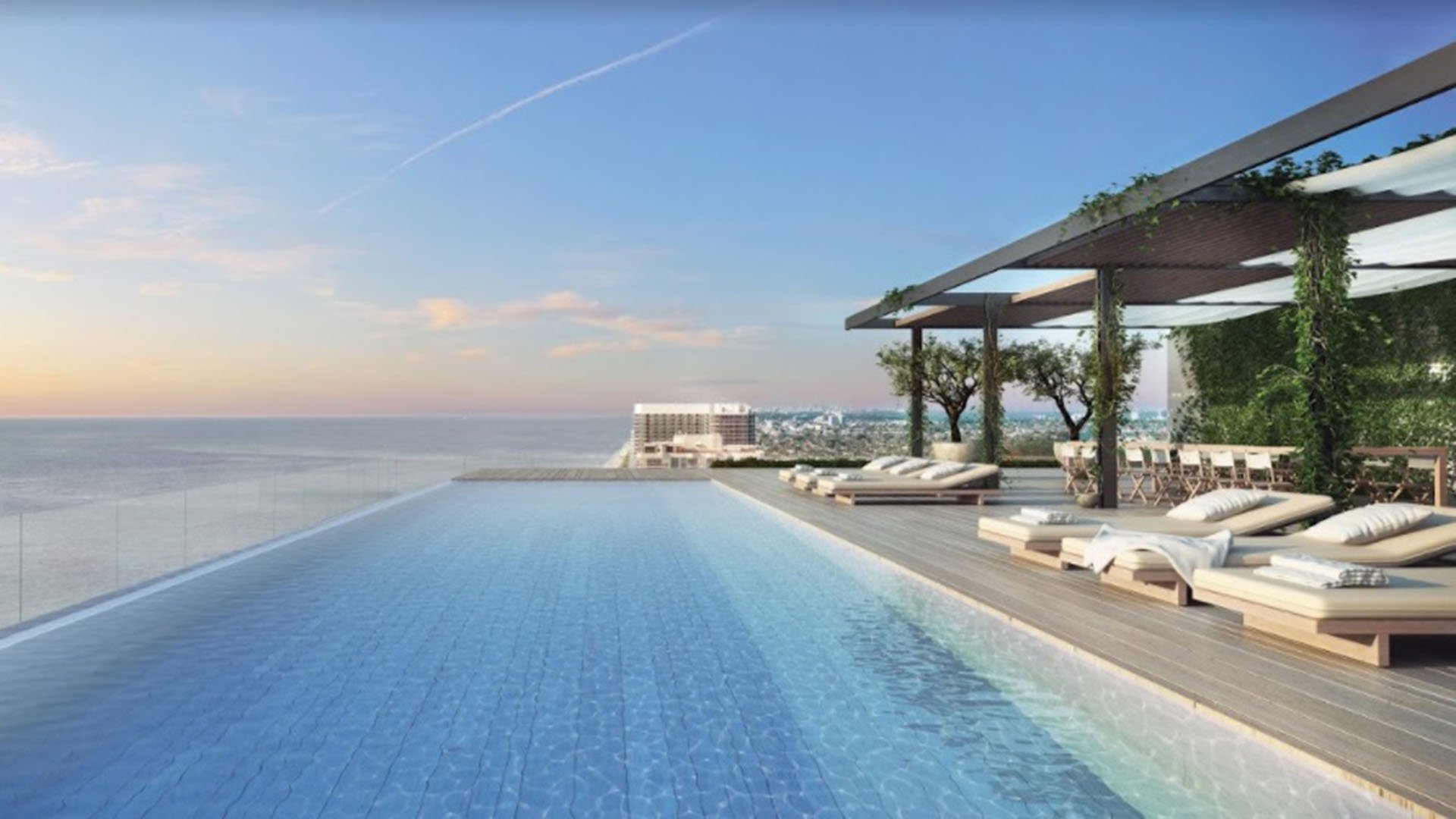
A terrace can be the most compelling room in a Bal Harbour residence: open to the horizon, integral to entertaining, and central to coastal ownership. Yet its value depends on more than dimensions and outlook. Equally important are who maintains it, who responds when water enters, and who secures it before a storm.
For buyers comparing Rivage Bal Harbour with Oceana Bal Harbour, the evidence distinguishes a planned development with estimated costs from an operating condominium with an established maintenance-reporting channel. It does not establish either building’s complete terrace obligations. Here, shared ownership means condominium responsibilities among owners and the association, not a fractional-ownership offering.
The decisive comparison is not which building promises greater ease, but which residence offers a clear, documented division of responsibility suited to the buyer’s intended use.
Rivage is a planned beachfront development with 25 stories and 56 residences. Its estimated monthly maintenance is $2.10 per square foot, but that figure is not a confirmed final association assessment. Treat it as a preliminary budgeting reference, not a settled carrying cost or a promise of particular services.
No water view or other specific view is guaranteed, and views vary by unit. For a terrace-led purchase, the outlook and ownership obligations should be assessed separately. Neither should be inferred from presentation imagery.
A detailed terrace-maintenance allocation and hurricane-preparation schedule remain unestablished. Important questions are therefore unresolved, including responsibility for waterproofing, surface finishes, drains, railings, and exterior doors. An undisclosed obligation is not necessarily an absent obligation. Before committing, request the applicable declaration, budget, rules, and hurricane-protection specifications, and have counsel distinguish binding provisions from estimates.
Oceana is located at 10201-10203 Collins Avenue, Bal Harbour, Florida 33154. Its association maintains a channel for residents to report maintenance issues. Association-fee coverage includes common areas, grounds maintenance, pest control, recreation facilities, sewer, trash, and water, alongside on-site maintenance.
Those services matter to day-to-day ownership, but they do not establish responsibility for terrace waterproofing, balcony coatings, railings, drains, exterior doors, or storm repairs. A maintenance request and an obligation to pay are different matters. Ask management to identify the governing provision for each terrace component rather than rely on a general description of services.
A terrace identified in a residence listing establishes a feature, not its maintenance allocation. Storm-preparation deadlines, furniture-removal requirements, inspection procedures, and lock-up services also remain unresolved at Oceana. Each requires written confirmation; none should be assumed unavailable.
Florida Statutes §718.113 requires an association to maintain, repair, and replace condominium property for which the declaration assigns it responsibility. The practical starting point is therefore the declaration, not the terrace’s appearance or the breadth of an amenity package.
Ask counsel and management to map responsibility component by component. Who maintains the waterproofing membrane? Who clears drains? Who repairs railings and coatings? Who services exterior doors? Who investigates water intrusion, and who pays for the resulting work? Seek clarity on routine upkeep, repair, replacement, and access for work rather than treating maintenance as a single category.
That distinction is especially useful if the shortlist also includes Fendi Château Residences Surfside. Apply the same questions to each property without carrying one building’s rules into another. Compare documented obligations; do not presume that similar residential positioning means identical service coverage.
A useful closing file should pair the responsibility schedule with the current budget, insurance summary, reserve study, and relevant structural and engineering documentation. These materials help frame further questions about how obligations are funded and handled. They are not interchangeable answers.
Neither beachfront positioning nor marketing information provides a unit-specific engineering analysis of Rivage’s terrace wind exposure. The available facts likewise do not support ranking Rivage against Oceana for wind conditions. A confident building-level verdict would exceed what is established.
Instead, request the wind-load criteria applicable to the residence, balcony and guardrail details, glazing specifications, and building-envelope documentation. Ask a qualified professional to explain what those materials establish for the particular unit and where further review is needed. A beautiful outlook is not an engineering assessment.
For a buyer also considering The Surf Club Four Seasons Surfside, the same discipline applies: seek residence-specific documentation rather than infer performance from a project’s identity. Keep two decisions separate throughout the search: whether the outdoor space suits your lifestyle, and whether its documented protection and upkeep arrangements suit your ownership expectations.
Florida law requires residential condominium boards to adopt hurricane-protection specifications, including permissible color, style, and other relevant design factors. Hurricane protection can include shutters, impact glass, code-compliant windows or doors, and other code-compliant systems, subject to governing documents and applicable code.
Responsibility for maintenance, repair, replacement, removal, and reinstallation depends on the declaration’s allocation and applicable statutory provisions. A protection system’s presence does not establish who operates it, who arranges service, or who pays when work is required.
Request a written storm protocol covering preparation deadlines, prohibited terrace items, furniture removal, storage arrangements, inspection procedures, and emergency-entry authority. Ask who communicates instructions, whether any securement or lock-up service is available, and what owners must arrange themselves. Keep operational procedures distinct from responsibility for physical components.
For Rivage and Oceana alike, the full terrace-securement protocol remains unestablished. Obtain written confirmation through the applicable building documents and authorized management, not rules belonging to another condominium with a similar name.
An absentee owner should ask who will act when the residence is unoccupied, what authorization is required, and whether storage and access arrangements are documented. If management offers assistance, confirm its scope and cost. General on-site maintenance should not be interpreted as a storm-preparation commitment.
The purchase decision becomes clearer when each unresolved item has a written answer: component responsibility, funding, engineering documentation, protection specifications, and storm procedures. Rivage’s estimated costs and Oceana’s operating service infrastructure are useful starting points, but neither alone settles the terrace question.
The strongest choice is the residence whose obligations you understand and can reliably fulfill. For a discreet conversation about aligning your residence search with those priorities, connect with MILLION.
If branded residences are on your mind — as a home or as an allocation — we would be glad to share what we are seeing, privately.
Begin a quiet conversationNo. The comparison concerns how condominium responsibilities are divided among individual owners and the association, not a fractional-ownership offering.
The estimate is $2.10 per square foot monthly. It is not a confirmed final association assessment and does not establish terrace-service coverage.
Rivage’s legal disclosures state that no water view or other specific view is guaranteed. Views vary by unit.
Yes, Oceana’s association asks residents to report maintenance issues. That channel does not itself establish who is responsible for particular terrace repairs.
The publicly described services do not establish responsibility for terrace waterproofing, coatings, railings, drains, exterior doors, or storm repairs. Buyers should obtain the governing allocation in writing.
The declaration is the starting point. Florida Statutes §718.113 requires the association to maintain, repair, and replace condominium property assigned to it by the declaration.
The available facts do not support that ranking. Buyers should request unit-specific wind-load criteria, balcony and guardrail details, glazing specifications, and envelope documentation.
Florida law requires residential condominium boards to adopt specifications addressing permissible color, style, and other relevant design factors. Applicable systems and responsibilities remain subject to governing documents and statutory provisions.
It should clarify deadlines, prohibited items, furniture removal, storage, inspections, emergency entry, and absentee-owner requirements. Buyers should also confirm whether management provides securement assistance and at what cost.
Request the recorded declaration, bylaws, current rules, budget, insurance summary, reserve study, structural and engineering documentation, and board-adopted hurricane-protection specifications. Obtain written clarification of terrace responsibilities and storm procedures.