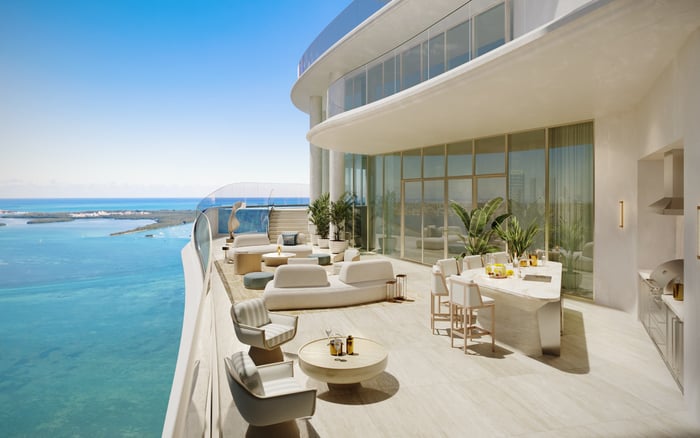
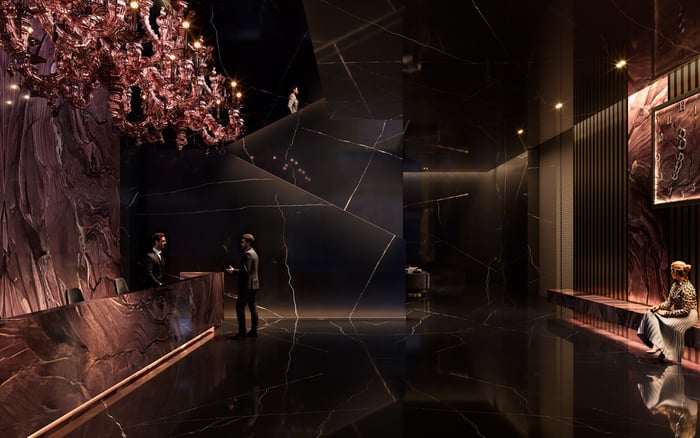
A practical framework for Milan-based principals evaluating St. Regis® Residences Brickell as a Miami destination residence, balancing domicile, family use, travel rhythm, recurring costs, and cross-border capital allocation.

For a Milan-based principal, acquiring in Miami is rarely a simple condominium search. It is a broader exercise in domicile discipline, family planning, travel cadence, and the allocation of capital beyond a European base. In that context, St. Regis® Residences Brickell becomes more than a prestigious address. It becomes the Miami destination asset around which a transatlantic lifestyle can be modeled.
The Milan-to-Brickell axis is compelling because it links two distinct forms of urban identity. Milan is the likely primary domicile: business, family governance, culture, fashion, private banking, and European routine. Brickell is the South Florida foothold: city living, branded service expectations, proximity to Miami’s financial core, and a year-round hospitality environment. The question is not whether Miami replaces Milan. For most buyers in this profile, it does not. The more useful question is how a Miami residence supports a dual-city life without creating avoidable complexity.
That distinction matters for South Florida luxury advisors. A Milan-based buyer is not only comparing finishes, views, and amenities. The buyer is weighing lifestyle value against total cost of ownership, and asking whether a branded residence can function as a personal base, hospitality asset, and long-horizon wealth holding at the same time.
A disciplined acquisition begins with domicile. Milan may remain the center of personal, family, and business life, while Miami functions as a second-home market and destination residence. That may sound straightforward, but it should be mapped carefully before a contract is signed.
The owner’s advisory team should clarify where family members actually live, where children are educated, where principal business decisions occur, and how much time is realistically expected in South Florida. Real estate, tax, legal, estate-planning, and travel considerations should be coordinated together, not handled in sequence after the residence is selected. The residence is one part of the architecture. The ownership structure, use pattern, and succession plan are equally important.
This is especially relevant in Brickell, where the buyer may compare the branded-service proposition of St. Regis® Residences Brickell with other urban options such as Baccarat Residences Brickell or Cipriani Residences Brickell. Each name signals a different lifestyle language, but the underlying question is the same: does the asset support the owner’s cross-border life in a way that is elegant, usable, and administratively coherent?
Travel rhythm is often the most revealing variable in a Milan-to-Miami model. A residence used for a few concentrated seasonal stays will be evaluated differently from one used frequently by the principal, spouse, adult children, guests, or business contacts. The financial model should therefore begin with a calendar, not a price sheet.
A Milan-based owner might plan family visits, winter usage, business-linked stays, cultural travel, or extended hosting. Those scenarios should be separated. Family utility is not the same as investment logic. A home that is deeply valuable for family continuity may not be judged purely by yield. Conversely, if capital preservation and an optional rental strategy are part of the thesis, the owner should understand how personal use, building rules, management expectations, and long-term hold strategy interact.
The best question is practical: who uses the residence, when, and for what purpose? If the answer is primarily family, the layout, privacy, arrival experience, service standard, storage, and ease of repeat occupancy become central. If the answer includes hospitality or business entertaining, the owner may place more emphasis on building reputation, amenity environment, and the ability to host without friction. If the answer is capital diversification, the analysis shifts toward liquidity, market depth, and the role of the residence within a broader portfolio.
For Italian and Milan-based buyers, the visible purchase price is only the starting point. A more complete model includes recurring building costs, property-related obligations, insurance, utilities, maintenance, owner services, management arrangements, financing costs if applicable, and the cost of coordinating cross-border advice. None of these categories should be treated as an afterthought.
The decision between deploying cash, using financing, or combining both is also strategic. Some buyers prefer simplicity and speed. Others may want to preserve liquidity or align the acquisition with a broader balance sheet. The correct approach depends on the buyer’s objectives, currency exposure, family governance, and comfort with U.S. property ownership. It should be modeled before emotional momentum takes over.
This is where branded residences require particular care. The service promise is part of the value proposition, but it also belongs in the cost analysis. Buyers should understand the relationship between brand experience, building operations, recurring obligations, and long-term expectations. A residence that feels effortless when in use may require sophisticated planning when the owner is abroad.
Comparisons within Brickell can be useful, but they should not become superficial. Una Residences Brickell may enter the conversation for a buyer who wants a different architectural or residential tone, while The Residences at 1428 Brickell may appeal to those studying another high-design Brickell ownership model. The point is not to dilute the St. Regis® thesis. It is to sharpen it by testing service, location, privacy, and cost assumptions across credible alternatives.
Brickell ownership can also represent geographic diversification for European capital. For a buyer whose assets, income, or family life are concentrated in Italy or the eurozone, Miami may provide a distinct jurisdictional and currency-linked exposure. That does not make the residence a purely financial instrument. It makes the lifestyle decision part of a broader capital allocation conversation.
The most resilient owners separate the three roles of the asset. First, the residence is a personal base in South Florida. Second, it may operate as a hospitality platform for family, friends, and business relationships. Third, it may serve as a long-horizon wealth holding. Those roles can coexist, but they should not be confused. A residence selected only for emotional appeal may disappoint as an allocation. A residence selected only for investment may fail the family test.
For St. Regis® Residences Brickell, the central question is whether the branded-residence framework matches the owner’s rhythm. A buyer who values consistent service, urban living, and a recognizable hospitality standard may find the model particularly coherent. The acquisition should still be stress-tested against absence, family scheduling, advisory coordination, and recurring cost discipline.
A strong advisory conversation begins with five questions. Where is the buyer’s primary domicile and family center? How often will the Brickell residence be used? Who will use it when the principal is not there? What is the intended capital structure? Which professional advisors need to coordinate before closing and after ownership begins?
From there, the residence can be assessed with greater precision. The buyer is no longer simply choosing between towers. The buyer is designing a transatlantic operating model. Milan remains the center of gravity. Miami becomes the destination address. Brickell provides the urban platform. St. Regis® Residences Brickell supplies the branded-residence lens through which service, prestige, and ownership discipline can be examined.
For South Florida professionals serving this audience, the most valuable guidance is not louder promotion. It is clarity. The Milan-based principal needs a framework that compares lifestyle utility, family use, total cost of ownership, and cross-border coordination before the decision becomes emotional. When that framework is in place, a Miami residence can be evaluated as both a beautiful private retreat and a serious component of international wealth planning.
Is St. Regis® Residences Brickell best viewed as a primary home or second home for a Milan-based buyer? It is most naturally modeled as a Miami destination residence while Milan remains the likely primary domicile.
Why does domicile matter before buying in Brickell? Domicile influences how the buyer coordinates tax, legal, estate, family, and travel planning around the acquisition.
Should family use and investment logic be modeled separately? Yes. Family utility may justify an asset differently than a financial return or long-horizon capital allocation thesis.
What should travel rhythm include? It should include expected frequency of use, seasonal stays, family visits, business travel, and guest or hospitality needs.
Are recurring costs as important as purchase price? Yes. A complete model should include ownership obligations, building costs, services, maintenance, and advisory coordination.
Why are branded residences relevant for this buyer profile? They offer a service-led ownership model that can appeal to owners who spend meaningful time outside Miami.
Can Brickell ownership support geographic diversification? It can provide exposure beyond Italy or the eurozone, but it should be evaluated within a broader capital plan.
Should financing be considered for a Milan-based buyer? Financing or cash deployment should be assessed according to liquidity goals, family structure, and cross-border advice.
How should a buyer compare St. Regis® Residences Brickell with other Brickell projects? The comparison should focus on service, privacy, use rhythm, recurring costs, and fit with the family’s Miami plan.
What is the first step before selecting a residence? Define the owner’s calendar, family use, advisory structure, and total cost framework before narrowing the property search.
When you're ready to tour or underwrite the options, connect with MILLION.
If branded residences are on your mind — as a home or as an allocation — we would be glad to share what we are seeing, privately.
Begin a quiet conversation