A practical framework for Greenwich-connected buyers with international finances: coordinate advisers, confirm banking requirements, prepare closing documents and address FIRPTA before committing to a South Florida residence.
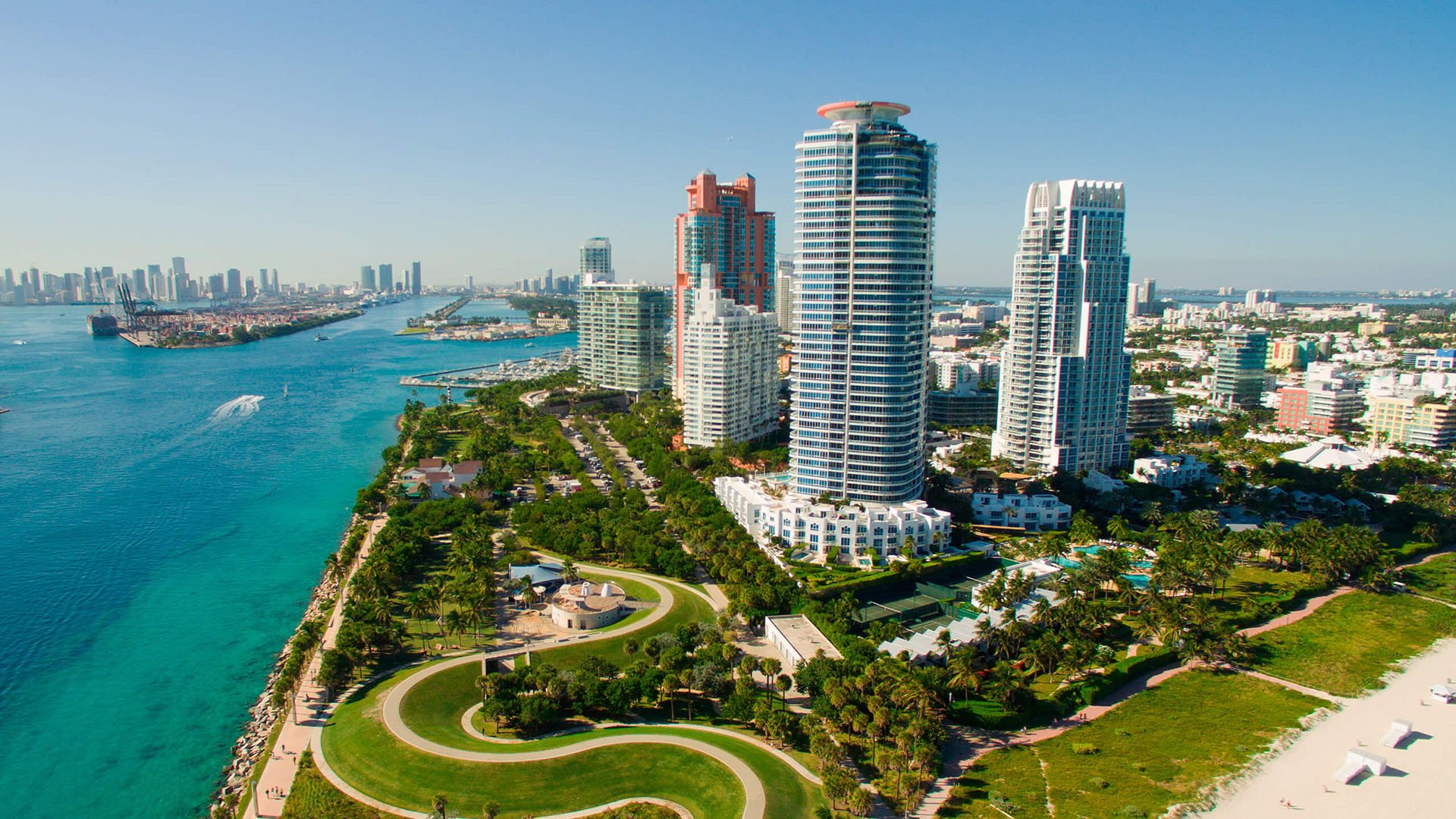
For a Greenwich household considering South Florida, the residence search may be the most enjoyable part of a more complex financial decision. When assets, banking relationships or family interests extend beyond the United States, coordination comes first: establish who is buying, how funds will arrive and which documents each institution expects.
A Greenwich address, an overseas account or a Florida purchase is no substitute for a formal status review. Ask advisers to distinguish the buyer’s circumstances from the seller’s tax status and the lender’s underwriting category. Each answers a different transaction question.
This guide focuses on acquisition logistics and foreign-seller withholding. Connecticut domicile, Florida homestead, estate planning and any non-U.S. tax consequences belong in a separate, individualized advisory discussion. The objective is a closing plan that supports the residence decision-not a complete tax strategy.
Before committing to a closing timetable, prepare a concise brief for transaction counsel, your tax advisers, the bank and any proposed lender. Set out the intended purchaser, anticipated funding accounts, preference for cash or financing and intended residential use. Ask advisers in each relevant jurisdiction to identify questions requiring joint review. Do not assume one professional covers every jurisdiction.
A West Palm Beach search that includes Alba West Palm Beach can proceed alongside this preparation. The property shortlist and financial work should inform one another, but neither constitutes approval of the other.
Request a written allocation of responsibilities: who reviews seller status, who confirms acceptable funds, who assembles lender documentation and who tracks any withholding submission. This is a recommended coordination framework, not a universal documentary requirement. Its value lies in surfacing unanswered questions before deadlines become binding.
A U.S. bank account is not necessarily required for a foreign buyer’s cash purchase. What matters is arranging closing funds acceptable to the closing provider. South Florida foreign-buyer transactions typically use U.S.-dollar wire transfers to the designated escrow account, subject to that provider’s verification procedures.
Before initiating a transfer, ask the closing provider to confirm the accepted funding route, required supporting records and verification steps. An existing banking relationship does not establish that a particular transfer will satisfy closing requirements.
Financing introduces a different timetable. Some foreign-national mortgage programs may require reserves in a U.S. FDIC-insured account for 30-60 days before closing. Programs may also require 6-12 months of principal, interest, taxes and insurance, commonly called PITI, in reserves, alongside identification, income and asset documentation.
For a Brickell search that includes The Residences at 1428 Brickell, establish the financing timetable before proposing a closing date. These conditions are institution-specific, not universal legal requirements. Obtain the lender’s actual reserve calculation and seasoning instructions; do not treat the ranges as a guaranteed approval standard.
Cross-border transaction documentation commonly includes government identification, proof of foreign address, asset statements and explanations of the source of funds. Additional requirements depend on the institutions involved. Financing may add income records and lender-specific asset documentation.
A useful working file separates the material into four categories:
Identity and address: government identification and applicable proof of foreign address.
Assets and income: statements and income records requested by the lender or other institution.
Funding explanation: a clear account of where the purchase money originates, with supporting records as requested.
Closing and compliance: escrow instructions, any applicable seller-status certification and counsel-confirmed affidavits.
Treat this as an organizing checklist, not an exhaustive legal standard. Have each institution confirm what it needs and whether the submitted materials are acceptable. Resolve questions left open by statements and explanations before scheduling the wire. The purpose is not simply to collect documents, but to make the proposed funding route clear to the parties reviewing it.
FIRPTA analysis turns on the seller’s foreign status. A foreign buyer purchasing from a foreign seller can therefore have a withholding obligation. The rule is not limited to a foreign owner selling to a U.S. buyer.
When a foreign person sells U.S. real estate, FIRPTA generally requires withholding of 15% of the gross sales price-not the seller’s profit-unless an exception applies. Withholding remains the buyer’s responsibility even when a closing agent handles the paperwork. Failure to withhold can expose the buyer to IRS liability.
A Miami Beach shortlist featuring The Perigon Miami Beach should therefore be accompanied by a transaction-specific seller-status review. A project name does not establish the seller’s status in a particular purchase.
The residential-use thresholds deserve precise treatment:
At $300,000 or less, a qualifying acquisition for use as a residence can be exempt from withholding.
Above $300,000 and up to $1 million, a qualifying residence purchase can receive a reduced 10% withholding rate.
Above $1 million, intended residential use alone does not reduce the standard 15% rate.
A valid seller certification of non-foreign status can establish an exception, subject to applicable reliance requirements. Have counsel determine whether that certification or any other exception can be relied upon in the specific transaction.
FIRPTA withholding is generally reported and remitted using Forms 8288 and 8288-A within 20 days of transfer. Form 8288-A documents the seller’s withholding credit. Before closing, confirm who will prepare and submit the forms and retain the corresponding records.
Florida Statutes Chapter 692 restricts certain foreign principals’ property acquisitions, including purchases near military installations or critical infrastructure. It is not a blanket prohibition on all foreign buyers.
Ask transaction counsel to determine whether an affidavit under penalty of perjury addressing buyer status and compliance is required for the proposed acquisition. Do not infer applicability from a neighborhood name or a general description of the buyer.
Have transaction counsel confirm the restrictions’ applicability and enforceability before contracting or closing. Keep that analysis distinct from FIRPTA: acquisition restrictions and foreign-seller withholding address different issues.
Before finalizing the timetable, seek confirmation of acceptable funding, any reserve-seasoning period, the documentary checklist, seller-status treatment and applicable affidavits. Assign any post-transfer withholding deadline to a named professional while recognizing that withholding remains the buyer’s responsibility.
For a coordinated South Florida residence search, connect with MILLION.
If branded residences are on your mind — as a home or as an allocation — we would be glad to share what we are seeing, privately.
Begin a quiet conversationNot necessarily. The buyer must arrange closing funds acceptable to the closing provider and satisfy its verification procedures.
South Florida foreign-buyer transactions typically use U.S.-dollar wire transfers to the designated escrow account. Confirm the funding route and verification requirements with the closing provider before sending funds.
Some foreign-national mortgage programs may require reserves in a U.S. FDIC-insured account for 30–60 days before closing. Confirm the specific lender’s seasoning requirements early.
Programs may require 6–12 months of principal, interest, taxes and insurance in reserves. The actual requirement is lender-specific.
Common documents include government identification, proof of foreign address, asset statements and source-of-funds explanations. Financing may also require income records and additional lender-specific documentation.
Yes. FIRPTA turns on the seller’s foreign status, and a foreign buyer purchasing from a foreign seller can have a withholding obligation.
No. The standard withholding is generally 15% of the gross sales price when a foreign person sells U.S. real estate, unless an exception applies.
Qualifying residence purchases can receive an exemption at $300,000 or less or a 10% rate above $300,000 through $1 million. Above $1 million, residential use alone does not reduce the standard 15% rate.
Withholding is generally reported and remitted using Forms 8288 and 8288-A within 20 days of transfer. The buyer remains responsible even when a closing agent handles the paperwork.
No. Chapter 692 restricts certain foreign principals’ acquisitions, and transaction counsel should confirm applicability, enforceability and any required affidavit before contracting or closing.