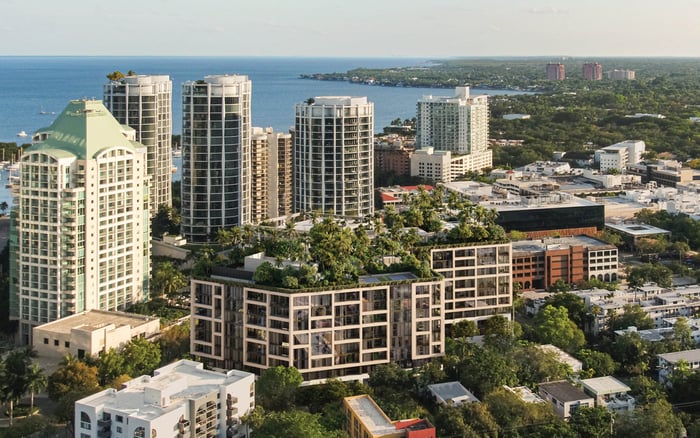
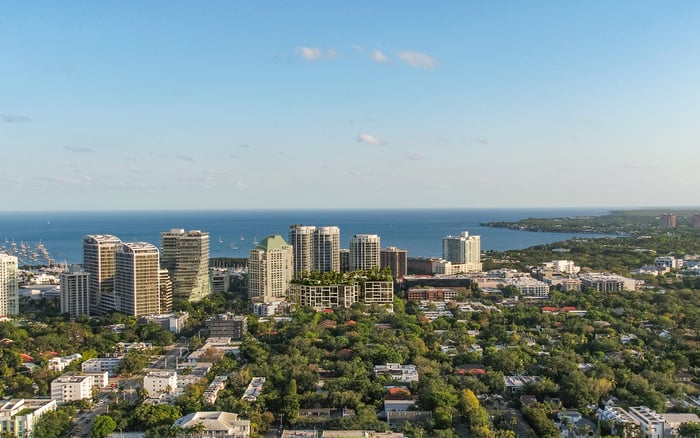
Frida Kahlo Wynwood Residences pairs a planned condominium offering with an advertised Baker Health center and concierge medical membership. For aging-in-place buyers, the decision depends on separating routine care convenience from emergency access, caregiving and long-term operating commitments.
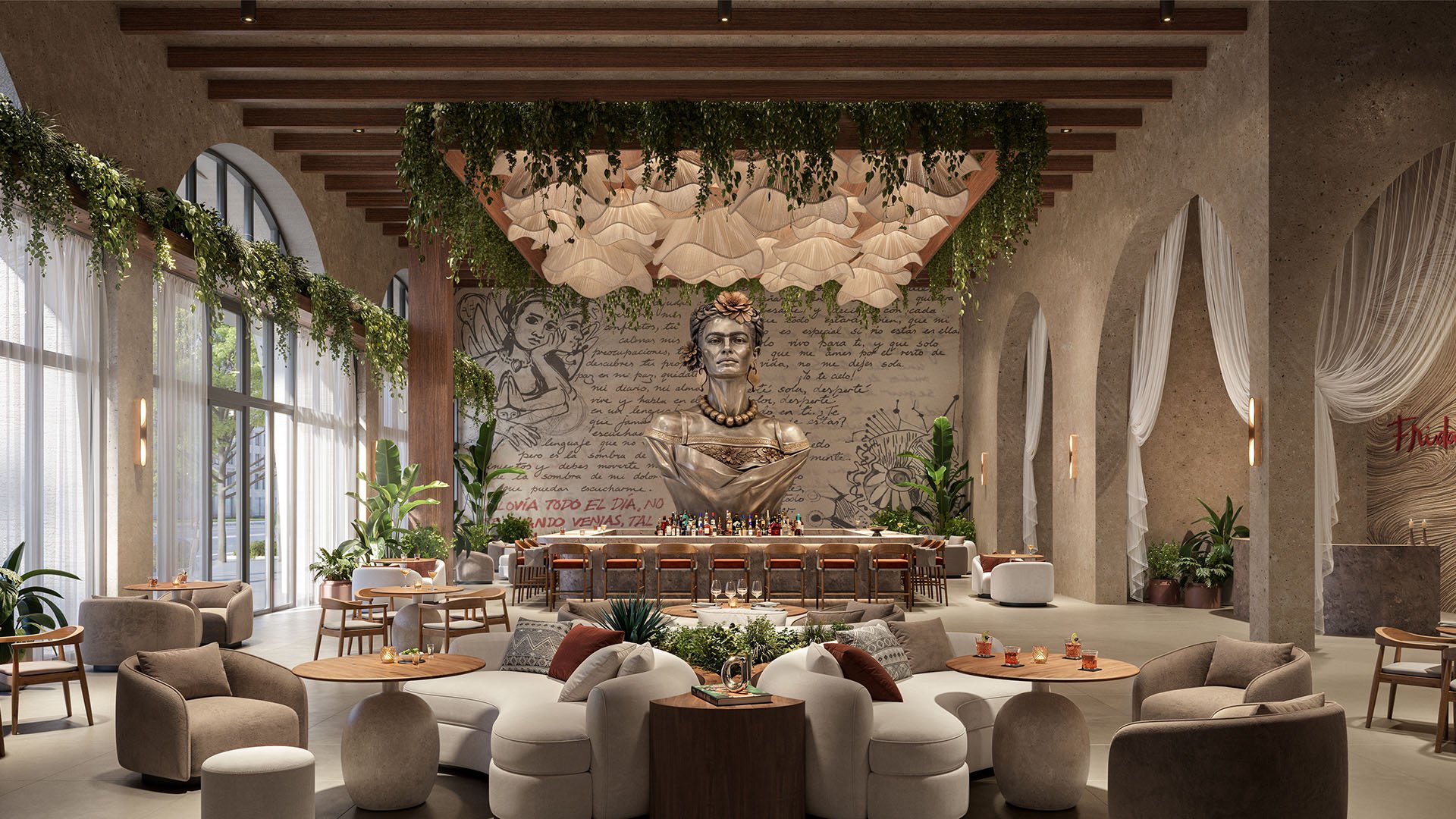
For buyers planning to age in place, luxury includes the ability to preserve familiar routines as needs change. A residence should support independence without complicating everyday life. At Frida Kahlo Wynwood Residences, the advertised combination of private ownership and concierge medical access makes that consideration especially relevant.
The planned condominium by PMG and LNDMRK Development is located at 119 NW 29th Street in Wynwood. Plans call for 244 residences, from studios to three bedrooms, with completion targeted for 2029. The offering includes an advertised on-site Baker Health center and a private concierge medical care membership, subject to membership conditions.
Those features warrant attention, not assumptions. An on-site center could reduce travel for services delivered there. It does not, by itself, establish emergency treatment capability, personal caregiving or a guarantee that an owner can remain at home through every stage of aging.
The essential distinction is between convenient access to routine medical services and a dependable emergency plan. The planned Baker Health location is described as occupying the building's ground floor. That placement may be convenient, but a medical center within a residential building should not be treated as an emergency department.
Hospital distances, ambulance response times, emergency-transfer agreements, on-site emergency equipment and overnight clinical staffing are not established for this offering. Nor are guaranteed same-day appointments, continuous on-site physician coverage or fewer emergency-room visits.
Before buying, request a written explanation of how building staff would facilitate emergency access: where responders enter, how they reach a residence, who can authorize entry and what happens outside reception hours. Ask separately about elevator procedures and backup power. These are questions to verify, not existing project commitments.
The buyer's own clinician should help assess whether the proposed setting fits current health needs. A future residence with a medical amenity is not a substitute for an individualized emergency plan.
The advertised membership includes a complimentary period described as one year. Buyers should not interpret that as lifetime medical coverage or assume that membership eliminates insurance requirements or separately billed treatment.
Request the membership agreement and clarify when the complimentary period begins. Confirm which household members qualify, what renewal costs may apply, which services are included and which require additional payment. Ask how specialist referrals, telemedicine and off-site treatment would work, if available.
The proposed center's operating hours, appointment arrangements and clinical scope matter as much as its location. Establish which contractual provisions address a delayed opening, changes in services or a change in provider. Until those terms are settled in writing, the value lies in conditional convenience, not guaranteed lifelong support.
Medical concierge service and residential concierge service are distinct. Neither should be assumed to include help with bathing, dressing, medication administration or overnight supervision. Frida Kahlo Wynwood Residences is a condominium offering, not an established assisted-living community, memory-care residence or continuing-care retirement community.
For daily support, ask about reception hours, delivery assistance, transportation coordination and access for privately hired caregivers. Determine whether an aide may stay overnight, how caregiver credentials are handled and whether occupancy restrictions could affect a future arrangement.
The advertised deeded office suites require separate review. Their inclusion does not establish permission for clinical practice or overnight caregiver accommodation. Buyers anticipating either use should obtain specific written confirmation rather than treating an office as flexible residential space.
Aging-in-place suitability depends on the actual route from arrival to bedroom, not simply the amenity list. Review step-free access, elevator connections, door clearances, bathroom dimensions and the space needed to move comfortably around furniture. Establish whether accessibility modifications would require association approval and what limitations might apply.
Pool access deserves its own assessment. An elevated pool, bar lounge and fitness center are advertised, along with shaded lounge areas in landscaping inspired by Frida Kahlo's garden. These may enrich daily life, but their accessibility and practical usefulness require separate evaluation.
If The Well Bay Harbor Islands also appears on a buyer's shortlist, apply the same residence-by-residence assessment there. A project's name or positioning should never replace a review of dimensions, circulation and written permissions. Compare documented suitability rather than assuming equivalent medical services.
The project is marketed as short-term-rental-friendly. For a permanent resident, that operating characteristic deserves consideration alongside the medical offering. Rental flexibility and a preference for a settled residential environment are different priorities; neither should remain implicit during a purchase.
Review the proposed rental rules, guest registration procedures, building access controls and policies for shared amenities. Ask how building procedures would distinguish visitors, delivery personnel and caregivers. Do not assume that rental-friendly marketing establishes a particular minimum stay or a specific guest-management system.
The relevant question is personal: would the proposed operating model remain comfortable if mobility, hearing or tolerance for busy shared spaces changed? Consider that before assigning long-term value to the address.
A 2029 completion target makes this a future housing option, not immediately available accommodation. Buyers with present care needs should evaluate interim arrangements independently of the development schedule. A target date should not become the sole foundation of a care plan.
Long-term affordability extends beyond acquisition. Request projected association budgets, details on how medical membership charges would be handled and the likely categories of privately arranged support. Distinguish included services from optional services, and ask who controls future changes to each.
For buyers also considering The Well Coconut Grove, compare the same written cost-and-service details. Do not infer comparable clinical access, staffing or renewal terms between properties.
The strongest purchase decision rests on three separate reviews: the residence's physical suitability, the building's operating rules and the medical provider's contractual obligations. None can substitute for the others.
Frida Kahlo Wynwood Residences may appeal to buyers seeking independent ownership with potential medical convenience close at hand. Its aging-in-place value, however, depends on the services delivered, accessible design and support arrangements that remain workable over time. Review the agreements with appropriate legal and clinical advisers before treating the amenity as a long-term care solution.
For a discreet conversation about aligning a South Florida residence with long-term living priorities, connect with MILLION.
If branded residences are on your mind — as a home or as an allocation — we would be glad to share what we are seeing, privately.
Begin a quiet conversationThe planned condominium is at 119 NW 29th Street, Miami, FL 33127, in Wynwood. The developers are PMG and LNDMRK Development.
Completion is targeted for 2029. Buyers should treat it as a future housing option rather than immediately available accommodation.
Plans call for 244 residences, with advertised layouts ranging from studios to three bedrooms. Each layout requires a separate accessibility assessment.
The offering advertises an on-site Baker Health center and a private concierge medical care membership, subject to membership conditions. Buyers should confirm the clinical scope and operating hours in writing.
No hospital-level emergency capability is established for the planned center. Ambulance response times, emergency-transfer agreements and overnight clinical staffing are also not established.
The complimentary period is described as one year, not lifetime coverage. Renewal costs, covered household members, insurance requirements and separately billed services should be verified.
The offering is a condominium, not an established assisted-living or continuing-care retirement community. Concierge services should not be assumed to include personal care or overnight supervision.
Review step-free routes, elevators, door clearances, bathroom dimensions and backup power provisions. Confirm the approval process and restrictions for future accessibility modifications.
The advertised office suites do not establish permission for overnight caregiver accommodation or clinical practice. Obtain specific written confirmation before planning either use.
The project is marketed as short-term-rental-friendly, making guest access and shared-space policies relevant to permanent residents. Review the proposed rules alongside caregiver access and occupancy provisions.