At Edgeworth West Palm Beach, a considered purchase means looking beyond the residence to the documents governing land, parking, and everyday access. Survey, title, and easement review can clarify what ownership actually includes.
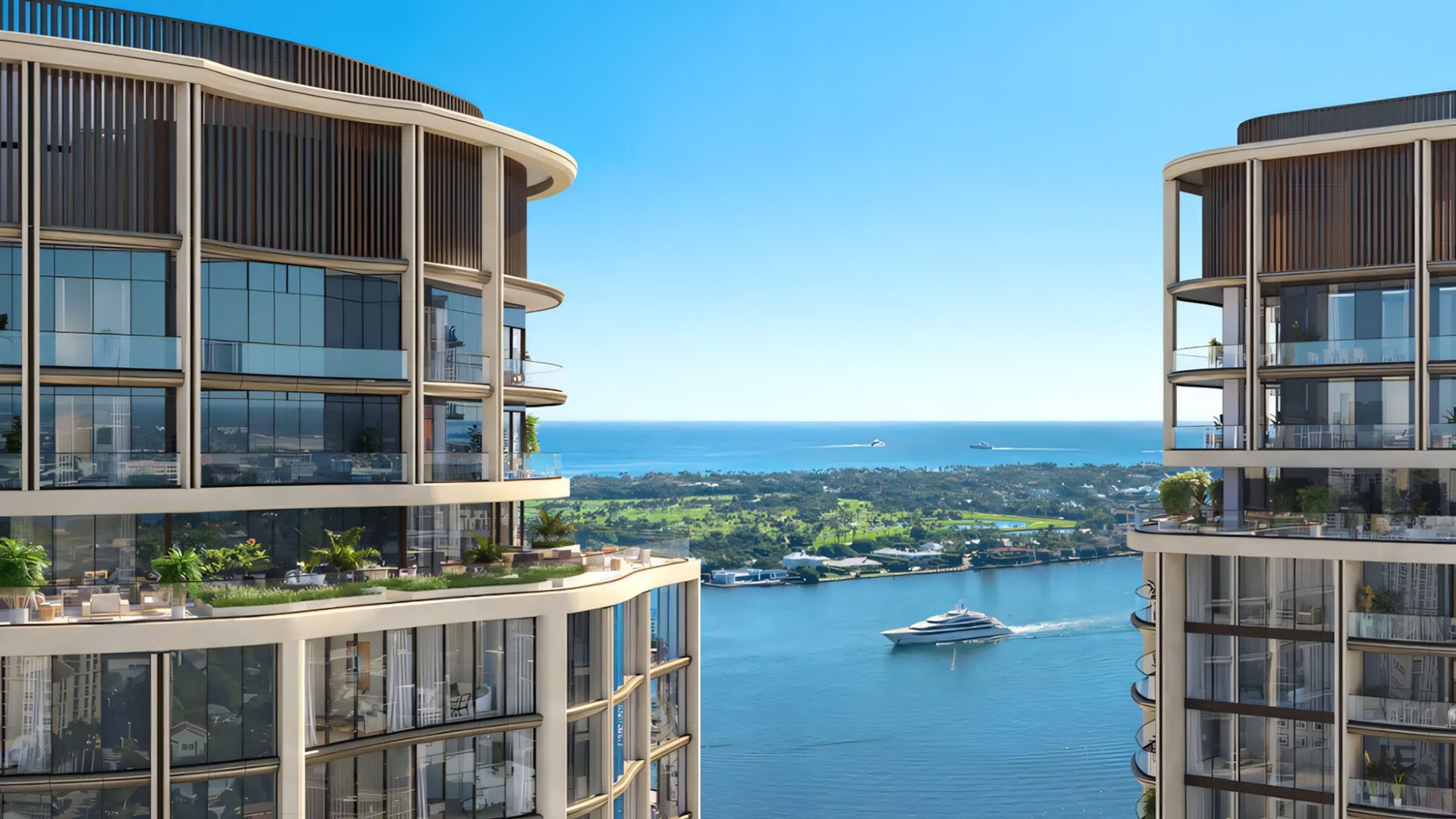
A condominium is experienced above the street, but important ownership questions remain at ground level. The arrival sequence, parking arrangement, and walk from car to lobby deserve the same precision as the residence itself. At Edgeworth West Palm Beach, those questions belong early in the purchase conversation.
Regardless of purchase price, the essential distinction holds: an attractive site plan illustrates an experience; the governing documents establish the rights that support it.
Survey, easement, and access review should not be read as evidence of a defect at Edgeworth. These are matters to resolve before treating any route, space, or shared facility as part of what ownership includes.
A condominium buyer should not dismiss the underlying parcel simply because the purchase concerns an individual residence. Ask the buyer's attorney and survey professional to examine boundaries, building footprints, setbacks, improvements, and potential encroachments affecting the condominium property or common elements.
Read the survey alongside the title commitment, condominium declaration, plat, and recorded exceptions. The objective is reconciliation: does the physical layout correspond to the property descriptions and rights set out in the documents? A line on a drawing should not be interpreted without understanding the instrument behind it.
Request survey treatment of plottable rights-of-way, easements, and servitudes. A marketing illustration is no substitute for locating those interests. Where an interest cannot be plotted, ask the reviewing professionals to explain what remains unresolved and how it affects the purchase decision.
This does not mean a new survey is mandatory for every condominium purchase. Establish the appropriate scope of review for the particular transaction rather than assuming it from commercial survey practices.
An easement deserves more than a checkmark beside its name. Ask which property benefits, which is burdened, where the route runs, and how its width is defined. Then examine the provisions governing whether those rights continue to successors and assigns.
The practical question is whether the documented right supports the intended use. For an access route, the buyer's team should reconcile the legal description with the surveyed location. Any discrepancy between a recorded instrument and the anticipated arrival experience warrants a written explanation before the buyer relies on that route.
Buyers also considering Forté on Flagler West Palm Beach can apply the same document-first questions independently there. This is a method of comparison, not a suggestion that the projects share easements, parking arrangements, or title conditions. Each property's documents must speak for themselves.
Not every convenient route carries equivalent rights. Distinguish deeded rights, easements, licenses, and association-controlled common-area use rather than grouping them under a broad promise of access. Ask counsel to identify the legal basis for each material part of the arrival and circulation plan.
Work through the property as an owner would experience it. Which documents govern the driveway and drop-off area? If valet service is offered, what supports its circulation? How are service access, emergency access, and pedestrian routes addressed? The goal is not merely to confirm that these routes appear on a drawing, but to understand the rights governing their use.
For each route, seek a clear explanation of the applicable instrument, who controls use, and any provisions affecting its continuation. If the physical experience and legal description appear to diverge, resolve the difference rather than relying on verbal assurance.
For an Edgeworth purchase, ask counsel to establish whether parking is governed by the condominium documents, a separate agreement, an easement, or another instrument. Do not infer the residence's ownership structure from a parking arrangement alone.
Before contracting, request the applicable parking documents, including any recorded agreement or easement, and confirmation of how many spaces attach to the selected residence. Ask the reviewing attorney to explain how the documents establish that residence's parking entitlement. A general statement that parking is included is not enough.
If parking depends on a separate agreement, review its term and renewal provisions. Do not assume parking rights are perpetual merely because they accompany a condominium purchase. The duration of the parking arrangement is a separate question requiring its own documentary answer.
Then establish who maintains and insures the parking facilities and how operating costs are allocated among the responsible parties. These responsibilities deserve the same attention as the number of spaces: they help define the obligations supporting everyday use.
When comparing Edgeworth with Alba West Palm Beach, keep lifestyle preferences separate from conclusions about legal rights. A preference for one arrival experience does not establish how either property's parking or access is documented. Request the relevant instruments for each residence under consideration.
The same discipline applies if Shorecrest Flagler Drive West Palm Beach is on the shortlist. Compare the clarity of the answers, not assumptions based on proximity or presentation. Neither a shared city nor a similar buyer profile establishes a shared ownership structure.
A useful comparison sheet can track survey and title reconciliation, access instruments, parking allocation, term and renewal provisions, and maintenance and insurance responsibilities. Leave unresolved items open until the buyer's professionals can identify the governing language. This keeps the decision focused on documented rights without suggesting that every project uses the same legal arrangement.
The strongest diligence package is not simply a large stack of documents. It is a coherent explanation of how those documents work together for the particular residence. Ask counsel to connect the survey, title commitment, declaration, plat, recorded exceptions, and parking instruments wherever they overlap.
Before contracting, seek written answers to the essential questions: what rights support the intended use, where do they apply, how long do they continue, and who bears the related responsibilities? If an answer depends on a specific provision, have that provision identified rather than summarized as an amenity promise.
For an ultra-premium buyer, certainty is part of the luxury. The objective is neither suspicion nor reassurance through presentation. It is a precise understanding of the residence and the rights that make daily ownership function.
For a considered approach to South Florida condominium ownership, explore MILLION.
If branded residences are on your mind — as a home or as an allocation — we would be glad to share what we are seeing, privately.
Begin a quiet conversationAsk the reviewing professionals to establish the rights governing land, parking, and everyday access. The documents should explain what ownership includes and which uses depend on separate permissions or agreements.
A marketing site plan is not a substitute for the governing documents. Ask counsel to reconcile the illustrated layout with the recorded instruments and survey.
A survey can help clarify boundaries, building footprints, setbacks, improvements, and potential encroachments affecting the condominium property or common elements.
A new survey should not be treated as universally mandatory for every condominium transaction. Ask the reviewing professionals to establish the appropriate scope for the particular purchase.
Review the survey alongside the title commitment, condominium declaration, plat, and recorded exceptions to identify differences between the physical layout and documented rights.
Identify the benefited and burdened property, the route and width, and provisions governing continuation to successors and assigns. Request survey treatment of interests that can be plotted.
Check the documents governing applicable driveways, drop-off areas, valet circulation, service access, emergency access, and pedestrian routes. Distinguish deeded rights, easements, licenses, and association-controlled use.
Request the applicable parking documents, including any recorded agreement or easement, and confirmation of the spaces attached to the residence. Review any term, renewal, maintenance, insurance, and cost-allocation provisions.
A separate parking agreement does not, by itself, establish that individual condominium ownership is leasehold. The rights conveyed to the residence require separate document review.
No; the questions themselves are not evidence of an access defect, encroachment, or disputed easement. They identify matters for the buyer's professionals to verify.