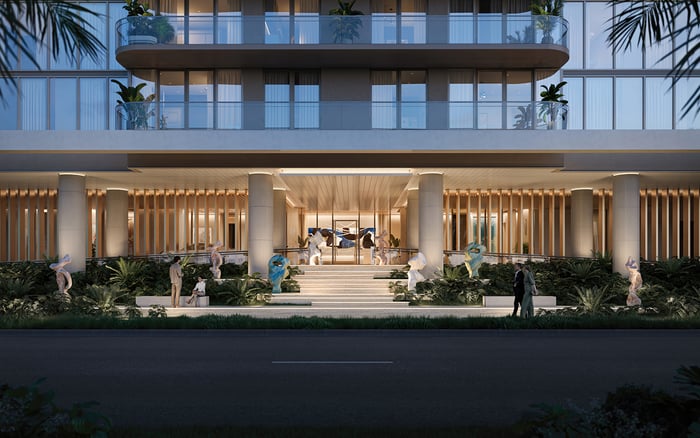
A resilient South Flagler home office depends on independent internet routes, battery-backed networking, planned Wi-Fi coverage and properly coordinated standby power.

For globally mobile owners, the home office is no longer an amenity tucked behind a library door. It can serve as a private operating environment for meetings, portfolio reviews, telemedicine, security monitoring and cloud-based work. On South Flagler Drive, resilience deserves the same early attention as lighting, acoustics and climate control.
The connection between Dubai and West Palm Beach is a planning mindset: sophisticated residences benefit when communications and power continuity are treated as core infrastructure rather than afterthoughts. Redundancy begins beyond the desk, with service routes, network hardware and electrical systems considered together.
That approach is relevant to buyers considering Forté on Flagler West Palm Beach, evaluating another condominium or renovating a private home. A polished workspace is only as dependable as the systems concealed behind its walls.
Redundancy begins outside the office, not at the desk.
A practical setup uses a primary wired connection and a secondary connection managed by a dual-WAN router. Proper configuration allows the router to detect an interruption and direct traffic to the available service, helping maintain access to calls and cloud applications.
Independence requires more than separate subscriptions. Services can share physical infrastructure or another common point of failure. During due diligence, ask who operates each network, where each service enters the property and whether the routes remain separate beyond the residence.
For a new or substantially renovated South Flagler home, separately routed telecom conduits can reduce exposure to a single physical interruption. This decision belongs in early design conversations, before hardscape, walls and finished gardens make another route disruptive or visually awkward.
Condominium buyers should ask management how service reaches the building, whether multiple carriers are available and which components depend on common building power. Buyers comparing Shorecrest Flagler Drive West Palm Beach and Mr. C Residences West Palm Beach can treat these as technical due-diligence questions rather than assumptions about either property.
A large residence may require multiple planned wireless access points. A single router may not provide consistent performance across expansive floor plans, service areas and terraces, particularly where construction materials weaken the signal. A more deliberate approach maps coverage zones and connects access points through a wired backbone.
The network rack should be organized, ventilated and accessible for service without compromising the residence’s visual language. Where appropriate, guest and smart-home traffic can be separated from sensitive office devices. The plan should also identify which access points need to remain active during an outage.
Coverage should extend beyond the formal study. Work may move to a bedroom, terrace or family area, so the objective is controlled continuity throughout the parts of the residence where secure connectivity matters.
A standby generator does not remove the need for an uninterruptible power supply. Sensitive network equipment should remain energized while standby power begins or utility service returns.
Prioritize the fiber terminal or modem, dual-WAN router, essential switches, required access points and critical communications equipment. Battery capacity should be selected according to the protected equipment and the desired runtime, then verified under the actual load.
Office circuits, security systems and selected climate-control zones can be addressed within the broader standby-power plan. Clear labeling is essential: an owner, property manager or technician should be able to identify protected circuits and devices without tracing cables during an outage.
Battery condition should also be checked periodically. Runtime changes as equipment and electrical loads change, so an estimate made during installation should not be treated as permanent.
Generator planning is both an electrical and site-design exercise. Placement must account for applicable permitting, floodplain conditions, ventilation, fuel, utility equipment, screening, service access and the physical constraints of the property. These needs can compete for the same service-court or side-yard space.
Owners should engage licensed professionals to determine suitable equipment, load priorities and installation requirements for the specific West Palm Beach property. The relevant authorities and utility providers should confirm required documentation, location and clearances before work begins.
Exhaust direction deserves particular attention because nearby openings and air intakes can affect placement. Landscape screening should not obstruct ventilation or maintenance access. In flood-prone locations, equipment elevation may also influence both the design and the permitting path.
An automatic transfer switch should be coordinated with a defined priority-load schedule. That schedule should identify which communications, security, lighting, refrigeration and climate-control functions are expected to operate during an interruption. A precise plan is more useful than an undefined promise of whole-residence coverage.
At The Ritz-Carlton Residences® West Palm Beach or another professionally managed residence, buyers should distinguish private-unit systems from shared building infrastructure. Ask which network and power components are resident-controlled, which depend on common equipment and how an interruption could affect both.
For a single-family acquisition, inspect service entrances, conduit routes, telecom-rack capacity, UPS provisions, generator placement and transfer logic. For a pre-construction or new-project purchase, request these answers while changes can still be coordinated.
Some of the most useful provisions are concealed. An additional conduit, dedicated circuit or reserved rack space can be easier to incorporate before finishes are complete. Buyers should document what is included, what can be modified and who is responsible for maintaining each part of the system.
Resilience is operational, not theoretical. Under controlled conditions, disconnect the primary internet service and confirm that the router moves traffic to the backup connection. Note which applications remain usable and how active calls respond. Then test battery runtime with the equipment that will actually be protected.
Standby-power transfer should also be tested with the intended priority loads, followed by confirmation that networking, security and essential cooling return as planned. Testing should be coordinated with qualified professionals where electrical or building systems are involved.
Repeat these exercises periodically and after material changes to internet service, network hardware or electrical loads. A concise record of settings, device locations, responsibilities and service contacts gives household staff a practical response plan.
For a confidential discussion of South Florida residences suited to connected, resilient living, speak with MILLION.
If branded residences are on your mind — as a home or as an allocation — we would be glad to share what we are seeing, privately.
Begin a quiet conversationUse a primary wired connection and a secondary service managed by a dual-WAN router. The backup can be wireless or satellite where suitable service is available.
No. Separate services can share physical infrastructure or another common point of failure, so route diversity should be confirmed.
Separate routes can reduce exposure to a single physical interruption. They are easiest to coordinate before walls, hardscape and landscaping are complete.
It may. Planned access points connected through a wired backbone can provide more consistent coverage across large interiors and terraces.
Prioritize the fiber terminal or modem, router, essential switches, required access points and critical communications equipment.
Yes. A UPS can keep sensitive network equipment energized while standby power begins or utility service returns.
Licensed professionals should assess the intended priority loads and select equipment appropriate for the specific property and installation.
Plan it before architecture and landscaping are finalized because ventilation, utilities, screening, access and site conditions all affect placement.
Ask which internet and power systems are resident-controlled, which rely on shared infrastructure and how interruptions are handled.
Test internet failover, battery runtime and standby-power transfer under controlled conditions. Repeat testing after material system changes.