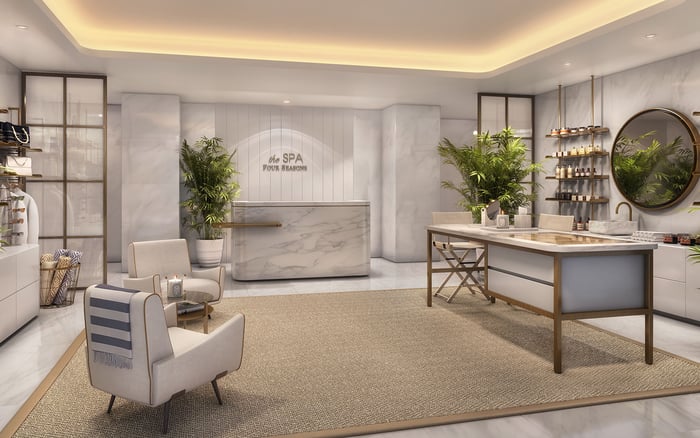
For a Fort Lauderdale primary residence, wellness due diligence should extend beyond finishes and amenity descriptions. Buyers need documentary evidence of capacity and booking rules, technical review of ventilation and water systems, and address-specific testing of medical access.

For a primary-residence buyer, wellness is not a decorative category. It is the combined performance of air, water, amenity access, building management, and practical access to medical care. A polished fitness studio has limited value if peak-hour demand makes it difficult to use. A filtration claim is incomplete without the equipment model, service history, and a clear explanation of what the system is designed to remove.
That distinction matters across Fort Lauderdale, whether the search centers on Fort Lauderdale Beach, Las Olas, or a quieter waterfront setting. Residences such as Four Seasons Hotel & Private Residences Fort Lauderdale may enter a buyer's consideration set, but every decision should rest on current documents, physical inspection, and the way the property actually operates.
Wellness becomes meaningful only when a buyer can verify access, performance, and maintenance.
Begin by translating each amenity into usable capacity. Request the number of treatment rooms, fitness stations, lockers, saunas, steam rooms, pool lanes, and reservable spaces. Then compare those figures with the number of residences and permitted guests. Ask management when demand peaks and whether residents routinely encounter waitlists.
Capacity also depends on staffing and downtime. A treatment room without dependable operating hours, or a sauna frequently closed for maintenance, should not be valued as fully available. Review maintenance logs, recent board minutes, resident communications, and any planned capital work that could interrupt access. For a lifestyle purchase, this operational layer can matter as much as the physical design.
When considering Auberge Beach Residences & Spa Fort Lauderdale or another amenity-rich property, request a live demonstration of the reservation process. A screenshot is useful, but logging into the current platform reveals the actual calendar, available time slots, booking horizon, and restrictions attached to popular periods.
Obtain the condominium declaration, bylaws, current rules, amendments, management policies, board minutes, and reservation-platform screenshots. Read them together. Marketing language may describe an amenity broadly, while the governing documents define who may use it, when it is available, and what charges apply.
For each reservable space, confirm the advance-booking window, duration limits, cancellation penalties, no-show fees, guest allowances, age restrictions, and whether private events displace ordinary resident use. Determine whether access is tied to the owner, the specific residence, or named occupants. Ask whether certain services require separate memberships or direct payment.
Rental rules deserve a parallel review, even for an owner who intends to occupy the home. Lease minimums, annual rental limits, tenant access, guest registration, and approval procedures can affect privacy, building rhythm, and future flexibility. A resale buyer should also verify whether amendments under consideration could alter current privileges.
Code compliance is a baseline, not proof of wellness performance beyond the applicable requirements. Confirm which code edition applied when the building was permitted. Request HVAC specifications, commissioning records, airflow tests, maintenance schedules, and the installed filters' MERV ratings. Determine whether controlled outdoor air reaches each residence through balanced ventilation, an ERV, an HRV, or another designed system.
Do not assume that air drawn through corridor door undercuts provides the residence's intended ventilation. Ask how outdoor air reaches the dwelling and where the intake is located, then have the design and current operation reviewed by a qualified professional.
Local kitchen and bathroom exhaust should be reviewed alongside whole-residence ventilation. During inspection, confirm whether exhaust terminates outdoors or recirculates air inside. Investigate dehumidification, condensate drainage, duct condition, prior mold or moisture events, and the integration of ventilation with air conditioning.
These questions apply when evaluating St. Regis® Residences Bahia Mar Fort Lauderdale or a boutique condominium. A wellness-focused inspection should combine airflow and exhaust checks with moisture assessment and document review.
Do not stop at general information about the water supply. Conditions within a property can be affected by building storage tanks, internal piping, fixtures, and building-level filtration. Request tank-cleaning records, plumbing history, filter specifications, replacement schedules, service invoices, and any building water-test results.
Use property-specific laboratory testing to identify what is present, then ask a qualified professional to match appropriate point-of-use or whole-home treatment to the documented findings. Avoid assuming that a filter addresses every possible concern.
Take samples from the taps that matter, particularly the kitchen and primary-bath outlets, and clarify with the laboratory whether to test first-draw water, flushed water, or both. If the residence does not use municipal service, ask the inspector or laboratory which testing protocol is appropriate for that water source.
Medical access should be verified, not reduced to a generalized drive-time promise. Map the precise building entrance to the buyer's preferred hospital, urgent-care center, specialists, pharmacy, and primary physician. Test the routes at hours that reflect the household's routine.
Ask building management how emergency responders enter, whether elevators can be recalled, how security directs medical personnel, and whether backup power supports relevant common systems. Buyers with ongoing care needs should confirm appointment availability and insurance participation directly with providers. Concierge assistance may be helpful, but it is not a substitute for a dependable personal care plan.
A buyer comparing Sixth & Rio Fort Lauderdale with a coastal address should evaluate medical access from each entrance under the same conditions. The objective is not to identify a universal winner. It is to develop an address-specific understanding of routes, building protocols, and the services most important to the household.
Before the inspection period ends, organize the findings into five folders: amenity capacity, booking and occupancy rules, air systems, water systems, and medical access. Record each unresolved question, the responsible party, the supporting document, and any specialist recommendation. If equipment requires replacement or rules materially limit intended use, the buyer can assess the issue with clarity.
The most refined primary residence is not simply the one with the longest amenity menu. It is the one whose systems, policies, and location support daily life with consistency. For a discreet review of Fort Lauderdale opportunities, connect with MILLION.
If branded residences are on your mind — as a home or as an allocation — we would be glad to share what we are seeing, privately.
Begin a quiet conversationRequest the declaration, bylaws, amendments, current rules, board minutes, management policies, and reservation-platform screenshots.
Compare usable spaces and stations with residence count, guest permissions, peak demand, staffing, waitlists, and maintenance downtime.
Confirm advance windows, session limits, cancellation penalties, no-show fees, guest access, age restrictions, and private-event priority.
Lease minimums, rental frequency, tenant amenity access, and approval procedures can affect privacy, building rhythm, and future flexibility.
Request HVAC specifications, MERV ratings, maintenance schedules, commissioning documents, airflow tests, and records of moisture or mold events.
No. Ask for documents showing how controlled outdoor air reaches the residence and have the system reviewed by a qualified professional.
It should determine whether kitchen and bathroom exhaust terminates outdoors or recirculates air inside.
No. Buyers should also investigate building tanks, internal plumbing, filtration maintenance, and property-specific tap-water testing.
Use property-specific test results and qualified advice to select treatment matched to the documented findings.
Test routes from the exact entrance at relevant times and confirm emergency-entry protocols, provider availability, and insurance participation directly.