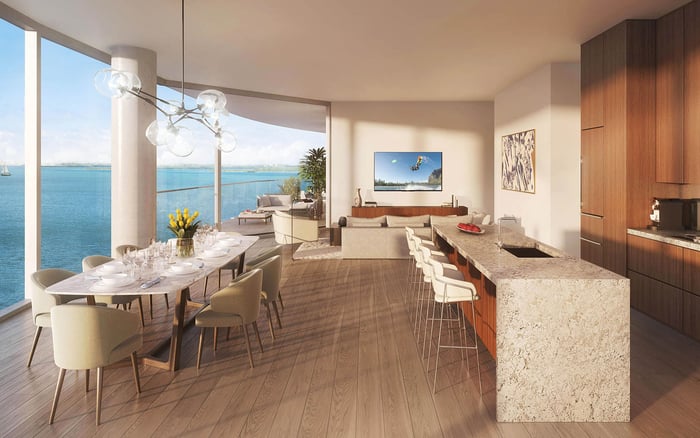
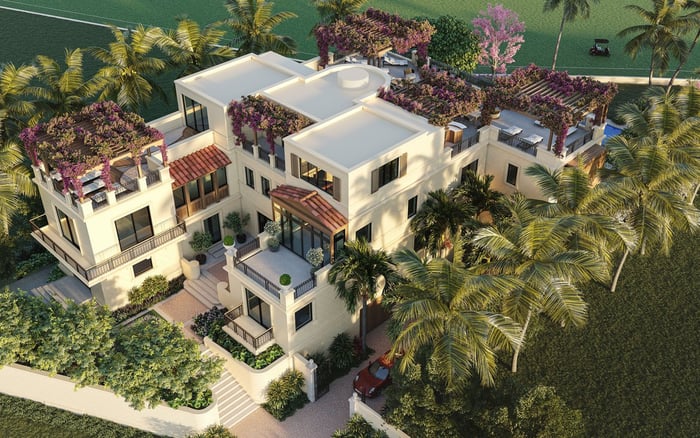
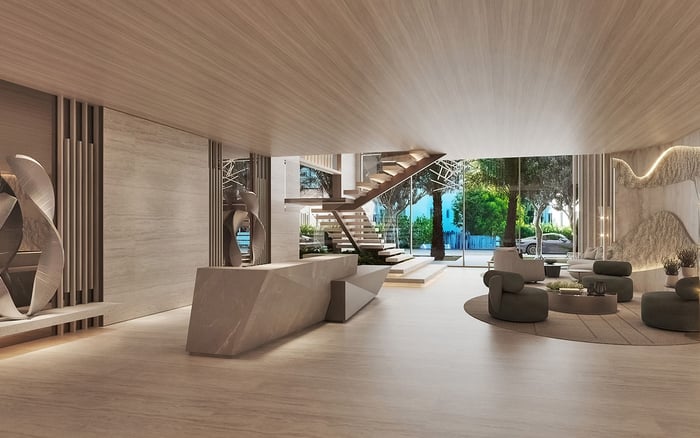
Miami’s marquee weekends reveal whether a luxury residence can preserve calm, discretion, and effortless access when the city is operating at maximum intensity.
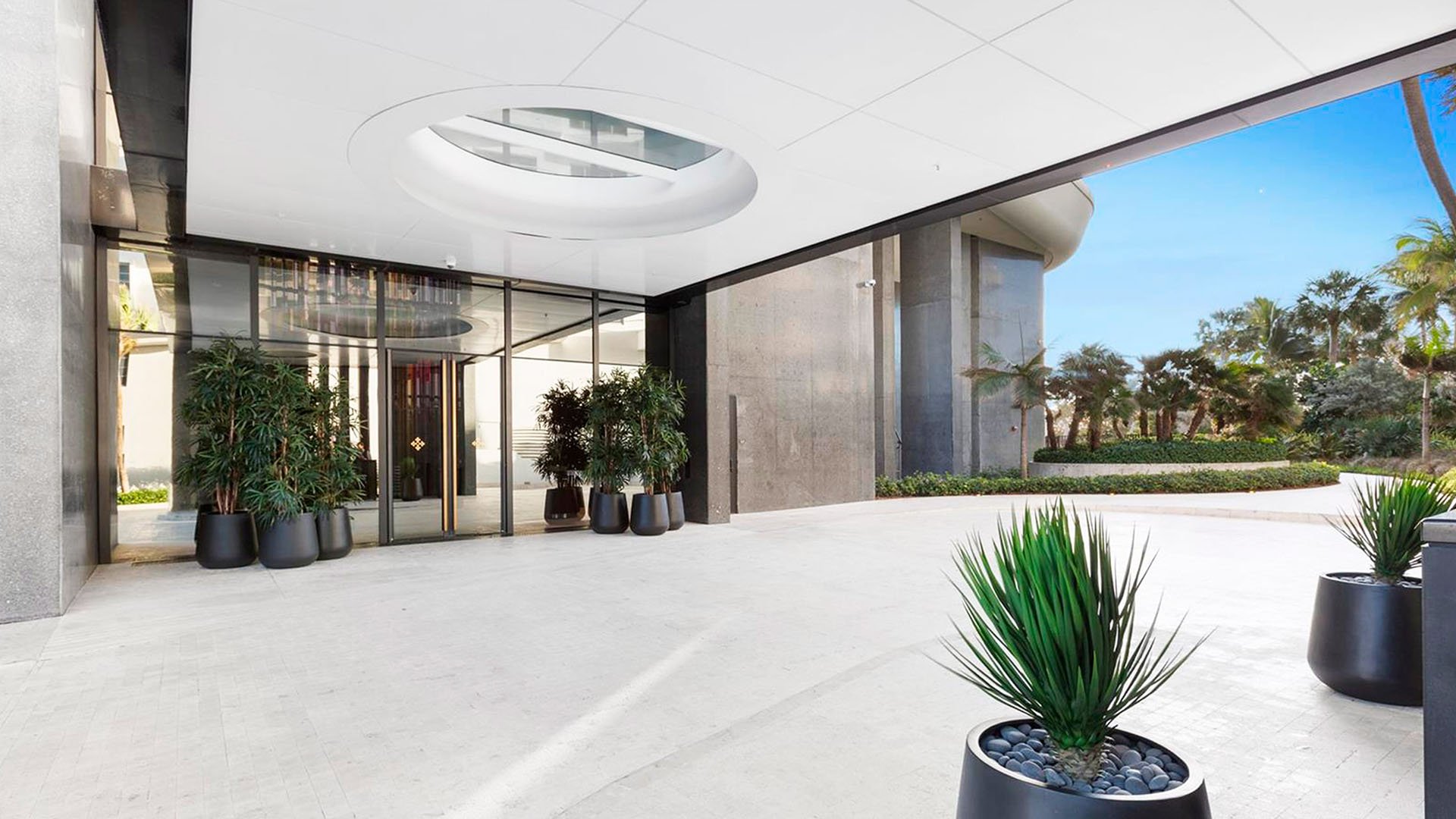
In Miami, residential privacy extends beyond the view from a window. It includes the ability to arrive discreetly, welcome guests smoothly, rest without unnecessary interruption, and choose when to engage with the city outside. Formula 1, boat shows, and Art Week give buyers a useful framework for examining those qualities under demanding conditions.
A residence that appears composed during a quiet showing may feel different when streets, lobbies, restaurants, and hospitality venues are busy. Buyers should therefore examine the full journey home: the approach by car, the arrival sequence, guest screening, elevator access, interior comfort, and terrace exposure.
The true luxury is not distance from the action, but control over how it enters the home.
Neighborhood reputation alone cannot establish how a particular home will feel. Orientation, nearby structures, façade exposure, floor plan, glazing, door assemblies, and the position of bedrooms can all influence the experience. Two residences in the same building may therefore warrant separate reviews.
Begin in the primary suite rather than the sales gallery. Note which direction the room faces, whether exterior doors close securely, and how the space feels when nearby streets and venues are active. In a corner residence, evaluate each exposed side independently. Living rooms, home offices, and terraces should receive the same attention if they will be used during major event periods.
Glazing should be considered as one part of the complete building envelope. Frames, seals, sliding-door systems, walls, and penetrations also deserve review. Buyers who prioritize calm should request project-specific documentation where available and avoid treating a broad neighborhood description as proof of conditions inside a particular room.
In Brickell, a buyer considering The Residences at 1428 Brickell should focus on the specific residence, its elevation, bedroom orientation, arrival route, and relationship to surrounding activity. The same room-by-room approach applies to The Residences at Mandarin Oriental, Miami.
This review is not about assigning a single privacy profile to a project or district. It is about understanding the precise home under consideration and determining whether its layout and circulation align with the buyer’s expectations. A recognized address does not make every residence identical.
Architecture establishes the setting, but building operations shape the daily experience. During busy periods, buyers should ask how management handles valet demand, ride-share arrivals, deliveries, service personnel, resident guests, and private events. The objective is to understand whether residential movement remains distinct when several uses are active at once.
Trace access from the vehicle entrance to the residential floor. Look for clear guest verification, controlled elevator authorization, and separation between resident, visitor, and service paths. If a property includes hospitality or public-facing spaces, ask where those visitors arrive and whether they use any part of the residential circulation sequence.
Small overlaps can affect discretion. A guest line beside a resident desk, deliveries near the lobby, or shared elevator access may matter to a buyer who values an unobtrusive arrival. Staffing plans and temporary procedures can be as important as permanent design, so ask how operations change during Miami’s busiest periods.
Art Week provides a useful setting for evaluating visual privacy and evening circulation. In the Design District, a buyer reviewing Kempinski Residences Miami Design District should study views from public approaches, the separation of resident and visitor paths, and the relationship between bedrooms, terraces, and surrounding activity.
Miami Beach calls for the same precision. At Shore Club Private Collections Miami Beach, buyers can trace the intended journey from curb to residence and identify where hospitality and residential movement might intersect. This is a diligence exercise rather than a conclusion about project performance.
A nighttime visit can be especially revealing. With interior lights on, review views into living spaces from neighboring buildings, roofs, terraces, and public areas. Consider whether window treatments and automated shades support the desired level of control without compromising how the residence is meant to be used.
Each major event places a different emphasis on the privacy review. During Formula 1 periods, focus on driving routes, access alternatives, arrival timing, and the interior experience with doors and windows closed. During boat shows, examine waterfront approach roads, marina-facing outdoor areas, service activity, and the separation of residential circulation from event visitors.
For Art Week, prioritize evening arrivals, guest controls, sightlines, and the effect of nearby hospitality activity. The purpose is not to predict every possible condition. It is to observe how the building and residence respond when the surrounding area is more active than usual.
Whenever possible, arrive as a resident would. Approach by car, enter through the designated residential route, observe the lobby, use the appropriate elevator sequence, and spend meaningful time in the rooms that matter most. Step onto the terrace, return indoors, and compare the two environments.
Repeat the visit after dark if evening privacy is important. Note vehicle movement, pedestrian activity, lighting, and the visibility of interiors. A buyer who frequently entertains should also ask how guests are announced, authenticated, directed, and escorted through the property.
Ask management to explain how peak-period procedures differ from ordinary operations. Relevant topics include resident priority, valet and ride-share staging, guest credentials, deliveries, service entrances, private events, elevator controls, and any shared circulation with public-facing uses.
For interior comfort, request available documentation that applies to the project and clarify whether it describes components, design targets, or completed residences. If a quiet primary suite is essential, the exact home deserves closer attention than a generalized statement about the building or neighborhood.
Access resilience also belongs in the review. Discuss practical routes to the entrance, how temporary congestion is handled, and whether residents have alternatives when the preferred approach is busy. Buyers should consider how household staff, drivers, guests, and deliveries would navigate the same conditions.
Miami’s energy is part of its appeal, but a private residence should let its owner decide how much of that energy enters daily life. The strongest choice is not automatically the home farthest from a major event. It is the residence whose orientation, envelope, access sequence, staffing, and operating procedures support the owner’s preferred balance of connection and retreat.
A peak-period inspection turns privacy from an abstract promise into a practical evaluation. By testing the precise residence and documenting operational questions, buyers can compare South Florida properties on the qualities that shape real use rather than relying only on a polished presentation.
Explore South Florida residences with a privacy-focused advisor at MILLION.
If branded residences are on your mind — as a home or as an allocation — we would be glad to share what we are seeing, privately.
Begin a quiet conversationA busy period can reveal arrival, lobby, access, sightline, and interior-comfort conditions that may not be evident during an ordinary showing.
No. Buyers should evaluate the exact residence, including its orientation, layout, façade exposure, and exterior openings.
Start with the primary suite, then assess living areas, home offices, and terraces that will be used frequently.
Different elevations, orientations, layouts, sightlines, and circulation relationships can create distinct experiences.
Review valet procedures, resident priority, visitor screening, elevator controls, service access, deliveries, and staffing plans.
Inspect the residence with interior lights on and review views from neighboring buildings, roofs, terraces, and public areas.
Focus on waterfront approaches, marina-facing outdoor areas, service activity, guest controls, and residential circulation.
Review driving routes, access alternatives, arrival procedures, and interior conditions with exterior doors and windows closed.
It offers an opportunity to assess evening arrivals, guest screening, sightlines, nearby activity, and shared hospitality circulation.
Ask how peak-period operations address arrivals, guests, deliveries, private events, elevator credentials, service routes, and public-facing uses.