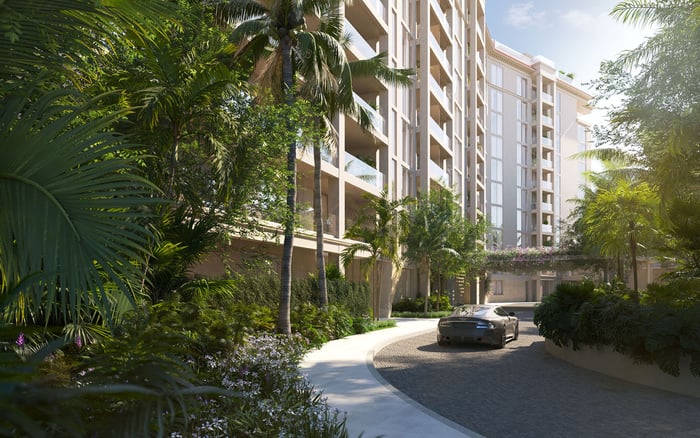
For married couples making Florida their home, a disciplined acquisition aligns deed vesting, title coverage, access rights and survey findings before closing. The essential task is deciding which risks the seller must cure, the insurer will cover and the buyers can accept.

For a married couple establishing Florida domicile, selecting a South Florida residence is both a lifestyle decision and an exercise in allocating legal risk. The critical question is not simply whether the transaction can close. It is whether the ownership structure, insured interest and rights supporting everyday use align with the couple’s intentions.
A residence under consideration at The Residences at 1428 Brickell should prompt the same disciplined questions as any other Brickell acquisition: who will own it, what will be insured, and which burdens will remain? Project selection cannot answer those questions; the transaction documents must.
Title ownership does not, by itself, establish Florida domicile. Nor does title insurance protect against every property-related problem. Treat domicile planning, deed vesting and title review as coordinated but distinct assignments.
A title commitment is a conditional undertaking to issue a policy, not the policy itself. Its requirements identify what must happen before issuance; its exceptions identify matters excluded from the proposed coverage.
Begin with Schedule A. Check the proposed insured, estate or interest, policy amount, record ownership and legal description against the intended acquisition. For spouses, the proposed insured and planned deed vesting deserve particular attention. Resolve discrepancies before closing documents become the default expression of the ownership plan.
Then distinguish Schedule B requirements from exceptions. Satisfying a requirement does not automatically remove an unrelated exception. Standard exceptions can concern current-year taxes, unrecorded possession rights, survey matters, unrecorded easements and certain construction liens.
An owner’s policy serves a different purpose from a lender’s policy. The latter protects the lender’s insured interest, not the couple’s ownership interest. Review the proposed owner’s coverage on its own terms rather than treating financing approval as protection.
Florida recognizes tenancy by the entireties, with a presumption that real property conveyed to spouses is held in that form, subject to the deed and applicable facts. It treats the spouses as a single ownership unit, making vesting relevant to creditor protection and succession planning.
A familiar ownership label is no substitute for legal review. Counsel should reconcile the proposed deed with the couple’s estate plan and intended homestead treatment before execution.
Florida homestead has distinct tax, creditor-protection and inheritance dimensions. The form of co-ownership can affect those consequences. Florida’s statutory homestead-descent provision expressly does not apply to property owned by the decedent as tenants by the entireties or as joint tenants with rights of survivorship. That distinction warrants planning-not an assumption that every homestead rule operates identically.
An exception referring to an easement calls for a review of the underlying instrument. Recording does not make the easement’s consequences insured. If it remains excepted, the couple should understand the burden and obtain a clear underwriting response to any requested coverage.
For essential access easements, review location, width, permitted uses, utility rights, maintenance costs, relocation provisions and enforcement rights. Ask counsel and the surveyor to connect the written rights to the physical property and intended use.
A couple considering Four Seasons Residences Coconut Grove can apply this same document-first approach to their Coconut Grove options. This is a recommendation about review discipline, not a statement that a particular project has an access defect or title exception.
Legal access and ownership of an adjoining road are different questions. A policy’s definition of insured land may exclude interests in abutting roads while preserving whatever access coverage the policy provides. A visible driveway alone does not establish a legal access right or resolve the scope of insurance.
Review the survey alongside the commitment and recorded instruments, rather than treating it as a separate approval. Its value includes identifying where physical conditions and written rights may diverge.
A qualifying survey completed within 90 days before closing and certified to the insurer by a registered Florida surveyor provides a mechanism for narrowing survey exceptions. Exceptions for encroachments, overlaps, boundary disputes and similar matters generally must identify conditions actually shown on the qualifying survey rather than retain a blanket exception.
This is a route to more precise coverage, not a promise that every revealed condition becomes insured. Ask the insurer which exceptions will be narrowed, which specific matters will remain and whether any requested affirmative coverage is available.
Visible conditions are not the entire inquiry. An easement by necessity can arise from the historical division of land, so the current deed may not reveal all potential access rights or burdens. Before a survey exception is deleted, the title review should address circumstances that could create such implied rights. A survey is not zoning approval, either.
For a Miami Beach search that includes The Perigon Miami Beach, waterfront due diligence should remain distinct from the appeal of the setting. Waterfront commitments may contain sovereign-land or changing-water-boundary exceptions that require scrutiny beyond ordinary lot lines and encroachments. The actual commitment must determine whether those provisions apply.
Possession deserves a separate inquiry. Standard exceptions may exclude rights or claims of occupants that do not appear in public records. Ask who occupies or uses the property, and have counsel assess the supporting arrangements alongside the proposed coverage. A review confined to recorded documents can leave this category unresolved.
The practical deliverable is a written resolution for each material objection. Review the commitment, underlying instruments, survey and intended use together, then allocate responsibility expressly:
Seller cure: Identify the required correction, responsible party and contractual timing.
Insurer response: Obtain written confirmation of proposed exception removal, narrowing or affirmative coverage.
Buyer acceptance: Document the remaining burden and why the couple is prepared to accept it.
Contractual exit: Have counsel assess termination rights under the contract if the issue cannot be resolved acceptably.
Obtain underwriting responses before contractual objection deadlines. A requested endorsement or deletion is not coverage merely because it has been discussed; it must be agreed and issued. Confirm that the final policy reflects the agreed resolution.
Commitment terms are not universal. Florida counsel, the insurer and the surveyor should resolve the parcel-specific questions. The objective is not an abstract promise of a risk-free home, but a clear understanding of what the couple owns, can use and has insured.
Explore South Florida residences with MILLION while keeping ownership and coverage aligned with your plans.
If branded residences are on your mind — as a home or as an allocation — we would be glad to share what we are seeing, privately.
Begin a quiet conversationTitle ownership does not, by itself, establish Florida domicile. Domicile planning should be coordinated with, but kept distinct from, the acquisition and title review.
No. A commitment is a conditional undertaking to issue a policy, with requirements and exceptions that shape the proposed coverage.
Check the proposed insured, estate or interest, policy amount, record ownership and legal description against the intended acquisition. Reconcile the proposed insured with the planned deed vesting.
Not automatically. Closing requirements and coverage exceptions perform different functions, so each remaining exception needs separate review.
A lender’s policy protects the lender’s insured interest. It does not substitute for an owner’s policy protecting the couple’s ownership interest.
No. A recorded easement listed as an exception remains a coverage issue unless cleared or otherwise addressed by the insurer.
A qualifying survey completed within 90 days before closing and certified to the insurer by a registered Florida surveyor provides a statutory mechanism for narrowing survey exceptions. Specific matters shown on the survey may remain excepted.
No. Physical access, legal access rights and ownership of an adjoining road are distinct questions that should be checked against the instruments and proposed coverage.
It treats spouses as a single ownership unit and is relevant to creditor protection and succession planning. Florida presumes this form for real property conveyed to spouses, subject to the deed and applicable facts.
Waterfront commitments may contain sovereign-land and changing-water-boundary exceptions. These require scrutiny beyond ordinary boundary and encroachment review.