A buyer-oriented guide to choosing between formal hospitality and quiet residential service when financing a luxury South Florida residence.

For cash buyers, the debate between formal hospitality and quiet residential service can feel almost aesthetic. Do you want a residence that operates like a private hotel, or a building that moves with the restraint of a well-managed estate? For financed buyers in South Florida, the answer is more technical. Service is not simply a lifestyle layer. It can shape carrying costs, association culture, maintenance expectations, guest flow, insurance sensitivity, and how a lender views the broader condominium environment.
The most elegant answer is rarely the loudest one. A financed buyer should begin with a practical test: does the service model support stable ownership? If the building’s promise depends on a constant theater of amenities, staffing, programming, and brand presentation, the buyer should understand how that promise is funded and governed. If the building is quieter and more residential, the question becomes whether discretion is matched by competence, access, security, and long-term care.
Formal hospitality has real appeal in South Florida, especially for owners who travel often, entertain selectively, or expect the building to absorb friction before it reaches the residence. A staffed arrival sequence, concierge culture, valet presence, food and beverage adjacency, wellness programming, and a polished front-of-house experience can make a condominium feel less like an apartment building and more like a private club.
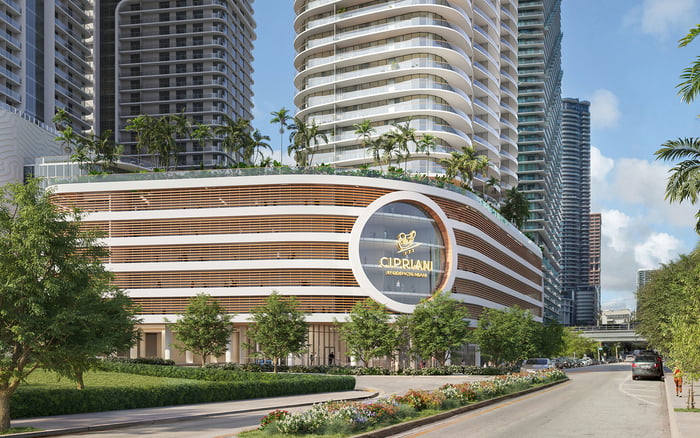
In Brickell, this is part of the gravitational pull. A buyer considering Cipriani Residences Brickell is not only thinking about a residence in a financial district. The broader appeal is a life that feels coordinated, legible, and service-forward. For a financed buyer, that can be useful if the building’s operations are transparent and the monthly obligation remains sustainable beyond the first impression.
Formal hospitality can also support resale psychology. A recognizable service posture gives future buyers an immediate way to understand the lifestyle proposition. The risk is mistaking hospitality for permanence. Staff intensity, programming, and brand expectations must be funded year after year. A financed buyer should be comfortable not only with the purchase price, but with the operating philosophy that follows closing.
Quiet residential service is not the absence of luxury. It is the decision to make luxury less performative. In many of South Florida’s most desirable enclaves, buyers prefer a building where the staff knows the owners, the lobby is calm, the amenity areas are not overactivated, and the service rhythm feels private rather than theatrical.
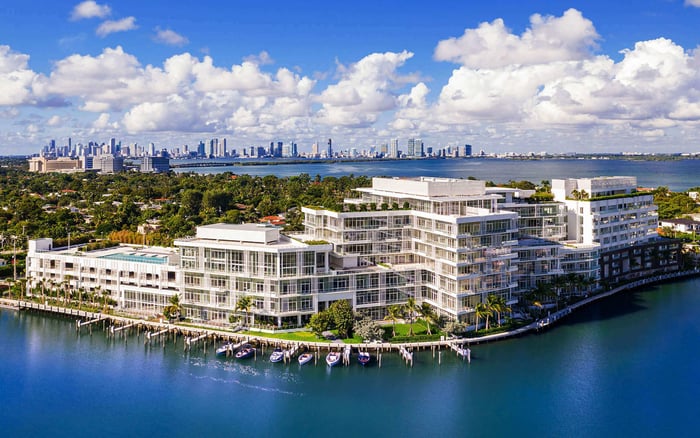
This style can be especially compelling for a Second-home owner who wants the residence to be ready on arrival without feeling like a hotel stay. It can also appeal to buyers who prize privacy, predictable association culture, and a lower-key daily pattern. At The Perigon Miami Beach, the decision for many buyers is not merely beach versus city. It is whether the residential experience can remain composed in a market known for visibility.
Quiet service can be more durable because it is less dependent on constant novelty. The most successful version still requires discipline: excellent management, attentive maintenance, clear access control, and staff capable of solving problems without spectacle. The weakness appears when quiet becomes under-service. Financed buyers should distinguish restraint from thin operations.
Investment thinking for a financed buyer starts with clarity. A high-service building can be entirely appropriate if the buyer understands the total monthly picture and believes the service model will remain desirable to the next owner. A quieter building can also be financially elegant if it avoids unnecessary cost escalation while preserving quality.
The issue is not whether formal hospitality is expensive or whether quiet service is efficient. The issue is alignment. If an owner uses the home frequently, values daily service, hosts guests, and wants a building that handles logistics, the premium may be rational. If the owner values privacy, makes fewer amenity demands, and expects to hold for years, a calmer residential model may feel more intelligent.
Financed buyers should also think about liquidity. The next buyer must understand what they are buying into. Highly branded hospitality can be legible, but it can also narrow the audience to those who actively want that lifestyle. Quiet residential service can attract a broader privacy-minded audience, but only if the building communicates quality without requiring a dramatic stage.
South Florida is not one service market. Brickell rewards convenience, speed, and polished access. Miami Beach often demands privacy, beachside ease, and a careful balance between resort energy and residential calm. Fort Lauderdale can favor marine access, club-like service, and a more relaxed coastal rhythm. Boca Raton buyers often evaluate service through the lens of security, wellness, dining, and day-to-day comfort.
That is why the same buyer may reach different conclusions in different submarkets. St. Regis® Residences Bahia Mar Fort Lauderdale speaks to a buyer who may want service integrated with a coastal and yachting lifestyle. The Residences at Mandarin Oriental Boca Raton may resonate with a buyer who wants a more composed, destination-like residential experience within Boca Raton’s established luxury context.
In Hallandale, the calculus can be different again. Shell Bay by Auberge Hallandale may appeal to buyers who see hospitality, recreation, and residential ownership as one integrated proposition. A financed buyer should ask whether that integration simplifies life or introduces obligations that exceed actual use.
The first question is use. Will this be a primary home, a seasonal residence, or an occasional retreat? A primary resident may value quiet consistency over visible hospitality. A seasonal owner may appreciate a more formal service apparatus that makes arrival effortless.
The second question is tolerance for shared programming. Some buyers enjoy an active building culture. Others want amenities available, not announced. Formal hospitality can create energy, but energy is not the same as privacy.
The third question is governance. Financed buyers should review how service standards are maintained, how budgets are approved, and whether the building’s identity depends on discretionary spending. The best buildings make service feel seamless because the underlying structure is serious.
The fourth question is exit. If the buyer needed to sell in a softer environment, would the service model expand or narrow the buyer pool? The answer may depend less on the label and more on whether the building feels timeless, well-kept, and financially coherent.
For financed buyers, quiet residential service often has the advantage when privacy, predictability, and long-term carrying-cost comfort are the highest priorities. Formal hospitality may matter more when the buyer will actively use the service infrastructure and when that infrastructure is central to the property’s identity.
The most sophisticated buyers do not choose between service and silence. They choose a building where the level of service matches the way they intend to live, finance, and eventually resell. In South Florida’s luxury market, the winning model is not necessarily the most elaborate. It is the one that remains desirable after the novelty has faded.
Does formal hospitality always mean higher ownership costs? Not always, but it often comes with more visible staffing, programming, and operational expectations. Buyers should evaluate the full carrying-cost picture before assuming the premium is lifestyle-only.
Is quiet residential service less luxurious? No. In many luxury buildings, quiet service is the more refined choice because it prioritizes privacy, consistency, and discretion over performance.
Which model is better for a financed primary residence? A primary residence often benefits from predictable operations and calm daily service. Formal hospitality can still work if the buyer uses it often and is comfortable with the costs.
Which model is better for a Second-home? A Second-home buyer may value formal service for arrival, maintenance coordination, and guest logistics. Quiet service may be better if privacy and low-friction ownership matter most.
Should a buyer avoid branded residential hospitality? Not necessarily. Branded service can be compelling when governance, budgets, and daily execution support the promise rather than simply market it.
How should financed buyers compare two buildings? Compare the monthly obligation, service culture, rules, staffing philosophy, and likely resale audience. The better building is the one whose operations match your actual use.
Does Brickell favor formal hospitality? Brickell often rewards convenience, access, and polished service because many buyers want an efficient urban lifestyle. Still, the right choice depends on privacy needs and budget discipline.
Can quiet service help with resale? Yes, if the building is well maintained and the experience feels composed. Buyers often respond to calm quality when it is supported by strong management.
What is the biggest mistake financed buyers make? They fall in love with the lobby experience before studying the long-term operating model. Service should feel sustainable, not merely impressive on a tour.
What matters most in the final decision? Alignment matters most: financing comfort, service use, privacy expectations, and exit strategy should all point in the same direction.
When you're ready to tour or underwrite the options, connect with MILLION.
If branded residences are on your mind — as a home or as an allocation — we would be glad to share what we are seeing, privately.
Begin a quiet conversation