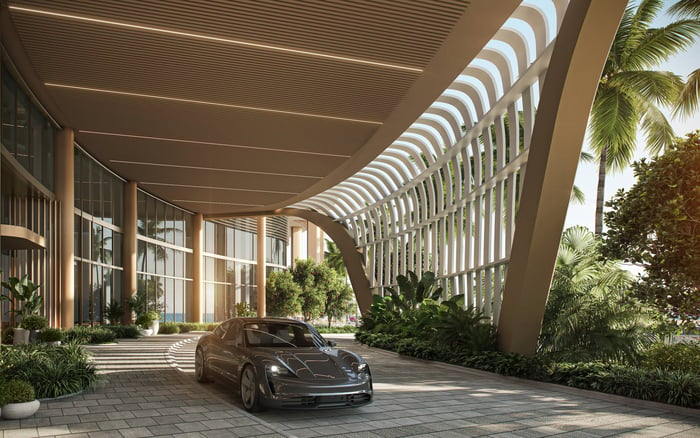
For lock-and-leave buyers, the quality of arrival, elevator privacy and valet choreography may shape daily satisfaction more than an extensive amenity program.
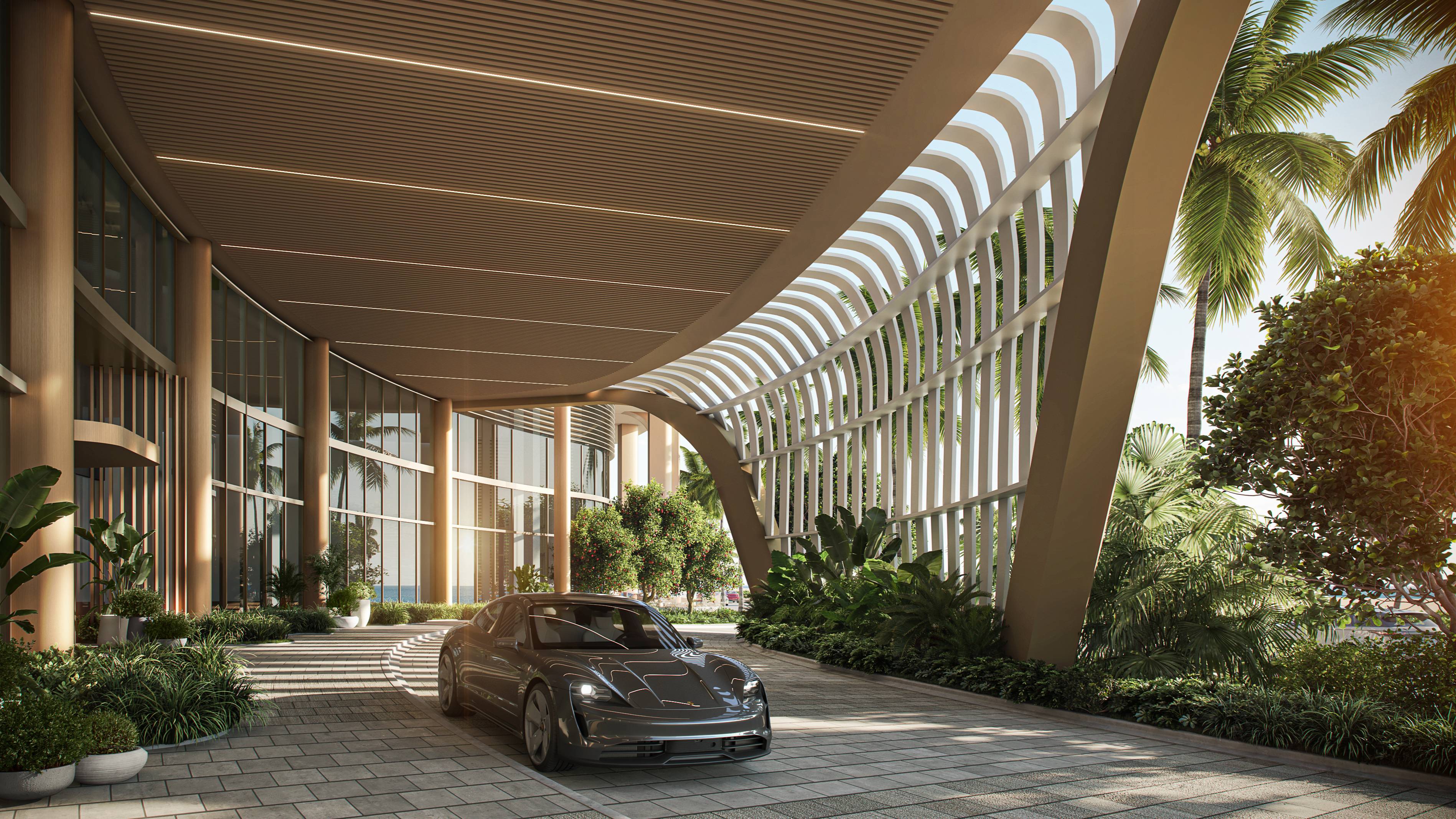
For a seasonal owner, a residence is often experienced through transitions. The decisive moments extend beyond the pool deck or lounge. They begin when the car enters the property, luggage is unloaded, keys are transferred and the owner moves from curb to residence with minimal friction.
That is why private elevator access and valet flow deserve equal billing with more photogenic amenities. A brochure can convey atmosphere, but it rarely captures the choreography of a busy arrival, a family visit or a departure lasting several months. In Pompano Beach, the more useful question is not simply what a building offers, but how reliably it supports the owner’s rhythm.
For a second-home buyer, this is a lifestyle decision with an operational dimension. The strongest experience is often the one that feels calm, discreet and repeatable.
Walk the arrival sequence rather than simply viewing it from the lobby. Note where a driver pauses, how luggage is removed from the vehicle, whether residents and hotel guests share the same path, and where deliveries enter. Ask what happens when several cars arrive at once or when weather disrupts the usual routine.
Valet quality is measured by more than courtesy. The physical layout matters: stacking capacity, turning space, pedestrian separation, key control and the distance between vehicle handoff and elevator. Buyers should also understand how self-parking, if available, interacts with valet operations and whether an owner can retrieve belongings without initiating a full vehicle request.
A polished porte cochere can still feel strained when circulation is unclear. Conversely, a restrained arrival can feel genuinely luxurious when staff roles, sightlines and handoffs are intuitive.
The phrase “private elevator” can describe different experiences. Buyers should clarify whether the elevator opens directly into the residence, into a private vestibule or onto a limited-access corridor. They should also ask how guests, household staff, deliveries and emergency personnel are admitted.
Privacy is only one consideration. Elevator count, service-elevator separation, access controls and backup procedures all shape the practical experience. During a tour, request a complete demonstration from arrival to front door. Note the number of credential checks, whether the elevator stops at other floors and how a guest would navigate the same journey.
The best configuration is not necessarily the most elaborate. It is the one that suits the household. Owners who entertain frequently may prioritize intuitive guest access, while those traveling with children, pets or substantial luggage may value a generous vestibule and a clearly separated service route.
A useful shortlist can encompass different expressions of luxury, provided each is assessed through the same operational lens. Buyers considering Armani Casa Residences Pompano Beach and The Ritz-Carlton Residences® Pompano Beach should compare current plans, access diagrams and management protocols rather than infer service details from branding alone.
The same discipline applies when reviewing W Pompano Beach Hotel & Residences, Waldorf Astoria Residences Pompano Beach and Ocean 580 Pompano Beach. At every property, verify the residential arrival route, parking model, elevator configuration and separation of resident, guest and service circulation.
This is especially relevant in an oceanfront setting, where owners may arrive with beach equipment, groceries, pets and overnight guests. The brochure establishes the mood. The circulation plan reveals how the residence will actually live.
Seasonal ownership includes long stretches when the owner is elsewhere. Before buying, examine package handling, contractor access, vehicle storage, residence checks and authorization procedures for family or staff. Ask who can enter the unit, how permission is recorded and what communication the owner receives after access occurs.
The valet discussion should extend to dormant vehicles. Clarify battery support, scheduled retrieval, cleaning permissions and the process for releasing a car to an authorized driver. Presume no service. Obtain the current written policy and identify any separate charges.
Across Broward, operational details can shape the ease of waterfront ownership. In buyer’s guides, these questions may appear secondary to views and finishes. In practice, they can determine whether every return feels restorative or administrative.
Visit at more than one time, if possible. A quiet weekday presentation may not reveal the pressure points that emerge during a busy weekend arrival period. Time a vehicle request, follow the guest route, and ask to see the service elevator and loading access. If the property is not yet operating, review plans and written procedures, then distinguish firm commitments from concepts that may evolve.
Also examine the relationship between staffing and design. Staff can refine a well-planned sequence, but they cannot fully correct a constrained drive court or conflicting circulation paths. Design can create privacy, yet service protocols determine whether that privacy remains convenient.
The final comparison should be simple: Which residence minimizes repeated friction? Amenities enrich ownership, but arrival and vertical circulation frame every stay. For the seasonal buyer, quiet competence is not a supporting feature. It is part of the luxury itself.
Why can valet flow matter more to a seasonal owner? Every stay begins and ends with the vehicle handoff, making delays or confusion unusually visible.
What should buyers ask about a private elevator? Confirm where it opens, who can call it, how guests gain access and which backup procedures apply.
Is direct elevator entry always the best arrangement? Not necessarily. A private vestibule may better suit households that want a buffer for guests, deliveries or staff.
How should a buyer test the valet experience? Observe the arrival circulation and, when possible, request a vehicle during a realistically busy period.
What parking questions matter during an extended absence? Ask about vehicle access, battery support, authorized drivers, cleaning permissions and separate fees.
Should guests use the same elevator as residents? The answer depends on the building, but buyers should understand the access path and determine whether it suits their privacy expectations.
Why inspect service circulation? Deliveries, maintenance and housekeeping can compromise privacy when service routes overlap heavily with resident paths.
How can pre-construction buyers evaluate operations? Review access plans, parking diagrams and written management descriptions while distinguishing commitments from illustrative concepts.
Do more amenities necessarily create better ownership? No. An amenity’s value depends on whether the owner will use it and whether core operations remain effortless.
What is the most useful final comparison? Identify which property offers the clearest, most repeatable journey from vehicle arrival to private residence.
For a tailored shortlist and next-step guidance, connect with MILLION.
If branded residences are on your mind — as a home or as an allocation — we would be glad to share what we are seeing, privately.
Begin a quiet conversation