Ocean 580 pairs a highly limited ownership base with a substantial amenity program. Buyers should look beyond the headline HOA figure and model each major expense category independently before signing a contract.
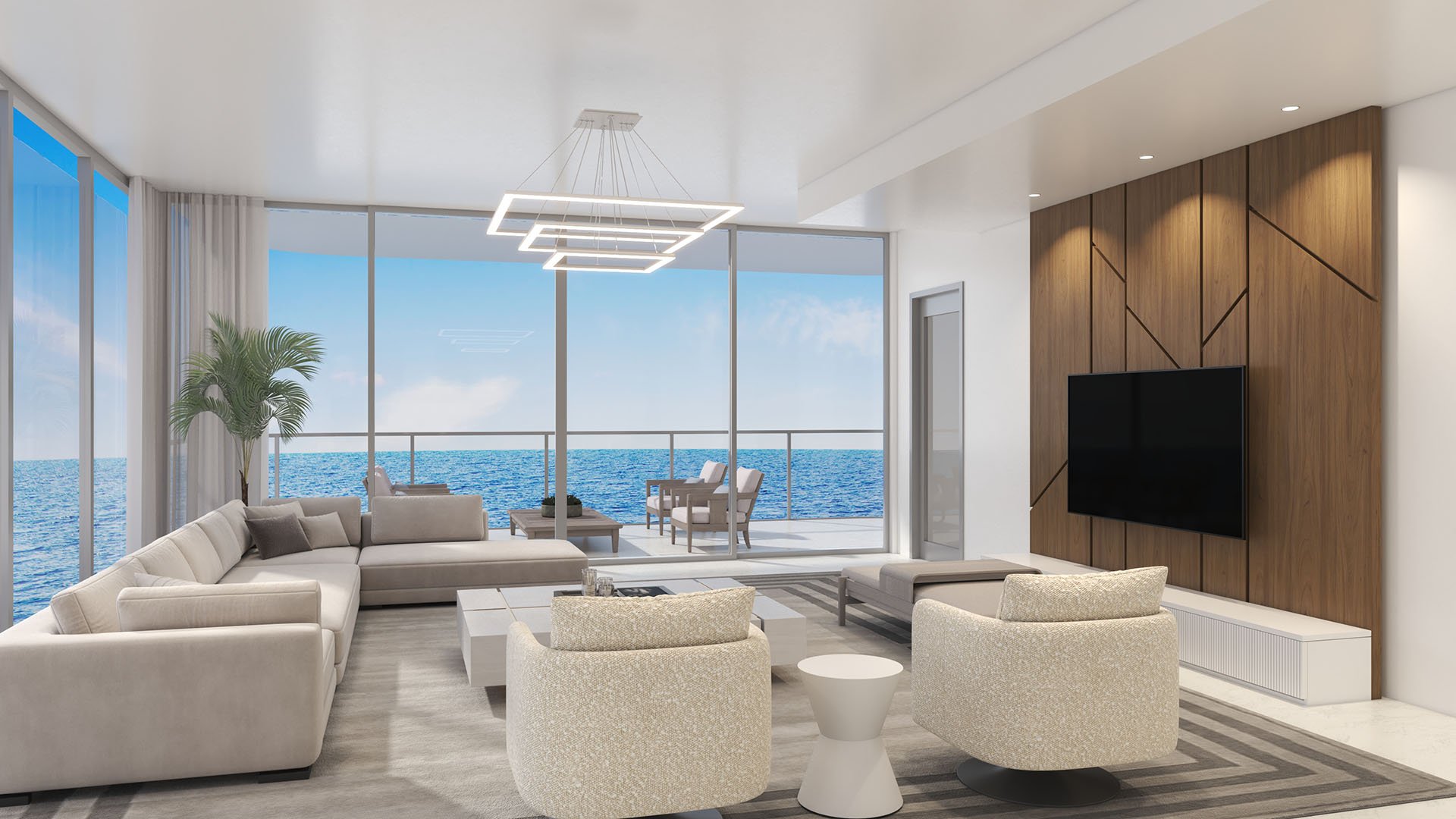
Ocean 580 Pompano Beach is planned as a 10-story oceanfront condominium with just 17 residences at 580 Briny Avenue. Claridge Homes is the developer, FSMY is the architect, Manhas Design is responsible for the interiors, and completion is stated for 2027. Residences are listed at approximately 3,688 square feet, with prices ranging from $4,979,844 to $21.8 million.
The limited residence count is central to any analysis of recurring costs. Insurance, management, security, pool service, common-area utilities, and other fixed expenses are spread across a small ownership base. That structure can support privacy and a more intimate residential experience, but it also gives each unit meaningful exposure to changes in the building budget.
The headline fee should therefore be treated as a starting point, not a forecast. For buyers considering Pompano Beach oceanfront and pre-construction opportunities, the more useful questions are what the fee includes today, how costs are allocated by residence, and how each major category could change over five to 10 years.
The headline HOA fee is a starting point, not a long-term ownership forecast.
HOA costs are quoted at $1.41 per square foot. Applied directly to a 3,688-square-foot residence, that rate implies roughly $5,200 per month. A separate figure of $1.52 per square foot already indicates that buyers should not assume one universally applicable rate.
Unit-level figures widen the range. Units 401 and 602 have each been listed at $4,954 per month. Unit 501 has been listed at $5,200, while Unit 902 has been listed at $6,335. Those figures translate to annual association costs of $59,448 for Unit 401, $62,400 for Unit 501, and $76,020 for Unit 902, before unit-level expenses or assessments.
The $1,381 monthly difference between the lowest and highest disclosed figures equals $16,572 annually. It may reflect allocation percentages, condominium-document square footage, limited common elements, timing, or budget revisions. It does not, by itself, establish an error. It does establish the need for a unit-specific assessment schedule and the current proposed budget.
Normalize the fee by dividing the residence’s monthly assessment by its exact condominium-document square footage. Then compare the result with the $1.41 benchmark. Do not substitute marketing square footage or assume that every home is assessed on a flat, building-wide basis.
Buyers comparing other local offerings, including The Ritz-Carlton Residences® Pompano Beach, should apply the same normalization exercise. A fee comparison is meaningful only when allocation, included services, reserve funding, and residence size are understood on equivalent terms.
Maintenance includes insurance, but that description does not quantify coverage, limits, deductibles, exclusions, or the portion of the budget assigned to premiums. Request declarations for master property, windstorm, flood, liability, umbrella, and directors-and-officers coverage. Review replacement-cost limits and every applicable deductible.
The buyer’s model should isolate the residence’s allocated share of the insurance budget. Rather than increasing the entire HOA fee by one general inflation assumption, apply a separate insurance scenario and measure its effect on monthly dues. Also clarify how a deductible would be funded after a covered event and whether the governing documents permit a special assessment for that obligation.
The practical objective is not to predict a premium precisely. It is to understand the owner’s exposure if premiums, deductibles, or replacement-cost assumptions rise independently of other operating expenses.
Ocean 580’s amenity program includes beach access, a fitness center, pool, restaurant, sauna, spa or hot tub, parking, and security. Outdoor common amenities include a beachside pool deck, spa, sundeck, and private beach access with loungers. Each offering may carry labor, management, maintenance, energy, and third-party contract costs.
Request staffing schedules and vendor agreements covering management, security, pool, beach, restaurant, janitorial, and spa operations. Determine which roles are direct employees and which are contracted. The proposed budget should show wages, payroll taxes, benefits, contract values, and service frequency with enough clarity to reveal the true operating model.
This review is particularly important in a 17-residence building. If service hours expand or a contract is repriced, the increase is divided among relatively few owners. Buyers can apply the same scrutiny when evaluating service-intensive alternatives such as Armani Casa Residences Pompano Beach or W Pompano Beach Hotel & Residences. The point is not to compare headline dues alone, but to compare the service promise with the machinery required to deliver it.
The property uses public water and sewer, with cable, electricity, and natural gas available. For Unit 401, maintenance includes cable television, sewer, and water. Buyers should still verify what is association-paid, what is individually metered, and whether internet, gas, or any in-residence electricity is included.
Build a utility schedule that separates water, sewer, cable, internet, natural gas, common-area electricity, pool and spa energy, and owner-paid electricity. Apply annual rate and usage assumptions to each applicable category rather than treating utilities as a single static number.
Usage deserves as much attention as rates. A pool deck, spa, fitness areas, restaurant-related operations, exterior lighting, and conditioned common spaces can create distinct consumption patterns. The governing documents, meter plan, service agreements, and proposed budget should align before the buyer accepts an included service at face value.
For Unit 401, maintenance includes a reserve fund. That phrase confirms neither the proposed contribution by unit nor whether projected funding is adequate for the building’s long-term components.
Request the reserve schedule, unit-level contribution, component inventory, useful-life assumptions, replacement-cost assumptions, and any supporting engineering analysis. Then model reserve contributions independently from operating expenses. A prudent five- to 10-year view should show how reserve funding changes as major components age and replacement costs evolve.
Buyers should also identify what the proposed reserves exclude. If an expensive component is absent, funded only partially, or expected to be handled through future assessments, the apparent monthly savings may simply defer the obligation. Any developer guarantee should be reviewed alongside the budget to determine which costs are temporarily supported and what happens when that support ends.
Start with the unit-specific monthly assessment, not a building average. Divide it among insurance, payroll and service contracts, utilities, reserves, and remaining operating costs. Assign a separate annual escalation input to each category, then run the model for five and 10 years. Include a distinct line for potential assessments rather than burying that risk within ordinary dues.
Before contracting, reconcile the model against the condominium declaration, proposed budget, assessment schedule, insurance binders, reserve materials, meter plan, vendor contracts, and any developer guarantees. The range of disclosed fees makes this documentary review indispensable.
For MILLION readers, this buyer’s guide framework also offers a disciplined way to interpret pricing and trends across boutique coastal condominiums. At Ocean 580, the essential luxury is not a deceptively low carrying cost. It is financial transparency around the service level, protection, utilities, and capital planning that preserve the property over time.
For private advice on South Florida luxury real estate, connect with MILLION.
If branded residences are on your mind — as a home or as an allocation — we would be glad to share what we are seeing, privately.
Begin a quiet conversationThe project information quotes $1.41 per square foot, which implies roughly $5,200 monthly when applied directly to 3,688 square feet.
Figures range from $4,954 to $6,335 and may reflect allocation, square footage, limited common elements, timing, or budget revisions. Buyers should verify the unit-specific schedule.
Divide the unit’s monthly assessment by its exact condominium-document square footage, then compare the result with the published $1.41-per-square-foot estimate.
Request master property, windstorm, flood, liability, umbrella, and directors-and-officers declarations, including deductibles and replacement-cost limits.
Review schedules and contracts for management, security, pool, beach, restaurant, janitorial, and spa operations, including whether workers are employees or vendors.
Clarify responsibility for water, sewer, cable, internet, natural gas, common-area electricity, and in-residence electricity, including which services are individually metered.
Unit 401’s maintenance description includes a reserve fund, but buyers should request the contribution by unit, reserve schedule, and supporting assumptions.
Only 17 residences support the building’s amenity program, so fixed costs are distributed across a relatively small ownership base.
A prudent model should project five and 10 years while applying separate escalation assumptions to insurance, payroll, utilities, reserves, and other costs.
Review the declaration, proposed budget, assessment schedule, insurance binders, reserve materials, meter plan, vendor contracts, and any developer guarantees.