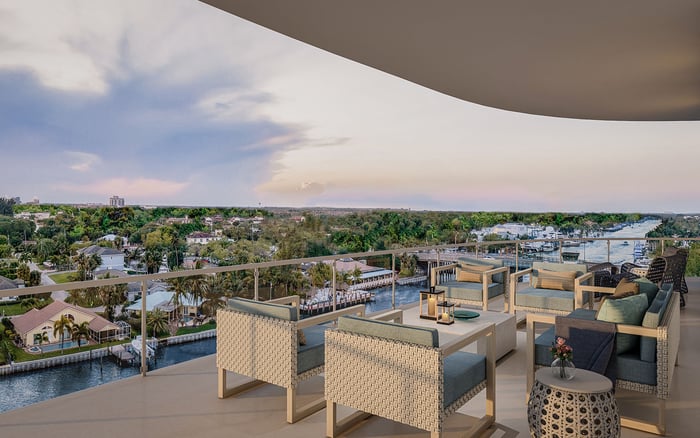
For seasonal condominium owners, the most consequential luxury may be disciplined governance. A careful review of structural studies, reserve planning, inspection history, insurance, and board records can reveal obligations that an amenity brochure cannot.

In Palm Beach Gardens, a polished arrival, attentive staff, water views, and private club spaces can define the emotional appeal of condominium ownership. For a seasonal owner, however, the building's less visible systems may carry greater financial consequence. Structural planning, reserve discipline, inspection history, insurance, and board governance determine how confidently an owner can lock the door and leave for several months.
That distinction matters across the broader Palm Beach market. A buyer considering The Ritz-Carlton Residences® Palm Beach Gardens may naturally begin with design, service, and setting. The more durable inquiry begins behind the presentation: What must the association maintain, what work has been identified, and how is that work expected to be funded?
For the Palm Beach second-home buyer, this is not a retreat from lifestyle considerations. It is a more complete definition of them. Within MILLION Buyer's Guides, governance deserves the same attention as architecture because predictability is itself a premium amenity.
SIRS generally refers to a structural integrity reserve study. In practical terms, it is a planning document intended to connect important building components with their estimated remaining useful life and anticipated replacement costs. Buyers should not treat it as a simple pass-or-fail certificate. Its value lies in the questions it prompts.
Review which components were studied, when the property was observed, which assumptions support the estimates, and whether the association's budget aligns with the study. A large reserve balance may sound reassuring, but its significance depends on the obligations it must cover. Conversely, a planned increase in contributions may reflect active stewardship rather than distress.
The document should also be read alongside meeting minutes, budgets, financial statements, engineering materials, and notices to owners. Consistency across those records matters. If one document anticipates major work while another makes little provision for it, the buyer should seek a clear explanation from qualified advisers and the association.
Reserve analysis is often reduced to a single number. Sophisticated buyers look beyond the headline balance, asking how funds are allocated, whether contributions are keeping pace with projected needs, and what other claims may compete for available capital.
This is particularly relevant for an investment or a residence occupied only part of the year. A special assessment, a material dues increase, or an extended repair program may affect carrying costs, resale positioning, access, and the ease of managing the home remotely. None of those outcomes can be evaluated from lobby photography.
The same discipline applies when comparing established condominiums with newer offerings. Palm Beach Residences and The Ritz-Carlton Residences® West Palm Beach may enter a buyer's consideration for different reasons, but every condominium decision benefits from a clear understanding of the association's responsibilities, projected operating costs, and framework for future capital work. Newness can change the questions. It does not eliminate them.
A milestone inspection should be understood as part of a process, not merely as a document in a closing file. The central questions are whether concerns were identified, whether further evaluation was recommended, what repairs were proposed, and how the association is addressing the next steps.
Buyers should distinguish among observation, recommendation, formal scope, contract, permit, and completed work. Those stages are not interchangeable. If repairs are underway, ask how access, noise, parking, terraces, common areas, or building services may be affected. A seasonal schedule can make disruption easy to underestimate, especially when the owner expects to arrive within a narrow winter window.
Professional interpretation is essential. Engineers, condominium counsel, insurance professionals, accountants, and inspectors serve distinct roles. A sales conversation cannot substitute for their review, and a visually pristine residence cannot answer questions about shared building obligations.
The strongest approach is to assemble one coordinated file before committing. It should include the current budget, reserve information, structural studies, inspection materials, recent meeting minutes, pending assessment notices, insurance information, litigation disclosures, major contracts, and rules governing access to residences.
Then test the practical realities of absence. Who may enter during an emergency? How are leaks or humidity issues handled when an owner is away? Is there a protocol for vendors, storm preparation, deliveries, vehicles, and post-event inspections? Effective remote ownership depends on documented procedures rather than informal assurances.
Location comparisons also benefit from this lens. A buyer drawn south toward West Palm Beach might consider Forté on Flagler West Palm Beach, while another may prefer Palm Beach Gardens. The essential comparison is not only residence against residence. It is governance against governance, obligation against obligation, and the owner's desired level of involvement against the building's operating model.
Due diligence is not a search for a building with no future expenditures. Every condominium requires maintenance, and every association must make decisions about timing, funding, and disruption. The goal is to determine whether those decisions are visible, documented, professionally informed, and financially coherent.
An identified project can be more manageable than an unexamined condition. A funded plan can be more reassuring than an artificially low monthly charge. Clear minutes can be more valuable than vague optimism. For luxury buyers, transparency should not diminish desirability. It should help define it.
Amenities shape daily pleasure, but institutional quality protects the experience over time. For seasonal owners, the ideal building is not simply beautiful upon arrival. It is competently managed during every month they are elsewhere.
That is the deeper luxury proposition in Palm Beach Gardens and across Palm Beach County: a residence supported by credible planning, legible finances, responsive management, and an association that treats stewardship as part of service.
What does SIRS mean for a condominium buyer? It generally refers to a structural integrity reserve study used to connect major building needs with reserve planning.
Is a large reserve balance automatically reassuring? No. The balance should be considered alongside projected obligations, allocations, budgets, and anticipated capital work.
Does a milestone inspection guarantee that no repairs are needed? No. Buyers should review the inspection's scope, findings, recommendations, and any documented follow-up.
Why are meeting minutes important? Minutes can reveal recurring maintenance issues, owner discussions, proposed projects, funding decisions, and unresolved questions.
Should newer condominiums receive the same scrutiny? Yes. The relevant documents and near-term concerns may differ, but governance, budgets, warranties, and obligations still matter.
How can a seasonal owner prepare for an assessment? Review disclosed plans and budgets, maintain liquidity appropriate to the residence, and seek professional financial advice.
Who should interpret structural or engineering materials? A qualified engineer or inspector should address technical matters, while condominium counsel can advise on legal implications.
What remote-management rules should buyers examine? Ask about emergency access, vendor entry, storm procedures, leak response, inspections, deliveries, and authorized local contacts.
Can repair work affect seasonal enjoyment? Yes. Access, noise, parking, terraces, common areas, and services may be affected depending on the project's scope and timing.
What is the best way to compare two luxury buildings? Compare documents, funding plans, management protocols, insurance considerations, and expected owner involvement-not amenities alone.
For a discreet conversation and a curated building-by-building shortlist, connect with MILLION.
If branded residences are on your mind — as a home or as an allocation — we would be glad to share what we are seeing, privately.
Begin a quiet conversation