A resale buyer’s framework for separating durable value from launch-era brand appeal at Mr. C Residences West Palm Beach, with emphasis on ownership structure, service quality, costs, unit attributes and closed-market evidence.
At Mr. C Residences West Palm Beach, the name may command attention, but a mature resale market will ask a more exacting question: what remains valuable once buyers are no longer purchasing a pristine promise? The answer will depend on the building’s operating performance, the legal rights attached to each residence and the quality of daily life within a mixed hotel and residential property.
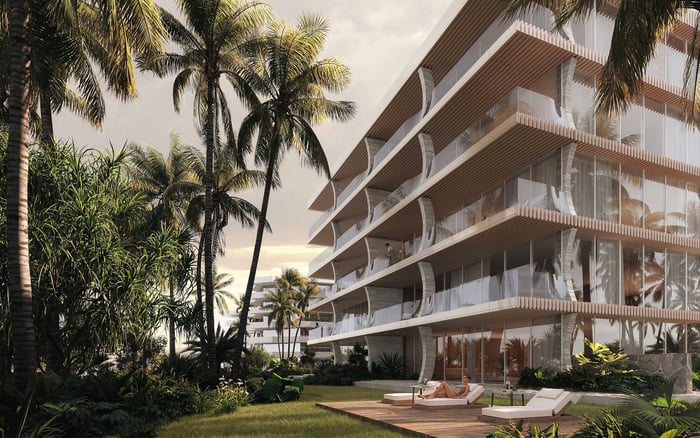
The project is planned as a 27-story condo-hotel with 146 private residences and 110 hotel rooms. Its branded-residences proposition draws on Mr. C hospitality, associated with the Cipriani family, yet the lasting premium will be earned through execution. Concierge consistency, housekeeping, dining, staffing and maintenance response must remain meaningfully differentiated from non-branded alternatives.
A durable brand premium is earned through operations, not preserved by a name alone.
Addresses vary among 320 Lakeview Avenue and 327 or 383 Okeechobee Boulevard. A buyer should therefore confirm the legal address, parcel boundaries and recorded condominium identity rather than rely on marketing shorthand. The declaration, public parcel record and certificate of occupancy should align with the contract and title materials.
The internal product split is equally important. The 146 residences comprise 57 Resort Residences and 89 Tower Residences. Resort Residences are positioned on floors 2 through 8 as furnished accommodations with no rental restrictions, while Tower Residences on floors 9 through 20 are presented as conventional private condominiums. The Tower component carries an indicated six-month minimum rental term, but that provision requires confirmation in the governing documents.
These are not interchangeable assets. An income-oriented purchaser may favor flexible occupancy, furnishing and hotel-program eligibility. A primary- or second-home buyer may place greater value on privacy, residential character and predictable neighbor turnover. Whenever possible, comparable sales should remain within the same component.
Approximately 46 residences may be eligible to participate in the hotel reservation system. Eligibility alone does not establish attractive investment economics. Buyers should examine revenue splits, owner-use limits, blackout periods, management charges, furnishing standards, maintenance obligations and termination rights.
For Resort Residences, unrestricted rental language should be reconciled with the declaration, association rules, hotel agreement and applicable local requirements. For Tower Residences, confirm the minimum lease term, approval process and frequency limits. Any rental representation should survive transfer to a new owner rather than depend on a personal agreement held by the seller.
The hotel component has also been identified with Marriott’s Tribute Portfolio. Confirm the current affiliation, the operator’s control and whether residence owners receive any loyalty or reservation benefits. Affiliation can support demand, but only documented rights should enter a valuation.
Mixed-use ownership can feel polished or compromised, depending on circulation and management. Establish whether residents and hotel guests share lobbies, elevators, pools, dining venues, or fitness and spa facilities. Ask about resident-priority rules, guest limits, security protocols and the operator’s ability to alter access.
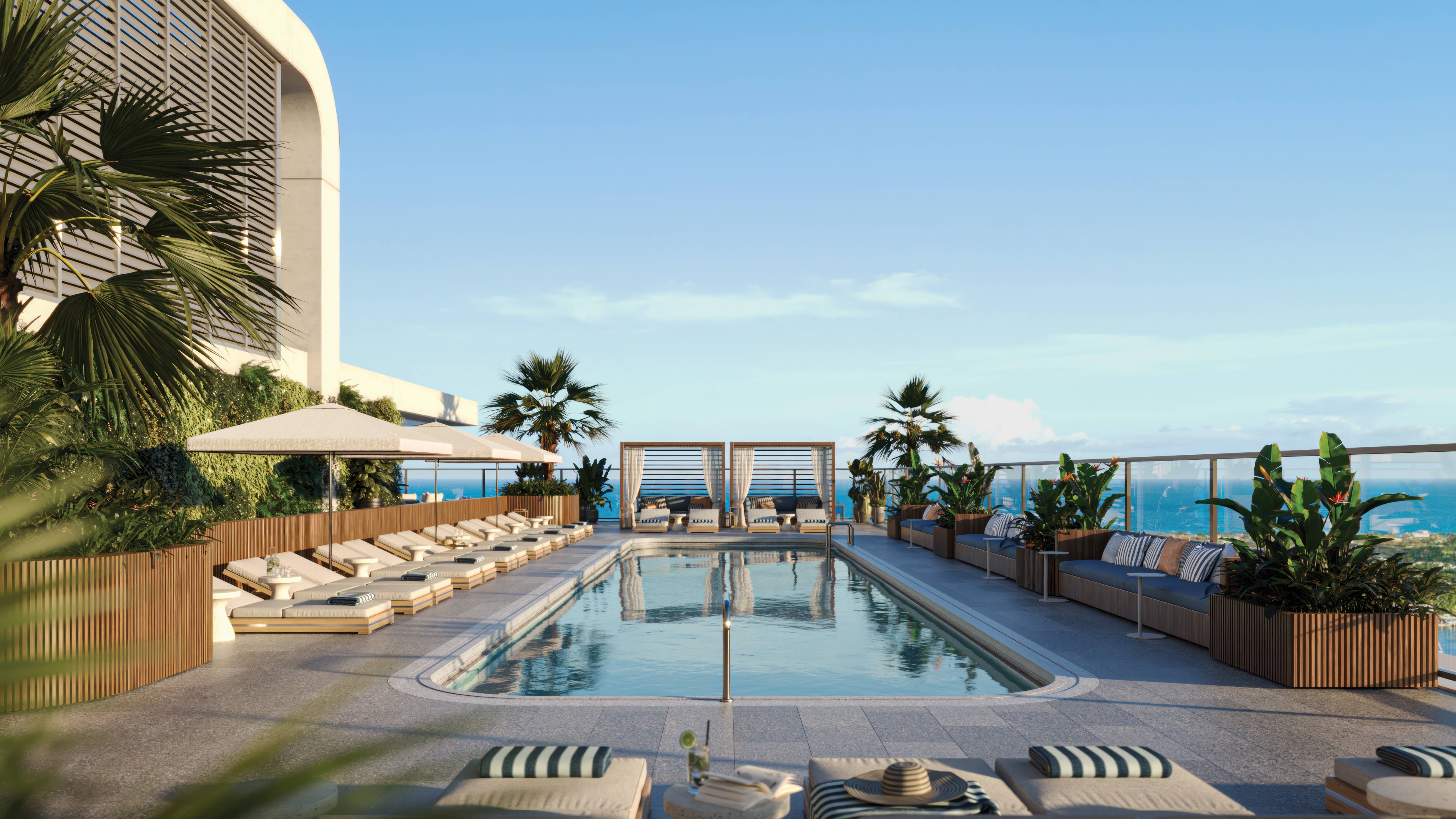
Amenities include a rooftop pool and bar, spa, fitness facilities, Bellini dining and Mr. C hospitality services. A resale review should identify opening hours, reservation priority, resident discounts, guest policies and every à-la-carte charge. Buyers comparing downtown options such as Mandarin Oriental Residences, West Palm Beach should compare actual access and service obligations, not amenity names alone.
Residences range from approximately 830 to 2,200 square feet. Price-per-square-foot analysis should adjust for planning efficiency, storage, ceiling height, balcony utility and furnished versus unfurnished delivery. In compact residences especially, a beautifully photographed plan may still be constrained by circulation or limited storage.
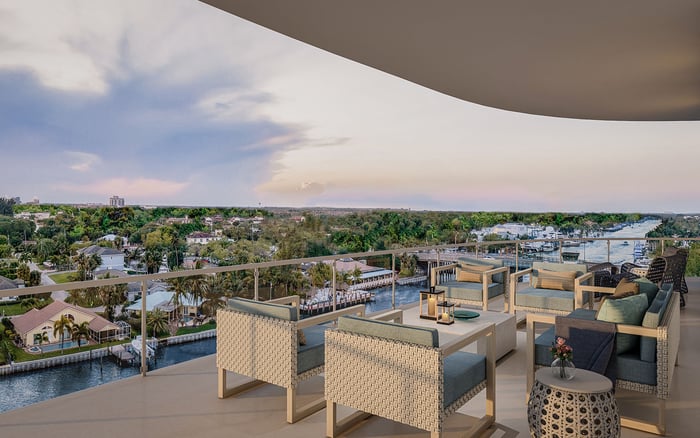
Orientation and elevation deserve visits at different times of day. Outlooks include city, Intracoastal, ocean and Palm Beach Island views, but the relevant facts are the specific sightline, exposure to neighboring development and permanence of the outlook. Lower floors also warrant attention to sound and privacy near hotel activity, amenity decks, food-and-beverage operations, valet circulation and mechanical equipment.
Location should be tested with equal care. Downtown West Palm Beach offers a distinct experience, so buyers should personally assess walkability, bridge access to Palm Beach, traffic patterns, event noise and convenience. Comparisons with Forté on Flagler West Palm Beach should account for micro-location and ownership structure before drawing conclusions from asking prices.
One HOA estimate is approximately $2.19 per square foot, but a resale buyer needs the current approved budget, reserve information, assessment history and precise schedule of included services. The key issue is not simply whether fees are high, but whether that spending produces reliable staffing, well-maintained spaces and privileges owners consistently use.
Review how hotel and residential costs are allocated, who pays for shared facilities and what control the operator holds over amenity operations. The documents should also address how branding or management can change. Parking deserves its own review, including assigned versus valet-only rights, included vehicle count, guest charges, EV charging and automatic transfer upon resale.
A useful local comparison set may also include The Ritz-Carlton Residences® West Palm Beach, but monthly charges should never be compared without normalizing residence size, included services, parking and shared-use obligations.
Delivery estimates have varied between 2026 and 2027. Once closings occur, verify the certificate of occupancy, actual closing date, remaining warranties and whether construction continues elsewhere on the property. Post-delivery inspections should focus on finish durability, water intrusion, acoustic separation, elevator performance and maintenance response.
Association minutes can reveal whether early concerns are isolated or recurring. Service requests, elevator interruptions, water events and finish failures may influence buyer confidence long after the new-construction sheen recedes. A well-operated property can convert early imperfections into evidence of responsive management; unresolved patterns can erode the premium.
Launch-era pricing ranged from roughly $1.4 million to $1.6 million at the lower end and $5.7 million to $6 million-plus at the upper end. Those figures establish positioning, not future liquidity. The credible resale record will come from closed prices, concessions, days on market and achieved price per square foot.
Segment that evidence by Resort or Tower classification, floor, exposure, layout, furnishing package and hotel-program eligibility. Then compare the results with relevant downtown and waterfront alternatives rather than treating every luxury building as equivalent. The buyer pool is most likely to reward documented rental utility, quiet circulation, durable finishes, dependable service, controlled operating costs and a residence whose outlook and layout remain compelling after the initial brand premium fades.
For confidential guidance on evaluating South Florida’s most considered residences, connect with MILLION.
If branded residences are on your mind — as a home or as an allocation — we would be glad to share what we are seeing, privately.
Begin a quiet conversationThey have different locations within the building, intended uses and reported rental frameworks. Resale comparisons should remain within the same product type whenever possible.
Confirm rental flexibility, local compliance, hotel-program eligibility, owner-use limits, revenue splits, charges and whether all rights transfer on resale.
A six-month minimum rental term may apply. Buyers should verify the current rule in the recorded documents before purchasing.
The project is generally described as containing 146 private residences and 110 hotel rooms within a 27-story tower.
Published project addresses vary. Buyers should reconcile the contract with the recorded declaration, parcel record, title materials and certificate of occupancy.
Verify whether residents and hotel guests share lobbies, elevators, pools, dining and wellness spaces, as well as any resident-priority and guest-access rules.
Review the current budget, reserves, assessments and included services, then determine whether the spending supports reliable operations and meaningful owner benefits.
Focus on finish durability, water intrusion, acoustic separation, elevator performance and the management team’s response to maintenance requests.
Confirm the residence’s exact orientation, elevation and sightlines in person, including exposure to existing or proposed neighboring development.
Use closed prices, concessions, days on market and achieved price per square foot, segmented by residence type, floor, exposure and program eligibility.