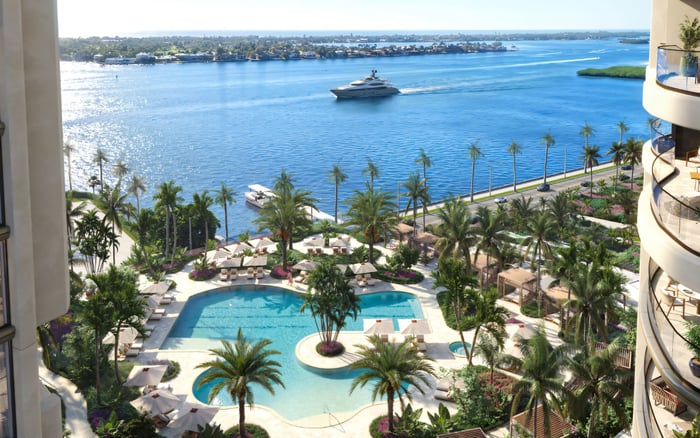
For South Flagler House buyers, occupancy approval, contractual closing obligations, insurance acceptance, and service readiness deserve separate scrutiny. A temporary certificate of occupancy remains a conditional scenario, not a confirmed delivery plan.

At South Flagler House West Palm Beach, the anticipation of waterfront living should be matched by precision about the handover. The development at 1355 South Flagler Drive comprises two 28-story towers and 108 residences, with Related Ross as developer. That scale warrants close examination of any occupancy approval, but it does not establish that approvals will be phased.
The central distinction is straightforward: a temporary certificate of occupancy, or TCO, is a conditional due-diligence scenario here, not a confirmed move-in plan. No project-specific TCO arrangement or obligation to close under one is established. Buyers should therefore separate four questions: what the municipality authorizes, what the purchase agreement requires, what the insurer and lender accept, and which services will actually be available.
Permission to occupy, an obligation to close, and a fully functioning residential experience are not interchangeable assurances.
South Flagler House topped out at 28 stories in November 2025, and its expected completion year is 2027. Neither milestone establishes an individual residence’s closing date or permission to move in.
Completion expectations have changed. An early projection anticipated completion by early 2026; another delivery window spans late 2026 through 2027. A project timeline anticipates interior finishing, amenity completion, and model-residence preparation in 2026, followed by occupancy certification and resident move-ins in 2027. These remain forecasts, not issued approvals or contractual guarantees.
For a buyer coordinating a seasonal arrival, the useful question is not simply whether the building is on schedule, but which document supports each proposed date. Ask the sales and closing teams to distinguish estimated construction completion, anticipated certification, contractual closing notice, and the first permitted move-in appointment. Align travel, furnishing deliveries, and the release of another residence with the most dependable written commitments available.
If temporary occupancy is proposed, request the actual municipal approval and all accompanying conditions. Have counsel confirm that it applies to the residence being purchased and the areas needed to reach and use it. A general statement that the project has occupancy approval is no substitute for reviewing the document itself.
For a two-tower development, ask whether an approval covers both towers, one tower, particular floors, or specified areas. The project’s configuration prompts this inquiry; it does not establish South Flagler House’s approval strategy.
Clarify any stated expiration date, outstanding conditions, renewal requirements, and anticipated route to final approval. Ask who will monitor those items and how owners will receive updates. If work is expected to continue elsewhere, seek a written explanation of resident access and any operational restrictions.
Buyers also considering Alba West Palm Beach can apply the same document-first standard without assuming that either development shares the other’s certification or delivery arrangements.
The purchase agreement deserves a separate review. Ask your real-estate attorney to identify the provisions defining completion, the documents that permit a closing notice, and any language addressing temporary occupancy. The available project facts do not establish whether a South Flagler House buyer can be required to close under a TCO.
Counsel should also distinguish unfinished items within the residence from unfinished common areas and explain how the agreement treats each. Request guidance on walkthrough procedures, documented deficiencies, correction commitments, and any contractual remedies. Do not assume that a punch-list item postpones closing or that an incomplete amenity creates a right to withhold funds.
A practical closing file should bring together the relevant contract provisions, applicable occupancy approval, walkthrough record, and written responses to unresolved questions. The objective is not more paperwork, but a consistent account of what must happen before funds transfer and what, if anything, may remain afterward.
Before treating an occupancy milestone as sufficient for closing, send the specific approval to your insurance adviser and lender. Ask each to confirm its acceptability in writing, including any conditions that must be satisfied before coverage begins or the loan is funded.
For insurance, request a clear explanation of the proposed owner’s coverage, including the HO-6 policy if applicable, its effective date, and any relevant conditions concerning occupancy or ongoing work. Ask how the owner’s policy relates to the building’s insurance arrangements. Do not assume that builder’s-risk insurance automatically protects an individual owner or that a TCO necessarily prevents HO-6 coverage.
For financing, ask whether the approval satisfies the lender’s requirements for this particular loan and whether additional documents or reviews remain outstanding. An expected closing date is not a substitute for that confirmation.
No project-specific insurance or lending outcome is established here. The decision should rest on the actual approval, policy terms, and funding requirements-not a general impression that temporary occupancy is either routine or problematic.
Request a dated, written schedule identifying which amenities and services are expected to operate at initial occupancy. Where relevant to the offering, ask about concierge coverage, valet arrangements, deliveries, move-in bookings, guest access, and amenity opening dates. These are matters to verify, not confirmed South Flagler House operating details.
An occupancy approval is not a promise that every marketed service is available. Equally, do not assume that valet or concierge operations are prerequisites for municipal approval. Clarify what is committed, what remains an estimate, and who will communicate changes.
For buyers weighing Mr. C Residences West Palm Beach alongside South Flagler House, written answers about service readiness provide a useful basis for comparison. They do not establish that either property will open with incomplete services.
Before committing to a first stay, reconcile the proposed closing date with approved occupancy, insurance inception, lender readiness, and the building’s move-in arrangements. Ask your advisers to flag any mismatch early, while travel and delivery plans remain flexible.
Keep practical contingencies proportionate to the answers. Alternative accommodation, furnishing storage, or a later arrival may be worth considering if dates remain provisional. These are planning choices, not predictions of disruption at South Flagler House.
The most valuable handover is one in which expectations and documents agree. A TCO, if proposed, should prompt precise questions rather than automatic concern or reassurance. The same discipline protects both the enjoyment of a residence and the capital committed to it.
For a considered perspective on South Florida ownership, explore MILLION.
If branded residences are on your mind — as a home or as an allocation — we would be glad to share what we are seeing, privately.
Begin a quiet conversationNo project-specific TCO plan is established. Temporary occupancy should be treated as a conditional due-diligence scenario, not an announced move-in arrangement.
South Flagler House is a waterfront condominium development at 1355 South Flagler Drive in West Palm Beach.
Related Ross is the developer. The project comprises two 28-story towers and 108 residences.
No. The expected 2027 completion year is a forecast, not a guaranteed closing date or permission to occupy an individual residence.
Buyers should ask whether any approval applies to both towers or specified portions of the development. A phased approval arrangement is not established.
That cannot be determined from the established project facts. Counsel should review the purchase agreement’s completion and closing provisions alongside the applicable approval.
Request the applicable municipal occupancy approval and its conditions. Have counsel check its scope, any expiration or renewal requirements, and its relationship to the purchase agreement.
Do not assume it does. Ask the insurer to review the specific approval and confirm coverage terms, conditions, and the effective date in writing.
No project-specific lending answer is established. The lender should confirm whether the actual approval satisfies the loan’s funding requirements and identify outstanding conditions.
Buyers should verify service readiness separately rather than infer it from occupancy approval. Request a written schedule identifying initial services, amenity access, and any provisional opening dates.