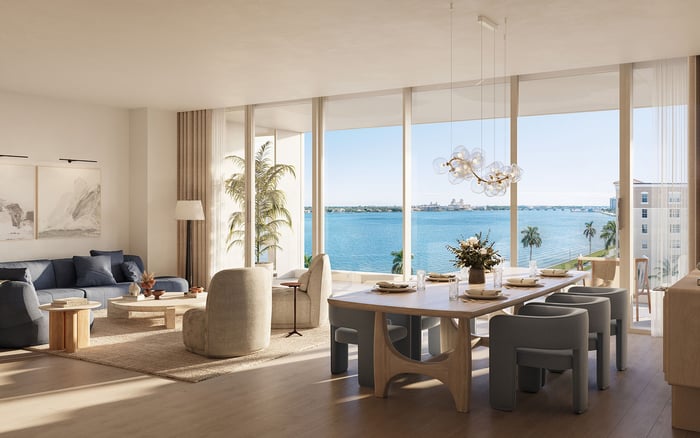
Art Basel Miami Beach places the practical realities of short stays into sharp focus. For luxury buyers, the decisive issue is not simply whether leasing is permitted, but whether a residence preserves privacy, service quality and long-term value when seasonal demand intensifies.

Art Basel Miami Beach compresses many of South Florida’s defining attractions into one highly visible week: culture, hospitality, private entertaining and international mobility. For a luxury buyer, that concentration also reveals the practical distinction between a true residence and a property that operates with the cadence of transient lodging.
The result is a more sophisticated conversation about short-stay restrictions. Some purchasers value leasing flexibility while they are away. Others regard tighter controls as an essential layer of privacy, security and continuity. The fair does not create a universal preference; it gives buyers a vivid setting in which to decide what kind of ownership experience they want.
That question extends beyond Miami Beach. Palm Beach buyers may be evaluating a different social rhythm and residential scale, but they face the same fundamental choice: maximize optionality or preserve a more controlled environment.
At the premium end of the market, a residence is more than its interior. It encompasses the arrival sequence, recognition by staff, elevator etiquette, amenity availability and confidence that shared spaces will remain composed. Frequent guest turnover can alter that experience, even when every stay is properly managed.
Restrictions may therefore serve as a form of residential curation. Minimum lease periods, approval procedures, limits on lease frequency and occupancy rules can help define a building’s character. Yet restriction alone is not a proxy for quality. Buyers should also examine enforcement, staffing and whether the property’s actual pattern of use reflects its written framework.
For a second-home purchaser, the calculation is especially personal. A home used only during select weeks may benefit financially from rental flexibility, yet its owner may prefer to arrive during art week to a familiar, settled atmosphere. The most suitable policy is the one aligned with intended use, not the one that appears most permissive on a marketing page.
Miami Beach places lifestyle and ownership strategy in unusually close contact. An art-week visit can reveal how traffic, guest access, private events and service demands affect a particular building. Buyers should tour at different hours, observe circulation through the lobby and amenities, and ask how management handles visitors during peak periods.
Residences such as Shore Club Private Collections Miami Beach and The Perigon Miami Beach belong in a broader comparison of location, service model and governing rules. Their inclusion is not a statement about any specific leasing policy. Current condominium documents and written management guidance should determine that issue.
The buyer’s central distinction is between occasional leasing and an operating pattern dependent on short stays. These are materially different propositions. The first may provide measured flexibility; the second can influence staffing expectations, common-area use and the sense of permanence within the property.
Palm Beach and the surrounding luxury market can appeal to buyers seeking a calmer residential base while retaining access to South Florida’s cultural calendar. Here, restrictions may be viewed less as an inconvenience than as part of a privacy-led ownership proposition.
Still, assumptions based on geography are unreliable. A waterfront address can be highly residential, hospitality-oriented or somewhere between the two. Buyers comparing Alba West Palm Beach with The Ritz-Carlton Residences® West Palm Beach should verify the rules, services and approval mechanics that apply to the specific residence under consideration.
For an investment-minded owner, a longer permitted lease may be a better fit than repeated short occupancy. For a privacy-first owner, even limited leasing may warrant careful scrutiny. The right answer depends on holding period, personal calendar, tax and insurance advice, and tolerance for operational complexity.
Before making an offer, request the current declaration, bylaws, rules, leasing application, fee schedule and any amendments affecting occupancy. Ask counsel to identify minimum lease terms, annual leasing limits, approval rights, guest rules and the consequences of noncompliance. For a pre-construction purchase, determine which provisions are fixed and which may change before closing.
Then move from documents to operations. Ask how rules are enforced, who registers guests, whether owners must be present for certain access privileges and how management distinguishes a guest from a tenant. Determine whether parking, deliveries, elevators and amenities follow separate protocols during high-demand periods.
This is also where the economics come into sharper focus. Consider rental revenue alongside management charges, cleaning, wear, insurance conditions, taxes and the periods when the owner wants the home available. Flexibility has value, but so does predictability. The strongest purchase is one whose legal framework and daily operation support the same vision.
Art week is an effective stress test because buyers can observe a residence when demand on the city is conspicuous. It should not, however, become the sole basis for a purchase. Return during a quieter period, compare the atmosphere and consult legal, tax and insurance advisers before relying on any rental plan.
The key is to buy for the life the residence must support. If cultural access and periodic income take priority, measured flexibility may be attractive. If discretion, continuity and effortless personal use lead, stronger short-stay controls may command their own premium. In either case, the rules are not a footnote. They are part of the architecture of ownership.
Does Art Basel Miami Beach prove that a residence will earn strong short-stay income? No. A high-profile week does not establish annual demand, legal eligibility, expenses or net returns.
Are short stays permitted throughout Miami Beach? Buyers should not make an area-wide assumption. Eligibility depends on applicable law, the property and its current governing documents.
Do stricter leasing rules always protect value? Not automatically. They may support privacy and consistency, but value also depends on location, condition, service and buyer demand.
What lease provisions deserve the closest review? Focus on minimum terms, frequency limits, approval rights, fees, guest access, occupancy rules and enforcement remedies.
Should a buyer rely on a sales representative’s summary? Use it only as a starting point. The controlling documents and independent professional advice should guide the purchase.
Can condominium rules change after closing? Rules may be amended through applicable legal and governance procedures. Counsel should explain the amendment framework and owner voting rights.
Why examine operations as well as written restrictions? A rule has practical value only when registration, access control, staffing and enforcement consistently support it.
Is a condo-hotel the same as a conventional luxury condominium? No general assumption is safe. Review the ownership, management, occupancy and rental structure of the specific property.
How should buyers compare Miami and Palm Beach? Compare intended use, privacy expectations, travel patterns and building rules rather than relying on broad market stereotypes.
When is the best time to evaluate a residence? Visit during a peak cultural period and again during a quieter week to understand both operational pressure and everyday character.
If you'd like a private walkthrough and a curated shortlist, connect with MILLION.
If branded residences are on your mind — as a home or as an allocation — we would be glad to share what we are seeing, privately.
Begin a quiet conversation